THE ADVENTURE COLLECTIVE® · Independent discovery and booking for outdoor travel

Move from subtropical forest to a glacial bowl in five days: this quick Annapurna Base Camp trek from Pokhara reaches 4,130 m through rhododendron-lined trails and traditional tea houses. Ideal for fit, time-limited trekkers who prepare for altitude and variable mountain weather.
Move from subtropical forest to a glacial bowl in five days: this quick Annapurna Base Camp trek from Pokhara reaches 4,130 m through rhododendron-lined trails and traditional tea houses. Ideal for fit, time-limited trekkers who prepare for altitude and variable mountain weather.
A thin ribbon of trail climbs out of subtropical forest and the valley opens; prayer flags tremble above stone steps, and the massif of Annapurna looms like a wall that gets closer with every hour.
Verified experiences and guided adventures in the surrounding area.
Operated by Nepal Mountain Club Pvt Ltd · Pokhara, Gandaki Province
A thin ribbon of trail climbs out of subtropical forest and the valley opens; prayer flags tremble above stone steps, and the massif of Annapurna looms like a wall that gets closer with every hour.
This condensed 4–5 day route moves fast: drive from Pokhara to Nayapul, then trek through Jhinu Danda and Chomrong, rise through rhododendron and oak to alpine meadows, and reach Annapurna Base Camp at 4,130 m. The geography is textbook Himalayan — young, uplifted crust folded and faulted by the Indian-Eurasian collision, with glacially carved cirques high on the massif and broad moraines beneath the snowline.
Villages along the way are predominantly Gurung and Magar communities; tea houses serve dal bhat and local hospitality, and trails pass mani stones and small gompas that mark centuries of mountain culture. The Annapurna Conservation Area (ACAP) manages permits and promotes low-impact travel.
Practicalities: expect 3–6 hours of walking per day and roughly 2,300–2,400 m of elevation gain from Jhinu Danda to ABC. Trails alternate packed earth, uneven stone steps, and short scree sections near Deurali and the base camp bowl. Altitude is the real challenge — plan a conservative pace, stay hydrated, and watch for signs of AMS.
Carry layers, reliable boots, and a headlamp for early starts. Best windows are spring and autumn for clear views; monsoon brings green forests but leeches and slippery steps. The trek is feasible in a short window but rewards acclimatization and respect for mountain weather.
challenging.
5 days.
Best for hikers with good cardiovascular fitness and prior multiday trekking experience; must handle sustained uphill and altitude gains.
The itinerary runs 4–5 days from Nayapul/Pokhara with daily walks of 3–6 hours; total elevation gain from trailheads to ABC is roughly 2,300–2,400 m, reaching 4,130 m.
Yes—trekkers require the Annapurna Conservation Area Permit (ACAP) and a TIMS card, typically arranged before or on arrival in Pokhara.
Physically fit beginners can complete the short ABC trek, but altitude risk makes acclimatization and conservative pacing essential; prior multiday hiking experience is recommended.
Spring (March–May) and autumn (September–November) offer the clearest views and stable weather; monsoon is wet and winter brings cold and possible snow on higher sections.
The Annapurna massif was first crossed and gained global attention after the 1950 French expedition; local Gurung and Magar communities have guided trade and pilgrimage routes for centuries.
The Annapurna Conservation Area Project regulates permits and promotes responsible tourism—stick to trails, avoid single-use plastics, and use tea-house facilities to reduce impact.
Nepal Mountain Club Pvt Ltd operates guided outdoor trips and adventures with an emphasis on safety, stewardship, and memorable experiences.
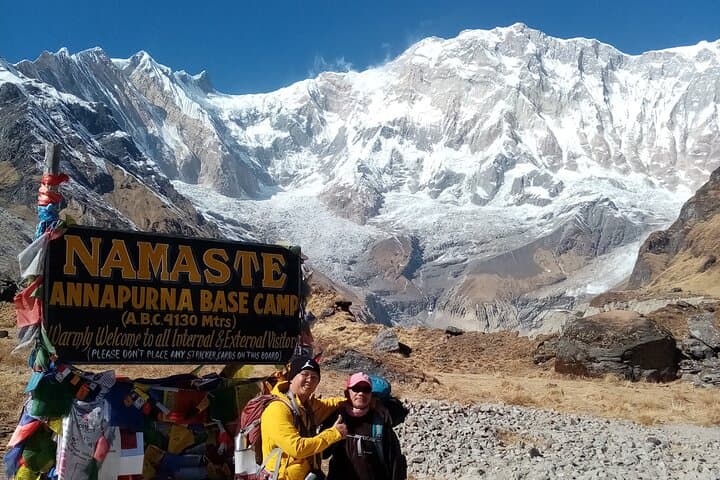
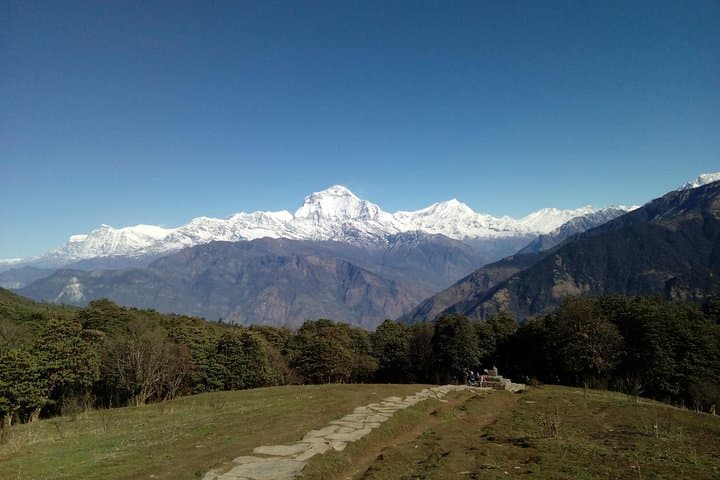
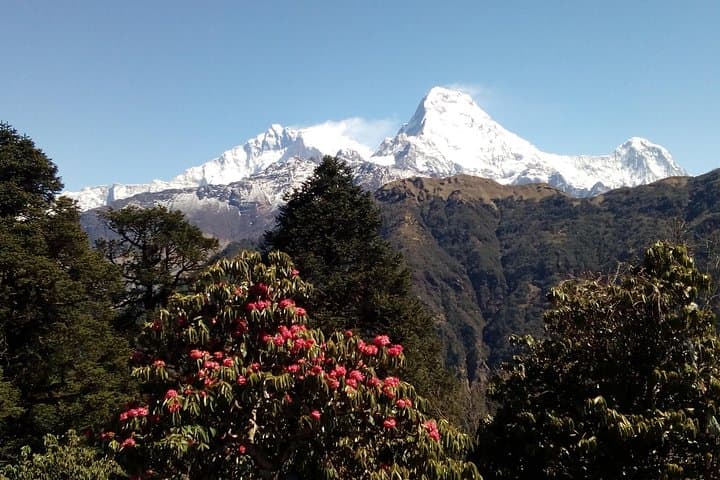
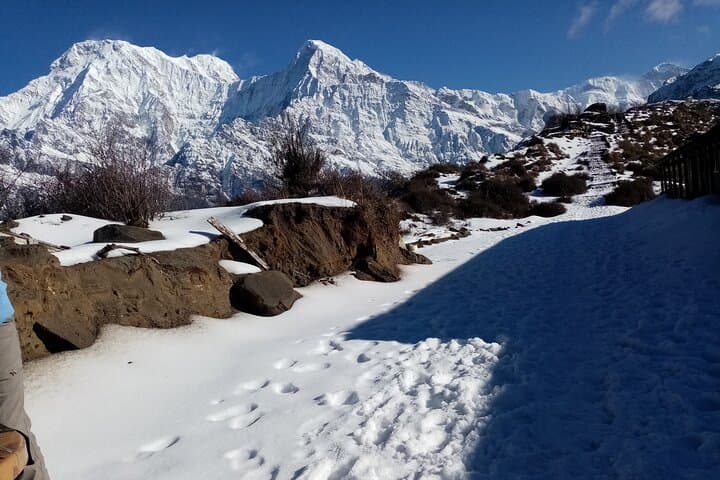
A thin ribbon of trail climbs out of subtropical forest and the valley opens; prayer flags tremble above stone steps, and the massif of Annapurna looms like a wall that gets closer with every hour.
A thin ribbon of trail climbs out of subtropical forest and the valley opens; prayer flags tremble above stone steps, and the massif of Annapurna looms like a wall that gets closer with every hour.
This condensed 4–5 day route moves fast: drive from Pokhara to Nayapul, then trek through Jhinu Danda and Chomrong, rise through rhododendron and oak to alpine meadows, and reach Annapurna Base Camp at 4,130 m. The geography is textbook Himalayan — young, uplifted crust folded and faulted by the Indian-Eurasian collision, with glacially carved cirques high on the massif and broad moraines beneath the snowline.
Villages along the way are predominantly Gurung and Magar communities; tea houses serve dal bhat and local hospitality, and trails pass mani stones and small gompas that mark centuries of mountain culture. The Annapurna Conservation Area (ACAP) manages permits and promotes low-impact travel.
Practicalities: expect 3–6 hours of walking per day and roughly 2,300–2,400 m of elevation gain from Jhinu Danda to ABC. Trails alternate packed earth, uneven stone steps, and short scree sections near Deurali and the base camp bowl. Altitude is the real challenge — plan a conservative pace, stay hydrated, and watch for signs of AMS.
Carry layers, reliable boots, and a headlamp for early starts. Best windows are spring and autumn for clear views; monsoon brings green forests but leeches and slippery steps. The trek is feasible in a short window but rewards acclimatization and respect for mountain weather.