THE ADVENTURE COLLECTIVE® · Independent discovery and booking for outdoor travel

Compressing the classic Annapurna approach into eight days, this rapid ABC trek delivers big Himalayan views, tea-house logistics and a soak in Jhinu Danda hot springs. Expect steep stone steps, altitude gain to 4,210 m, and essential permits.
Compressing the classic Annapurna approach into eight days, this rapid ABC trek delivers big Himalayan views, tea-house logistics and a soak in Jhinu Danda hot springs. Expect steep stone steps, altitude gain to 4,210 m, and essential permits.
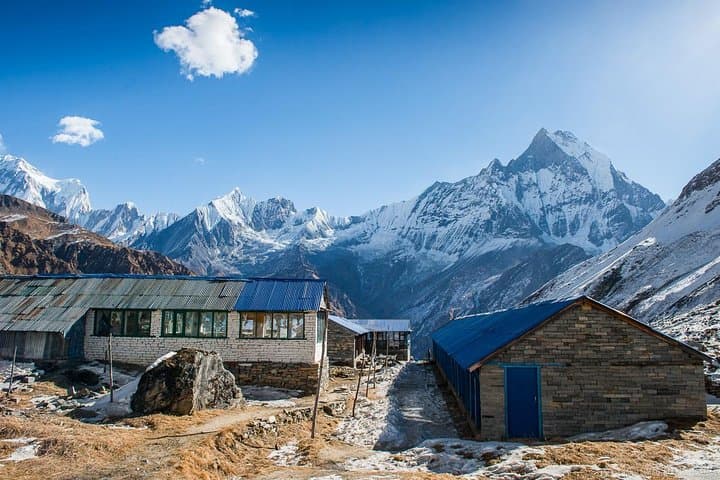
Dawn breaks across the Annapurna Sanctuary and the air tastes like cold stone and pine resin. You climb out of rice terraces, pass prayer flags fluttering along narrow ridgelines, and step into a bowl of jagged peaks: Annapurna I, Dhaulagiri and the knife-edge Machapuchare frame the sky.
Verified experiences and guided adventures in the surrounding area.
Operated by Himalayan Adventure Treks and Tours Pvt Ltd · Pokhara, Gandaki Province
Dawn breaks across the Annapurna Sanctuary and the air tastes like cold stone and pine resin. You climb out of rice terraces, pass prayer flags fluttering along narrow ridgelines, and step into a bowl of jagged peaks: Annapurna I, Dhaulagiri and the knife-edge Machapuchare frame the sky.
The route follows long-established mule tracks through the Annapurna Conservation Area, a landscape shaped by glaciers and deep river incision. Local Gurung and Magar villages line the lower slopes; tea houses and mani walls speak to a Himalayan culture that mixes Buddhist and Hindu practice. Geologically the sanctuary is a glacial amphitheater carved into the Lesser Himalaya, where metamorphic rock gives way to scree near the summit ridgelines.
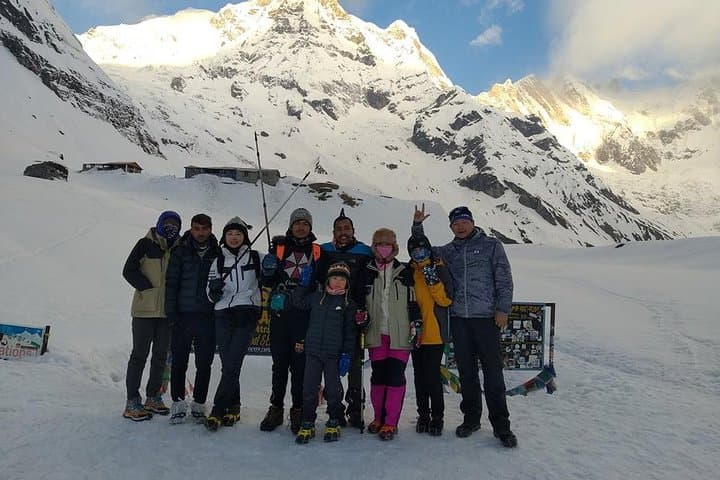
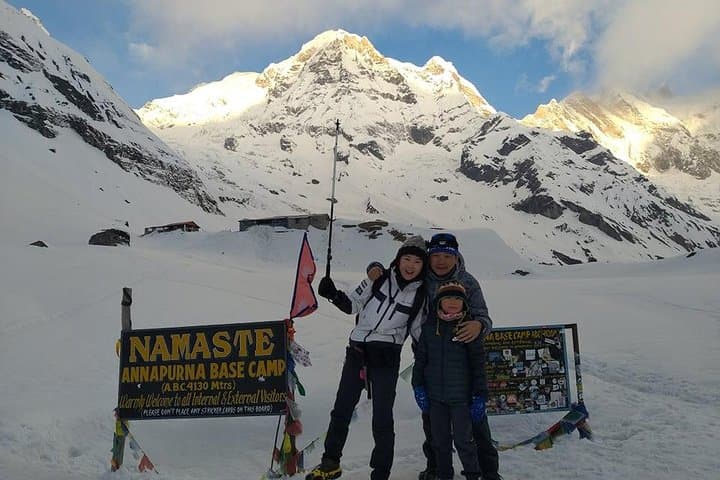
Practically, the 8-day itinerary compresses the classic ABC circuit: flight to Pokhara, drive to Nayapul, steady ascents to Chhomrong and Himalaya, then the final climb to Annapurna Base Camp at ~4,210 m. Expect 5–7 hour walking days over steep stone steps, muddy trails and occasional snow above 3,000 m. Accommodation is in tea houses—basic rooms with shared facilities, hot meals and instant coffee. Permits (ACAP and TIMS) are mandatory; guides and porters are common and recommended for efficiency and safety.
Prepare for altitude changes, cold nights, and strong daytime sun. Layered insulation, a sturdy pair of broken-in trekking boots, a reliable water treatment method and a headlamp are practical essentials. Time walks to avoid mid-day clouds and plan a soak at Jhinu Danda hot springs to ease tired legs—this rapid ABC route gives big mountain exposure in a short window, but respect acclimatization and weather windows.
challenging.
7–8 days.
Requires good cardiovascular fitness and leg strength; prior multi-day hiking experience helps.
Yes—both the Annapurna Conservation Area Permit (ACAP) and TIMS are required and are usually arranged by the operator or at permit offices in Pokhara.
Night temperatures at ABC (4,210 m) can drop below freezing even in spring; bring a warm sleeping bag rated to below -5°C for comfort.
No formal experience is required, but prior multi-day trekking and good fitness reduce risk; acclimatization discipline is essential.
Most tea houses offer charging for a small fee, but power is limited—bring a power bank for longer stretches without reliable electricity.
The Annapurna Conservation Area, Nepal’s largest, was established in 1986 to balance biodiversity protection with local livelihoods; Gurung and Magar communities have long used these valleys for trade and seasonal grazing.
Permits fund conservation and community projects; minimize waste by using refillable bottles, avoiding single-use plastics and following tea-house water-use norms.
Himalayan Adventure Treks and Tours Pvt Ltd operates guided outdoor trips and adventures with an emphasis on safety, stewardship, and memorable experiences.

Dawn breaks across the Annapurna Sanctuary and the air tastes like cold stone and pine resin. You climb out of rice terraces, pass prayer flags fluttering along narrow ridgelines, and step into a bowl of jagged peaks: Annapurna I, Dhaulagiri and the knife-edge Machapuchare frame the sky.
Dawn breaks across the Annapurna Sanctuary and the air tastes like cold stone and pine resin. You climb out of rice terraces, pass prayer flags fluttering along narrow ridgelines, and step into a bowl of jagged peaks: Annapurna I, Dhaulagiri and the knife-edge Machapuchare frame the sky.
The route follows long-established mule tracks through the Annapurna Conservation Area, a landscape shaped by glaciers and deep river incision. Local Gurung and Magar villages line the lower slopes; tea houses and mani walls speak to a Himalayan culture that mixes Buddhist and Hindu practice. Geologically the sanctuary is a glacial amphitheater carved into the Lesser Himalaya, where metamorphic rock gives way to scree near the summit ridgelines.
Practically, the 8-day itinerary compresses the classic ABC circuit: flight to Pokhara, drive to Nayapul, steady ascents to Chhomrong and Himalaya, then the final climb to Annapurna Base Camp at ~4,210 m. Expect 5–7 hour walking days over steep stone steps, muddy trails and occasional snow above 3,000 m. Accommodation is in tea houses—basic rooms with shared facilities, hot meals and instant coffee. Permits (ACAP and TIMS) are mandatory; guides and porters are common and recommended for efficiency and safety.
Prepare for altitude changes, cold nights, and strong daytime sun. Layered insulation, a sturdy pair of broken-in trekking boots, a reliable water treatment method and a headlamp are practical essentials. Time walks to avoid mid-day clouds and plan a soak at Jhinu Danda hot springs to ease tired legs—this rapid ABC route gives big mountain exposure in a short window, but respect acclimatization and weather windows.