THE ADVENTURE COLLECTIVE® · Independent discovery and booking for outdoor travel

Explore Shoreditch’s evolving street-art scene on a two-hour guided walk through Brick Lane and the Truman Brewery district. Learn about the artists, the neighborhood’s immigrant and industrial past, and practical ways to experience this lively urban gallery.
Explore Shoreditch’s evolving street-art scene on a two-hour guided walk through Brick Lane and the Truman Brewery district. Learn about the artists, the neighborhood’s immigrant and industrial past, and practical ways to experience this lively urban gallery.
You step off the Overground into Shoreditch and the city changes rhythm: spray cans and scaffold meet the clack of market vendors and espresso machines. Towering murals angle across brick facades; smaller, cheeky paste-ups peek from alleyways. A guide leads you through lanes where every corner could be a fresh commission or a disappearing piece — the art here is alive and impermanent.
Verified experiences and guided adventures in the surrounding area.
Operated by The Great Weekender Experiences · London, England
You step off the Overground into Shoreditch and the city changes rhythm: spray cans and scaffold meet the clack of market vendors and espresso machines. Towering murals angle across brick facades; smaller, cheeky paste-ups peek from alleyways. A guide leads you through lanes where every corner could be a fresh commission or a disappearing piece — the art here is alive and impermanent.
This part of London has always been a crossroads: eighteenth- and nineteenth-century industrial yards gave way to waves of immigration, and later to creative reuse of warehouses like the Truman Brewery. That history is visible in the streets — from Bangladeshi-owned curry houses on Brick Lane to reclaimed commercial buildings that now host studios and pop-ups. The scene itself evolved from activist stencil work into large-scale muralism, with famous names and local crews reshaping public space.
Expect two hours of mostly flat, urban walking over cobbles and pavement, with frequent stops to examine technique, discuss the artists, and unpack the social context of the pieces. Learn how paste-up culture, throw-ups, and commissioned murals differ and why pieces vanish overnight.
Practical side: arrive with a charged phone or camera, wear supportive shoes for standing and uneven paving, and bring a light rain layer — London weather turns fast. Public transport is the easiest way in; Shoreditch High Street, Hoxton, or Liverpool Street are all nearby. Respect the work: photograph, don’t touch, and consider buying from local artists or nearby vendors to support the scene’s longevity.
easy.
2 hours.
Suitable for most people who can walk and stand for two hours; some mobility required for cobbled surfaces.
Meeting points are typically near Shoreditch High Street or Brick Lane — confirm the exact address and signs on your booking confirmation and arrive 10 minutes early.
Yes, photography is generally allowed for personal use; avoid interfering with works in progress and be respectful when shooting private courtyards or businesses.
Many streets are accessible but cobbles and narrow alleys may be challenging; the provider lists wheelchair accessibility — contact them ahead to discuss needs and routes.
Tours run in light rain; bring a waterproof layer. In severe weather the tour provider’s cancellation policy allows full refunds if canceled 24 hours prior.
Shoreditch and Brick Lane moved from industrial yards to immigrant enclaves and, more recently, to a creative hub centered around converted breweries and warehouses like the Truman Brewery.
Street art is ephemeral; support the scene by buying from local artists, avoiding damage to works, and following local regulations on public art and private property.
The Great Weekender Experiences operates guided outdoor trips and adventures with an emphasis on safety, stewardship, and memorable experiences.
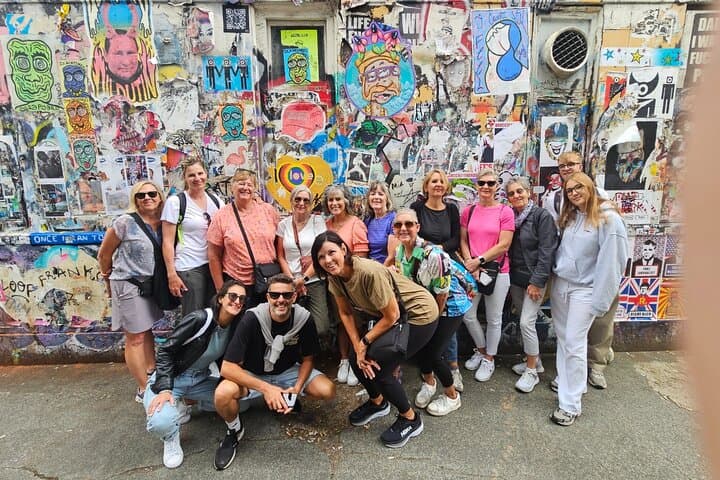
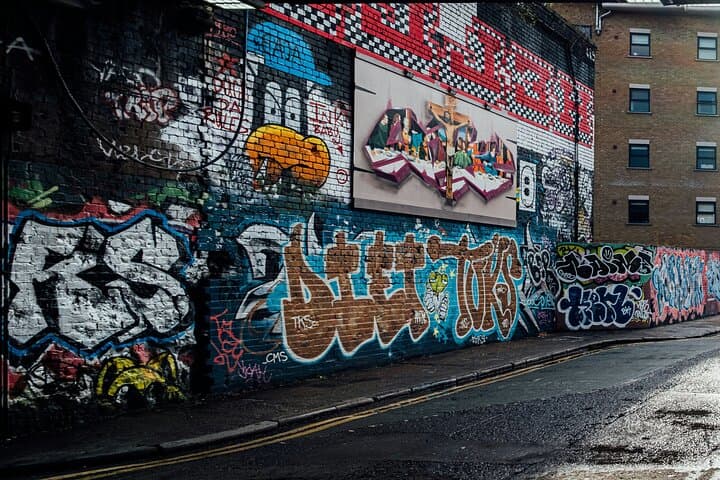
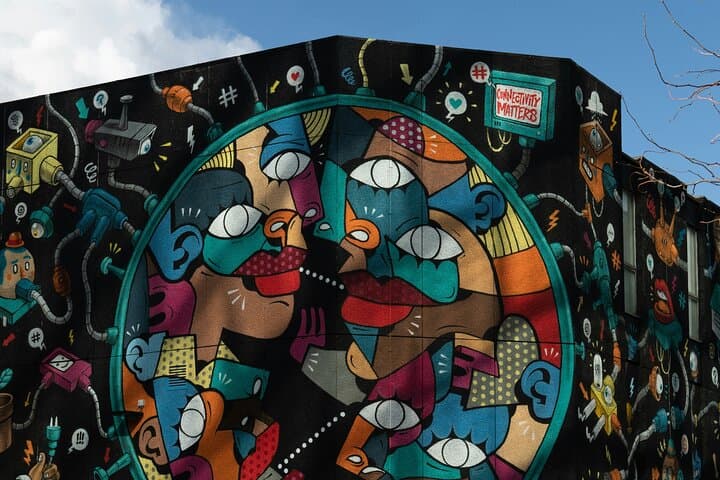
You step off the Overground into Shoreditch and the city changes rhythm: spray cans and scaffold meet the clack of market vendors and espresso machines. Towering murals angle across brick facades; smaller, cheeky paste-ups peek from alleyways. A guide leads you through lanes where every corner could be a fresh commission or a disappearing piece — the art here is alive and impermanent.
You step off the Overground into Shoreditch and the city changes rhythm: spray cans and scaffold meet the clack of market vendors and espresso machines. Towering murals angle across brick facades; smaller, cheeky paste-ups peek from alleyways. A guide leads you through lanes where every corner could be a fresh commission or a disappearing piece — the art here is alive and impermanent.
This part of London has always been a crossroads: eighteenth- and nineteenth-century industrial yards gave way to waves of immigration, and later to creative reuse of warehouses like the Truman Brewery. That history is visible in the streets — from Bangladeshi-owned curry houses on Brick Lane to reclaimed commercial buildings that now host studios and pop-ups. The scene itself evolved from activist stencil work into large-scale muralism, with famous names and local crews reshaping public space.
Expect two hours of mostly flat, urban walking over cobbles and pavement, with frequent stops to examine technique, discuss the artists, and unpack the social context of the pieces. Learn how paste-up culture, throw-ups, and commissioned murals differ and why pieces vanish overnight.
Practical side: arrive with a charged phone or camera, wear supportive shoes for standing and uneven paving, and bring a light rain layer — London weather turns fast. Public transport is the easiest way in; Shoreditch High Street, Hoxton, or Liverpool Street are all nearby. Respect the work: photograph, don’t touch, and consider buying from local artists or nearby vendors to support the scene’s longevity.