THE ADVENTURE COLLECTIVE® · Independent discovery and booking for outdoor travel

From Tien Sa port this full-day shore excursion pairs Son Tra’s Lady Buddha, the karst caves of the Marble Mountains, and the lantern-lit streets of Hoi An. Expect stairs, historic sites, a local lunch and tight shore-side timing.
From Tien Sa port this full-day shore excursion pairs Son Tra’s Lady Buddha, the karst caves of the Marble Mountains, and the lantern-lit streets of Hoi An. Expect stairs, historic sites, a local lunch and tight shore-side timing.
You step off the gangway at Tien Sa port and the humid sea air pushes you toward the limestone ridges that frame Da Nang. The shuttle hums south past My Khe Beach, and soon the Lady Buddha at Linh Ung rises on Son Tra’s shoulder—white stone focusing your gaze out to the South China Sea.
Verified experiences and guided adventures in the surrounding area.
Operated by Andy Tours Viet Nam · Da Nang, Da Nang
You step off the gangway at Tien Sa port and the humid sea air pushes you toward the limestone ridges that frame Da Nang. The shuttle hums south past My Khe Beach, and soon the Lady Buddha at Linh Ung rises on Son Tra’s shoulder—white stone focusing your gaze out to the South China Sea.
The route stitches together different pasts: Linh Ung Pagoda’s modern statue (the tallest in Vietnam) faces fishermen’s routes while Marble Mountains hold caves and shrines hewn from marble and limestone, each of the five hills named after an element. Hoi An’s old town is quieter—timbered merchant houses, the weathered Japanese Bridge, and assembly halls that tell of 16th–18th-century trade with China, Japan and Europe.
Geologically the Marble Mountains are karst outcrops—erosion-cut caves and steep stairways that funnel light and shadow into pagodas. Culturally the tour lets you move from coastal Buddhism to Cham and Chinese influences in Hoi An’s lanes.
Practical edge: expect about eight hours from port pickup to return. There’s stair climbing and uneven stone in caves—good shoes and moderate fitness matter. Bring passport copies for port pick-up, cash for small temple donations and marble crafts, and a sun hat for midday heat. Plan to be back at the ship at least an hour before departure; timing is strict. If you want more time in Hoi An, ask your guide about options but confirm return time—missed ships can’t be fixed.
moderate.
7–8 hours.
Moderate fitness; able to climb stairs and walk on uneven surfaces for several short sections
Yes — pickups occur inside Tien Sa port; you must provide precise ship arrival and disembarkation times when booking.
Yes — the tour includes a Vietnamese set-menu lunch at a local restaurant as noted in the inclusions.
Some parts (vehicle transit and flat areas) are stroller accessible, but Marble Mountains and many Hoi An lanes involve stairs, steps and cobbles so full wheelchair access is limited.
You’ll typically have about an hour of free time in the old town to explore shops and markets; plan purchases accordingly and watch the clock for return to port.
Hoi An was a major international trading port from the 16th to 18th centuries; Marble Mountains contain caves used historically as shrines and, during wartime, as shelters and field hospitals.
Son Tra and the Marble Mountains face tourist pressure—stay on marked paths, don’t remove stone or artifacts, and avoid feeding wildlife to protect fragile habitats.
Andy Tours Viet Nam operates guided outdoor trips and adventures with an emphasis on safety, stewardship, and memorable experiences.
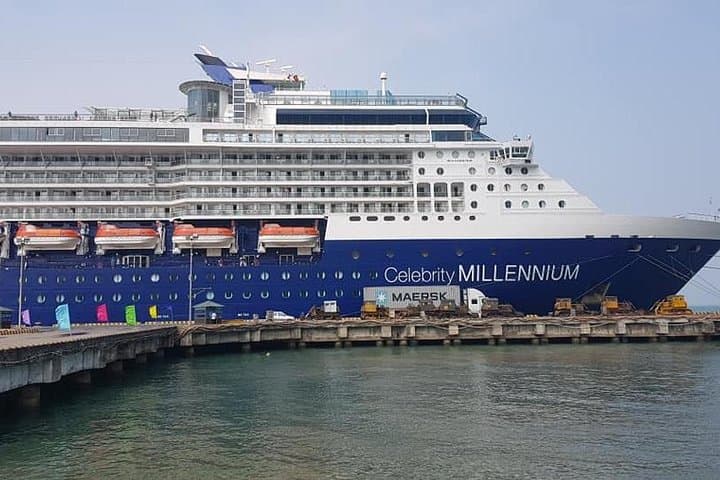


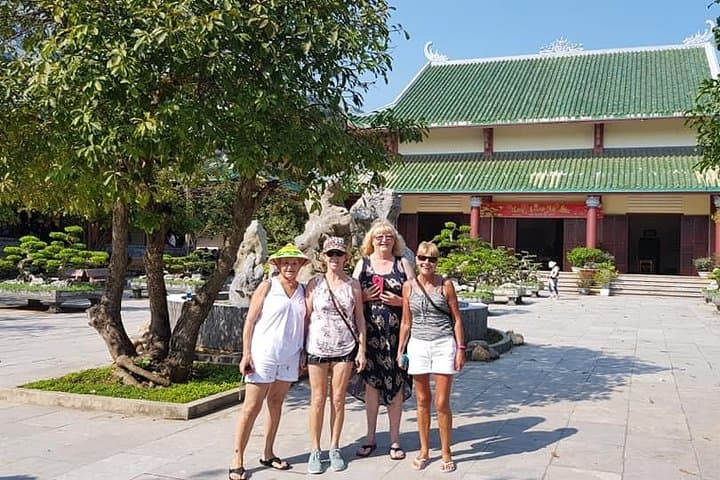
You step off the gangway at Tien Sa port and the humid sea air pushes you toward the limestone ridges that frame Da Nang. The shuttle hums south past My Khe Beach, and soon the Lady Buddha at Linh Ung rises on Son Tra’s shoulder—white stone focusing your gaze out to the South China Sea.
You step off the gangway at Tien Sa port and the humid sea air pushes you toward the limestone ridges that frame Da Nang. The shuttle hums south past My Khe Beach, and soon the Lady Buddha at Linh Ung rises on Son Tra’s shoulder—white stone focusing your gaze out to the South China Sea.
The route stitches together different pasts: Linh Ung Pagoda’s modern statue (the tallest in Vietnam) faces fishermen’s routes while Marble Mountains hold caves and shrines hewn from marble and limestone, each of the five hills named after an element. Hoi An’s old town is quieter—timbered merchant houses, the weathered Japanese Bridge, and assembly halls that tell of 16th–18th-century trade with China, Japan and Europe.
Geologically the Marble Mountains are karst outcrops—erosion-cut caves and steep stairways that funnel light and shadow into pagodas. Culturally the tour lets you move from coastal Buddhism to Cham and Chinese influences in Hoi An’s lanes.
Practical edge: expect about eight hours from port pickup to return. There’s stair climbing and uneven stone in caves—good shoes and moderate fitness matter. Bring passport copies for port pick-up, cash for small temple donations and marble crafts, and a sun hat for midday heat. Plan to be back at the ship at least an hour before departure; timing is strict. If you want more time in Hoi An, ask your guide about options but confirm return time—missed ships can’t be fixed.