THE ADVENTURE COLLECTIVE® · Independent discovery and booking for outdoor travel

A full-day shore excursion from Chan May Port that pairs the karst caves and pagodas of Marble Mountains with the lantern-lit streets and trading history of Hoi An. Expect stairs, city views and a taste of central Vietnamese culture.
A full-day shore excursion from Chan May Port that pairs the karst caves and pagodas of Marble Mountains with the lantern-lit streets and trading history of Hoi An. Expect stairs, city views and a taste of central Vietnamese culture.
You step off the tender into the humid air of central Vietnam and the day unfurls fast: limestone ribs of Marble Mountains rise ahead, and beyond them the Thu Bon River threads toward the old trading town of Hoi An.
Verified experiences and guided adventures in the surrounding area.
Operated by Danang Private Taxi · Hoi An, Quang Nam
You step off the tender into the humid air of central Vietnam and the day unfurls fast: limestone ribs of Marble Mountains rise ahead, and beyond them the Thu Bon River threads toward the old trading town of Hoi An.
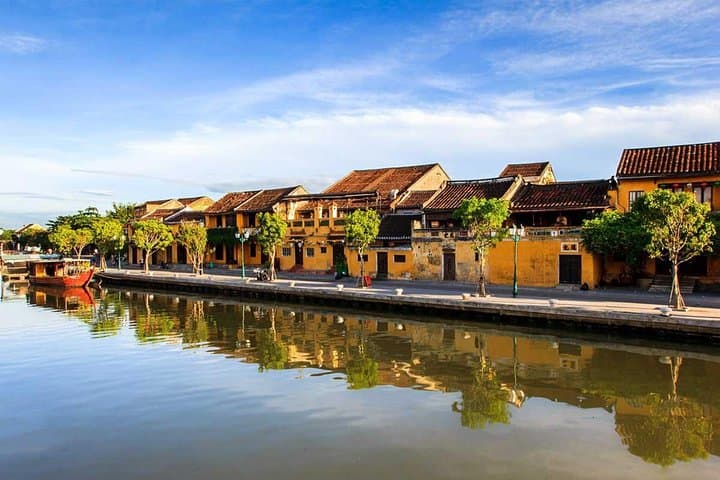
Marble Mountains are five marble and limestone outcrops historically tied to regional spiritual life — caves, carved pagodas and stone workshops cling to steep steps. Geologically they are karst towers, formed by uplift and erosion; their caverns hint at slow chemical work and past sea levels. Hoi An, a UNESCO World Heritage site, keeps the tight grain of its trading past: narrow wooden shop-houses, a Japanese Covered Bridge and riverfront markets that still hum with locally made textiles and ceramics.
The mountains offer brief climbs, shuttered grottoes and rooftop views where the ocean breeze pushes your jacket and the city spreads like a map. In Hoi An the river dares you to slow down: sampans bob, lanterns collect at dusk, and the architecture reads layers of Cham, Chinese, Japanese and European influence.
Practical edge: this is a full-day shore excursion (about 7–8 hours). Expect stairs, some uneven stone, and humid conditions—bring a photocopy of your passport for check-in, comfortable shoes for the Marble Mountains, and a refillable bottle for hot days. Lunch at a local restaurant introduces regional flavors—cơm gà or cao lầu—before you return to ship with time to spare. Aim for morning pickups to avoid midafternoon heat and allow relaxed exploration of both sites.
moderate.
7–8 hours.
Moderate fitness—able to handle multiple stair sections, short hikes up viewpoints and several hours on foot.
The tour runs about 7–8 hours; operator schedules pickups and returns with a buffer—confirm your ship’s departure time when booking and provide arrival/departure details.
Some areas have elevators and easier viewpoints, but many caves and pagodas require stair climbs; note wheelchair accessibility when booking to arrange appropriate stops.
Lunch at a local restaurant is included; inform the operator of dietary needs in advance so the guide can arrange suitable options.
Vietnamese dong is standard; small vendors prefer cash. ATMs are available in town, and many shops accept cards, but carry cash for markets and small purchases.
Hoi An prospered as a regional trading port from the 15th–18th centuries, attracting Japanese, Chinese and European merchants; Marble Mountains have been a pilgrimage and carving center for centuries.
Hoi An’s UNESCO status focuses on preserving historic fabric—avoid buying coral or endangered shells, stick to marked paths at Marble Mountains to limit erosion.
Danang Private Taxi operates guided outdoor trips and adventures with an emphasis on safety, stewardship, and memorable experiences.



You step off the tender into the humid air of central Vietnam and the day unfurls fast: limestone ribs of Marble Mountains rise ahead, and beyond them the Thu Bon River threads toward the old trading town of Hoi An.
You step off the tender into the humid air of central Vietnam and the day unfurls fast: limestone ribs of Marble Mountains rise ahead, and beyond them the Thu Bon River threads toward the old trading town of Hoi An.
Marble Mountains are five marble and limestone outcrops historically tied to regional spiritual life — caves, carved pagodas and stone workshops cling to steep steps. Geologically they are karst towers, formed by uplift and erosion; their caverns hint at slow chemical work and past sea levels. Hoi An, a UNESCO World Heritage site, keeps the tight grain of its trading past: narrow wooden shop-houses, a Japanese Covered Bridge and riverfront markets that still hum with locally made textiles and ceramics.
The mountains offer brief climbs, shuttered grottoes and rooftop views where the ocean breeze pushes your jacket and the city spreads like a map. In Hoi An the river dares you to slow down: sampans bob, lanterns collect at dusk, and the architecture reads layers of Cham, Chinese, Japanese and European influence.
Practical edge: this is a full-day shore excursion (about 7–8 hours). Expect stairs, some uneven stone, and humid conditions—bring a photocopy of your passport for check-in, comfortable shoes for the Marble Mountains, and a refillable bottle for hot days. Lunch at a local restaurant introduces regional flavors—cơm gà or cao lầu—before you return to ship with time to spare. Aim for morning pickups to avoid midafternoon heat and allow relaxed exploration of both sites.