THE ADVENTURE COLLECTIVE® · Independent discovery and booking for outdoor travel

Watch southern right whales from coastal vantage points around Florianópolis, Imbituba, Garopaba and Laguna. This shore-based tour pairs trained guides and local history for low-impact, family-friendly whale watching.
Watch southern right whales from coastal vantage points around Florianópolis, Imbituba, Garopaba and Laguna. This shore-based tour pairs trained guides and local history for low-impact, family-friendly whale watching.
You stand on a windswept headland, salt on your lips and binoculars steady, scanning a horizon where the ocean keeps secrets. Waves edge toward shore and the sea seems to breathe — occasional spouts puncture the surface, announcing the slow, steady passage of southern right whales and their calves as they move along the coast.
Verified experiences and guided adventures in the surrounding area.
Operated by Ao Sul Natural · Florianópolis, Santa Catarina
You stand on a windswept headland, salt on your lips and binoculars steady, scanning a horizon where the ocean keeps secrets. Waves edge toward shore and the sea seems to breathe — occasional spouts puncture the surface, announcing the slow, steady passage of southern right whales and their calves as they move along the coast.
This land-based whale-watching experience operates from Florianópolis and nearby coastal towns, following recent seasonal sightings in Imbituba, Garopaba and Laguna. The coastline here is geologically young, carved from Precambrian bedrock and newer Quaternary sands; steep dunes and rocky promontories give spectators raised vantage points. Culturally, the beaches carry layers of history: Sambaqui shell mounds mark millennia of indigenous occupation, and relics of 19th-century whaling—old oil stations and dugout canoes (canoa baleeira and canoa de um pau só)—tell a quieter story of human use and adaptation.
Guides combine natural history and local anthropology, explaining migration timing, calf behavior and why coastal bays act like whale magnets. On shore you’ll learn to read blows, fluke patterns and telltale mud-rake marks — the ocean will feel almost conversational as whales skirt the shallows.
Practical guidance: tours run 3–4 hours, often door-to-door in an air-conditioned vehicle; bring a good pair of binoculars, layered windproof clothing and sun protection. Morning light and low wind give the best viewing; respect posted protected zones and the guides’ instructions to minimize disturbance. Whether you’re an experienced naturalist or a first-time watcher, land-based observation provides a low-impact, accessible way to meet these coastal giants.
easy.
3–4 hours.
Suitable for most fitness levels; requires short walks on uneven sandy or rocky ground and standing for periods
Sightings cannot be guaranteed; guides track recent reports and position tours where whales have been seen, which maximizes chances during the seasonal window.
Yes; the tour is listed as physically easy and family-friendly, though infants may be required to sit on an adult's lap during transport.
Land-based viewing keeps a respectful distance—often several hundred meters—so binoculars or a telephoto lens improve viewing and photos.
Tours typically include air-conditioned vehicle pickup; accessibility can vary by specific lookout, so check with the operator for mobility needs and pickup locations.
The region bears traces of Sambaqui shell mounds and a 19th-century coastal whaling industry; many traditional dugout canoes survive as cultural artifacts.
Southern right whales are protected in Brazilian waters; shore-based watching reduces disturbance—follow guide instructions and keep distance to support conservation.
Ao Sul Natural operates guided outdoor trips and adventures with an emphasis on safety, stewardship, and memorable experiences.
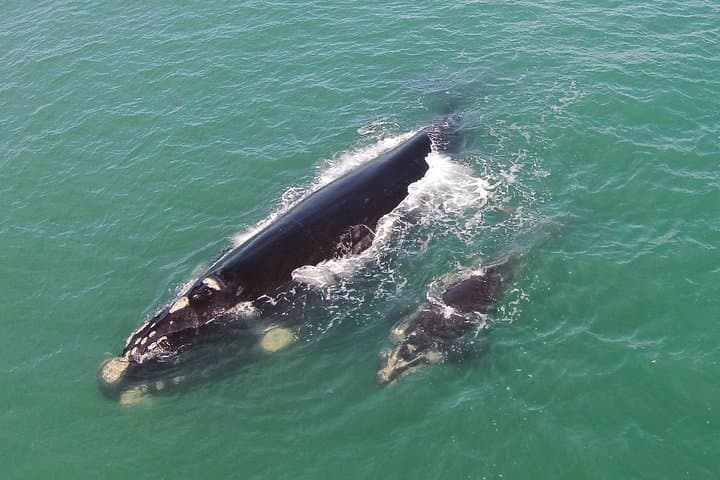
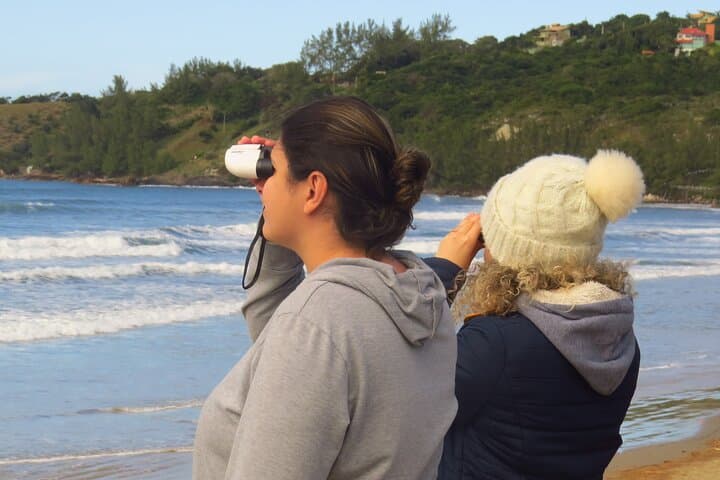
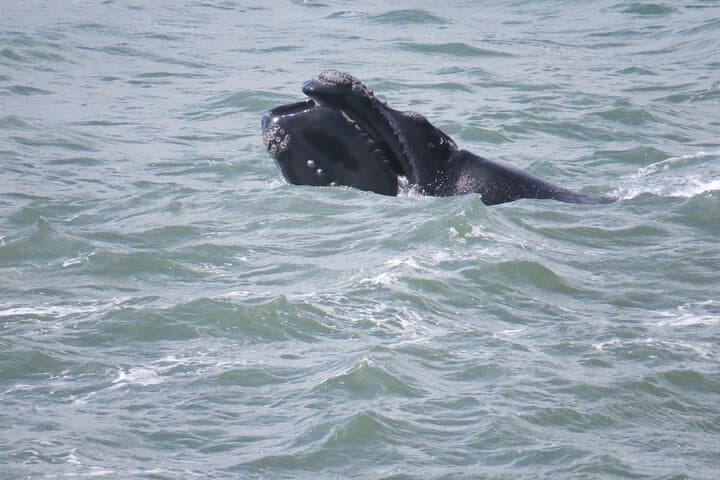
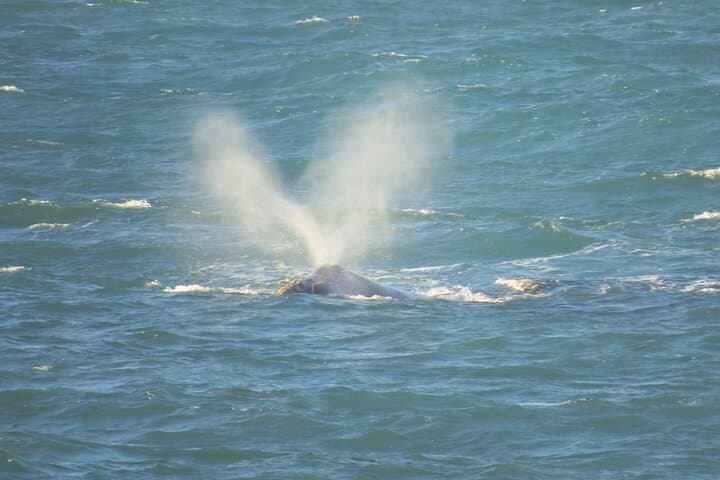
You stand on a windswept headland, salt on your lips and binoculars steady, scanning a horizon where the ocean keeps secrets. Waves edge toward shore and the sea seems to breathe — occasional spouts puncture the surface, announcing the slow, steady passage of southern right whales and their calves as they move along the coast.
You stand on a windswept headland, salt on your lips and binoculars steady, scanning a horizon where the ocean keeps secrets. Waves edge toward shore and the sea seems to breathe — occasional spouts puncture the surface, announcing the slow, steady passage of southern right whales and their calves as they move along the coast.
This land-based whale-watching experience operates from Florianópolis and nearby coastal towns, following recent seasonal sightings in Imbituba, Garopaba and Laguna. The coastline here is geologically young, carved from Precambrian bedrock and newer Quaternary sands; steep dunes and rocky promontories give spectators raised vantage points. Culturally, the beaches carry layers of history: Sambaqui shell mounds mark millennia of indigenous occupation, and relics of 19th-century whaling—old oil stations and dugout canoes (canoa baleeira and canoa de um pau só)—tell a quieter story of human use and adaptation.
Guides combine natural history and local anthropology, explaining migration timing, calf behavior and why coastal bays act like whale magnets. On shore you’ll learn to read blows, fluke patterns and telltale mud-rake marks — the ocean will feel almost conversational as whales skirt the shallows.
Practical guidance: tours run 3–4 hours, often door-to-door in an air-conditioned vehicle; bring a good pair of binoculars, layered windproof clothing and sun protection. Morning light and low wind give the best viewing; respect posted protected zones and the guides’ instructions to minimize disturbance. Whether you’re an experienced naturalist or a first-time watcher, land-based observation provides a low-impact, accessible way to meet these coastal giants.