THE ADVENTURE COLLECTIVE® · Independent discovery and booking for outdoor travel

Spend 3–4 hours exploring Athens’ distinct shopping neighborhoods with a local guide. From Ermou’s busy thoroughfare to Kolonaki’s designer streets and Exarchia’s bohemian stalls, this private walking tour focuses on authentic finds and practical shopping know‑how.
Spend 3–4 hours exploring Athens’ distinct shopping neighborhoods with a local guide. From Ermou’s busy thoroughfare to Kolonaki’s designer streets and Exarchia’s bohemian stalls, this private walking tour focuses on authentic finds and practical shopping know‑how.
You step off the tram into a pulse of stone and sunlight—Ermou Street stretches ahead, its pedestrian spine pushing the city forward. The air carries coffee steam and the faint metallic scent of markets; your guide threads you through a sequence of neighborhoods that each speak a different Athenian dialect.
Verified experiences and guided adventures in the surrounding area.
Operated by Athens Local · Athens, Attica
You step off the tram into a pulse of stone and sunlight—Ermou Street stretches ahead, its pedestrian spine pushing the city forward. The air carries coffee steam and the faint metallic scent of markets; your guide threads you through a sequence of neighborhoods that each speak a different Athenian dialect.
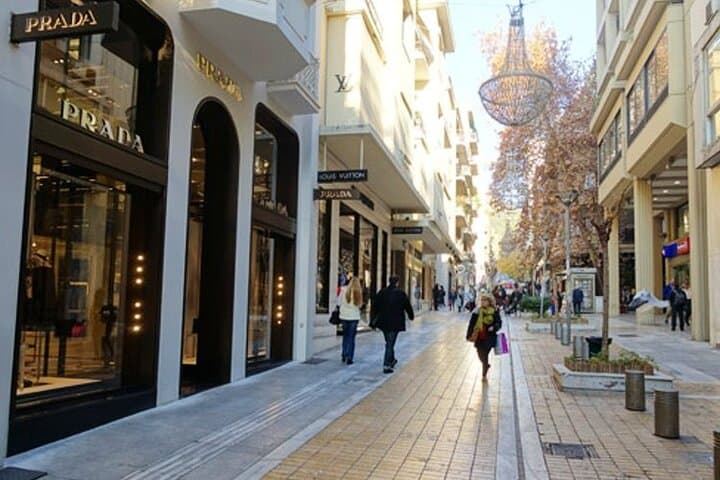
Ermou, once a Roman-era route toward the Agora, now stages high-street brands and quick finds. Turn with your guide into Psiri and the rhythm changes: courtyard workshops, basement ateliers, and hand-painted signs. Kolonaki climbs into tree-lined avenues where designer windows trade whispers, and Exarchia pushes back with anarchic energy, second-hand racks and vinyl shops that keep the city’s counterculture alive.
Geology and history intersect here: marble steps and Byzantine traces remind you Athens is built on layers—classical ruins sit cheek-by-jowl with modern commerce. The tour reveals cultural currents: family-run craftspeople, contemporary Greek designers, and street artists whose murals mark social memory.
Practical guidance is concise: expect 3–4 hours of mostly flat walking on paved streets, with short stair sections in Kolonaki and Psiri. Wear grippy shoes for uneven pavements and bring a small daypack for purchases. Plan to start mid-morning to avoid the hottest hours and to catch bakery windows full of loukoumades and spanakopita. Cash is handy for tiny shops; card works at boutiques. Your guide can point you toward authentic souvenirs and steer you away from tourist clichés—follow their lead and you’ll leave with objects and stories that feel earned.
easy.
3–4 hours.
Light walking fitness; able to stand and stroll for several hours with brief rests
Yes; the walking pace is gentle and the route avoids strenuous sections—notify the operator of mobility needs when booking so the guide can adapt stops.
Yes; guides typically include a short break at a café or bakery—bring cash for small snacks or let the guide recommend sit‑down options.
Absolutely; local guides specialize in authentic shops and can introduce you to artisans and advise on fair bargaining etiquette.
The standard offering is in English, but operators may provide guides in other languages on request—check availability at booking.
Ermou follows a path used since antiquity toward the Agora; Kolonaki rose in the 19th century as an elite quarter while Exarchia became known for political activism and alternative culture.
Support small local makers and avoid single-use plastics; small purchases from artisans help sustain traditional crafts and reduce reliance on mass-produced souvenirs.
Athens Local operates guided outdoor trips and adventures with an emphasis on safety, stewardship, and memorable experiences.

You step off the tram into a pulse of stone and sunlight—Ermou Street stretches ahead, its pedestrian spine pushing the city forward. The air carries coffee steam and the faint metallic scent of markets; your guide threads you through a sequence of neighborhoods that each speak a different Athenian dialect.
You step off the tram into a pulse of stone and sunlight—Ermou Street stretches ahead, its pedestrian spine pushing the city forward. The air carries coffee steam and the faint metallic scent of markets; your guide threads you through a sequence of neighborhoods that each speak a different Athenian dialect.
Ermou, once a Roman-era route toward the Agora, now stages high-street brands and quick finds. Turn with your guide into Psiri and the rhythm changes: courtyard workshops, basement ateliers, and hand-painted signs. Kolonaki climbs into tree-lined avenues where designer windows trade whispers, and Exarchia pushes back with anarchic energy, second-hand racks and vinyl shops that keep the city’s counterculture alive.
Geology and history intersect here: marble steps and Byzantine traces remind you Athens is built on layers—classical ruins sit cheek-by-jowl with modern commerce. The tour reveals cultural currents: family-run craftspeople, contemporary Greek designers, and street artists whose murals mark social memory.
Practical guidance is concise: expect 3–4 hours of mostly flat walking on paved streets, with short stair sections in Kolonaki and Psiri. Wear grippy shoes for uneven pavements and bring a small daypack for purchases. Plan to start mid-morning to avoid the hottest hours and to catch bakery windows full of loukoumades and spanakopita. Cash is handy for tiny shops; card works at boutiques. Your guide can point you toward authentic souvenirs and steer you away from tourist clichés—follow their lead and you’ll leave with objects and stories that feel earned.