THE ADVENTURE COLLECTIVE® · Independent discovery and booking for outdoor travel

Walk 5 km into Shirkent gorge to see over 400 fossilized dinosaur footprints, including unique five‑toed prints attributed to Macropodasaurusgravis. This one‑day private tour from Dushanbe pairs geology, light hiking and rural culture.
Walk 5 km into Shirkent gorge to see over 400 fossilized dinosaur footprints, including unique five‑toed prints attributed to Macropodasaurusgravis. This one‑day private tour from Dushanbe pairs geology, light hiking and rural culture.
A cool wind threads the Shirkent gorge as you step off the road and into a landscape that still remembers giant feet. Limestone slabs rise from a braided stream, their surfaces scored with fossilized impressions—five-toed prints larger than a human palm—waiting to be read like pages of deep time.
Verified experiences and guided adventures in the surrounding area.
Operated by Bunyod-Tour · Shirkent, Hissar District
A cool wind threads the Shirkent gorge as you step off the road and into a landscape that still remembers giant feet. Limestone slabs rise from a braided stream, their surfaces scored with fossilized impressions—five-toed prints larger than a human palm—waiting to be read like pages of deep time.
Shirkent Park preserves over 400 footprints across three stratigraphic sites attributed to an unusual five-toed trackmaker described locally as Macropodasaurusgravis. The area is listed as a monument of inanimate nature for its geological, hydrological and glaciological features, with sedimentary layers that record an ancient shoreline and river systems. Local villages have long used the valley for apiaries and cherry-plum orchards; shepherds and beekeepers still tend ridgeline pastures and trail routes.
On the one-day tour from Dushanbe you’ll cover roughly a 5 km ascent from the valley entrance along riverbeds, ridges and narrow spurs. Expect uneven rock, loose scree, and short steep pitches where boots and poles earn their keep. The footprints sit on exposed bedrock—low scrambling and careful footing required to view them without damaging the slab.
Practical notes: carry 2–3 liters of water, sun protection, sturdy hiking boots and layered clothing for mountain winds. Morning departures avoid afternoon heat and give clearer light on the prints. The trip includes private transport and lunch; admission to the site is included. Visitors with cardiovascular, spinal, or pregnancy restrictions should opt out; a moderate level of fitness is recommended. For anyone who loves walking through the planet’s own archive, Shirkent is a direct line to a wildlife that no longer walks these valleys.
moderate.
6–8 hours.
Moderate; able to hike 5 km on uneven terrain with ~200–400 m cumulative elevation change.
The walk from the valley entrance to the principal Shirkent-2 site is about 5 km round-trip on uneven terrain and takes roughly 2–3 hours depending on pace.
This tour includes admission and a guide; independent visitors should check local access rules and avoid walking on the slabs to prevent damage.
Children who can manage a 5 km hike on uneven ground are fine; travelers with spinal, cardiovascular issues or pregnancy are not recommended for this activity.
Expect mountain birds, beekeeping activity near apiaries, and native shrubs like cherry-plum along riparian stretches.
The footprints are preserved in Mesozoic-age sedimentary rock; local workers have known the sites for generations and the area is protected as a natural monument.
Visitors are asked not to step on fossil surfaces, to stick to established paths and to pack out waste to protect the fragile slab exposures and local hydrology.
Bunyod-Tour operates guided outdoor trips and adventures with an emphasis on safety, stewardship, and memorable experiences.
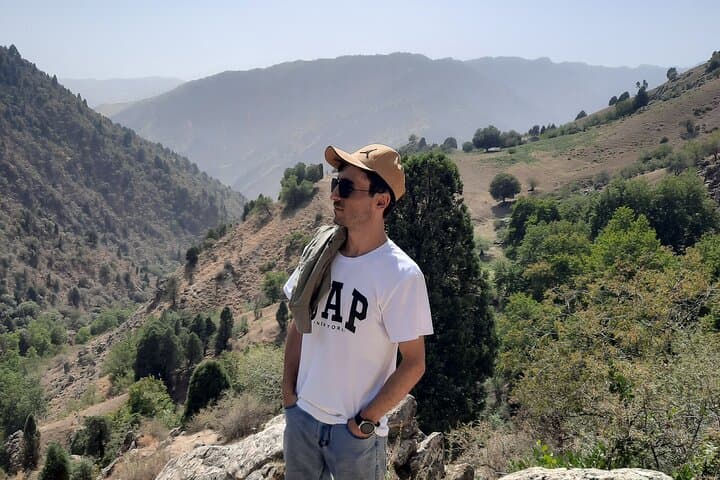
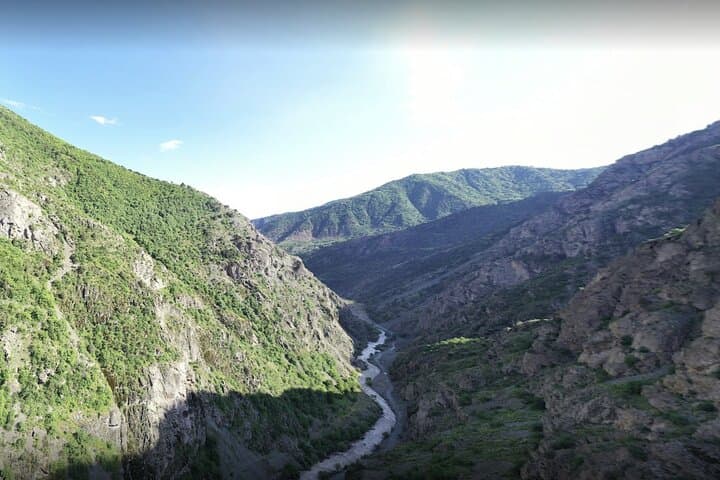
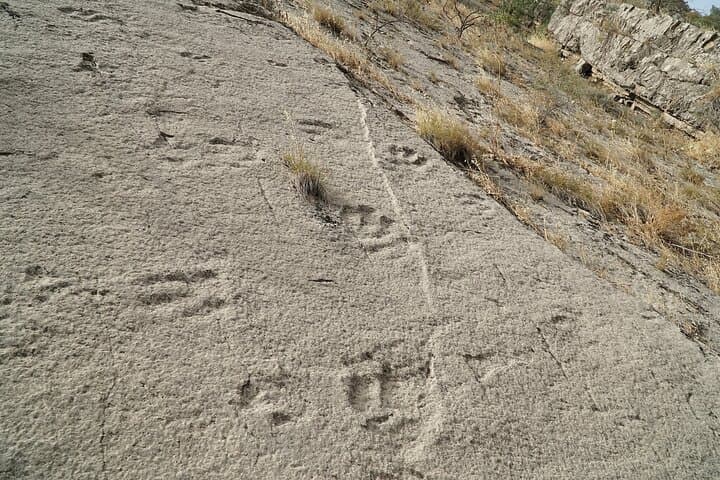
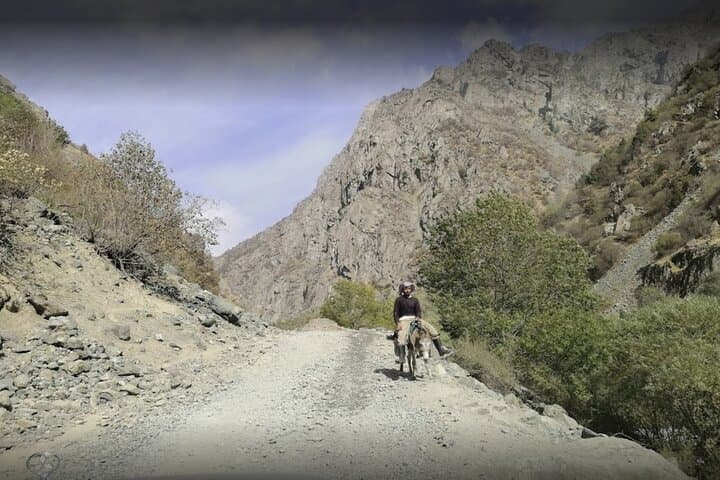
A cool wind threads the Shirkent gorge as you step off the road and into a landscape that still remembers giant feet. Limestone slabs rise from a braided stream, their surfaces scored with fossilized impressions—five-toed prints larger than a human palm—waiting to be read like pages of deep time.
A cool wind threads the Shirkent gorge as you step off the road and into a landscape that still remembers giant feet. Limestone slabs rise from a braided stream, their surfaces scored with fossilized impressions—five-toed prints larger than a human palm—waiting to be read like pages of deep time.
Shirkent Park preserves over 400 footprints across three stratigraphic sites attributed to an unusual five-toed trackmaker described locally as Macropodasaurusgravis. The area is listed as a monument of inanimate nature for its geological, hydrological and glaciological features, with sedimentary layers that record an ancient shoreline and river systems. Local villages have long used the valley for apiaries and cherry-plum orchards; shepherds and beekeepers still tend ridgeline pastures and trail routes.
On the one-day tour from Dushanbe you’ll cover roughly a 5 km ascent from the valley entrance along riverbeds, ridges and narrow spurs. Expect uneven rock, loose scree, and short steep pitches where boots and poles earn their keep. The footprints sit on exposed bedrock—low scrambling and careful footing required to view them without damaging the slab.
Practical notes: carry 2–3 liters of water, sun protection, sturdy hiking boots and layered clothing for mountain winds. Morning departures avoid afternoon heat and give clearer light on the prints. The trip includes private transport and lunch; admission to the site is included. Visitors with cardiovascular, spinal, or pregnancy restrictions should opt out; a moderate level of fitness is recommended. For anyone who loves walking through the planet’s own archive, Shirkent is a direct line to a wildlife that no longer walks these valleys.