THE ADVENTURE COLLECTIVE® · Independent discovery and booking for outdoor travel

Walk through the moss-draped cedar forests of Shiratani Unsuikyo and finish at Taiko Rock for sweeping mountain views. This one-day hike blends Studio Ghibli–inspired scenery with rugged island geology and practical backcountry conditions.
Walk through the moss-draped cedar forests of Shiratani Unsuikyo and finish at Taiko Rock for sweeping mountain views. This one-day hike blends Studio Ghibli–inspired scenery with rugged island geology and practical backcountry conditions.
A damp hush falls over the trail as sunlight slices through cedar trunks and the forest seems to breathe around you — moss clings to every root and boulder, and the air smells of wet stone and cedar resin. The Shiratani Unsuikyo ravine opens like an ancient room: green, slow, and oddly alive. The hike culminates at Taiko Rock, where the island folds into a panorama of ridgelines and cloud.
Verified experiences and guided adventures in the surrounding area.
Operated by 株式会社フィールド&マウンテン · Miyanoura, Kagoshima Prefecture
A damp hush falls over the trail as sunlight slices through cedar trunks and the forest seems to breathe around you — moss clings to every root and boulder, and the air smells of wet stone and cedar resin. The Shiratani Unsuikyo ravine opens like an ancient room: green, slow, and oddly alive. The hike culminates at Taiko Rock, where the island folds into a panorama of ridgelines and cloud.
Yakushima’s forests sit on granite bedrock worn by millennia of heavy rain and temperate climate. This landscape produced the island’s famous ancient cedars, including Jomon Sugi, and inspired Hayao Miyazaki’s visuals in Princess Mononoke. Culturally the island blends Shinto reverence for trees with a pragmatic islander relationship to timber and fisheries.
Expect a single-day outing of roughly 10 km round-trip and 400–500 m of ascent on uneven, root-strewn paths with intermittent boardwalks. Trails are often wet and slippery; streams sidle across routes and willows dip into the trail like curious hands. Wildlife encounters are quiet — macaques and sika deer move through understory shadows.
Practically, start early to avoid afternoon clouds, carry waterproof layers and reliable footwear, and plan for 5–7 hours including stops. The area is protected — stay on marked paths to preserve moss mats and fragile soil. Tours commonly include private transport from Miyanoura or Anbō, reducing navigation stress. Hydrate regularly, pack snacks, and allow extra time at Taiko Rock for weather shifts and photography. The hike rewards patience with a living, breathing forest that both challenges and steadies the walker.
moderate.
5–7 hours.
Appropriate for hikers with regular aerobic activity and experience on uneven terrain; some uphill stamina required.
The usual route is about 10 km round-trip and takes 5–7 hours depending on pace and weather.
The trail is uneven and wet in places; children and older adults with moderate fitness can do it if given time, rest breaks, and proper footwear.
No permit is required for day hikes in Shiratani Unsuikyo, though guided tours can simplify logistics and transport from Miyanoura or Anbō.
Facilities are minimal — bring water, use toilets at trailheads where available, and assume no services in the forest itself.
Yakushima’s primeval forests are part of a UNESCO World Heritage site; the cedars were historically valued for timber but are now culturally protected and revered.
Heavy rainfall and foot traffic stress the moss and thin soils — stay on boardwalks, pack out waste, and avoid touching moss mats to preserve this sensitive ecosystem.
株式会社フィールド&マウンテン operates guided outdoor trips and adventures with an emphasis on safety, stewardship, and memorable experiences.
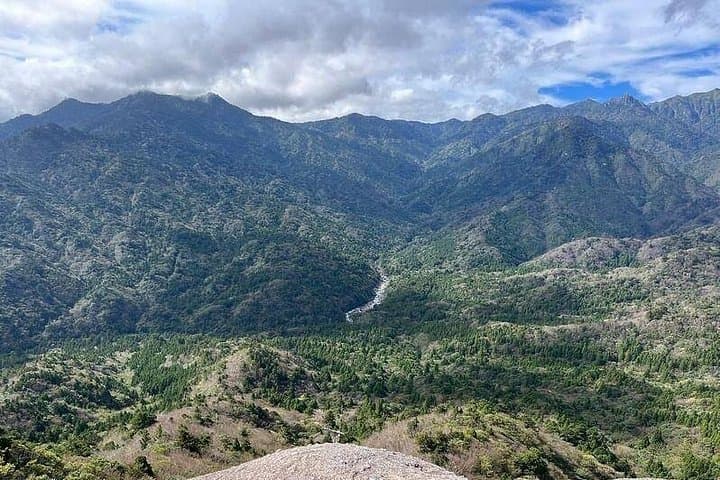
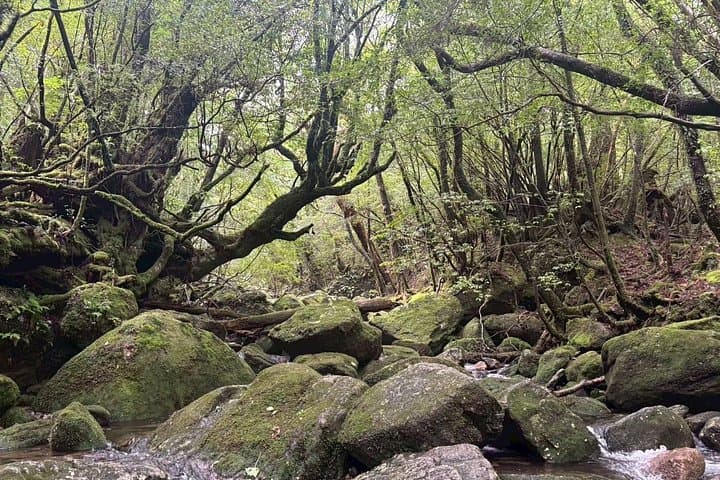
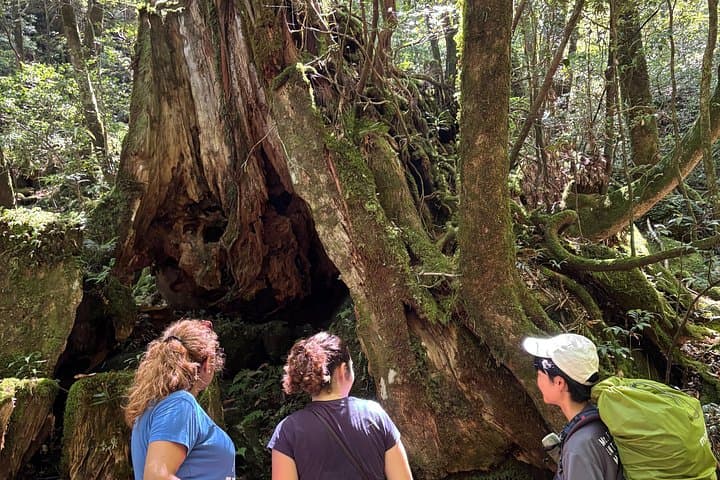
A damp hush falls over the trail as sunlight slices through cedar trunks and the forest seems to breathe around you — moss clings to every root and boulder, and the air smells of wet stone and cedar resin. The Shiratani Unsuikyo ravine opens like an ancient room: green, slow, and oddly alive. The hike culminates at Taiko Rock, where the island folds into a panorama of ridgelines and cloud.
A damp hush falls over the trail as sunlight slices through cedar trunks and the forest seems to breathe around you — moss clings to every root and boulder, and the air smells of wet stone and cedar resin. The Shiratani Unsuikyo ravine opens like an ancient room: green, slow, and oddly alive. The hike culminates at Taiko Rock, where the island folds into a panorama of ridgelines and cloud.
Yakushima’s forests sit on granite bedrock worn by millennia of heavy rain and temperate climate. This landscape produced the island’s famous ancient cedars, including Jomon Sugi, and inspired Hayao Miyazaki’s visuals in Princess Mononoke. Culturally the island blends Shinto reverence for trees with a pragmatic islander relationship to timber and fisheries.
Expect a single-day outing of roughly 10 km round-trip and 400–500 m of ascent on uneven, root-strewn paths with intermittent boardwalks. Trails are often wet and slippery; streams sidle across routes and willows dip into the trail like curious hands. Wildlife encounters are quiet — macaques and sika deer move through understory shadows.
Practically, start early to avoid afternoon clouds, carry waterproof layers and reliable footwear, and plan for 5–7 hours including stops. The area is protected — stay on marked paths to preserve moss mats and fragile soil. Tours commonly include private transport from Miyanoura or Anbō, reducing navigation stress. Hydrate regularly, pack snacks, and allow extra time at Taiko Rock for weather shifts and photography. The hike rewards patience with a living, breathing forest that both challenges and steadies the walker.