THE ADVENTURE COLLECTIVE® · Independent discovery and booking for outdoor travel

Spend a full day exploring Shimba Hills National Reserve: an early game drive, a walking safari to Sheldrick Falls with a possible swim, and coastal-forest views. This private 10‑hour tour blends wildlife spotting with a hands-on waterfall experience.
Spend a full day exploring Shimba Hills National Reserve: an early game drive, a walking safari to Sheldrick Falls with a possible swim, and coastal-forest views. This private 10‑hour tour blends wildlife spotting with a hands-on waterfall experience.
The day opens with sunrise light leaking through coastal forest, and a private jeep crunching along red earth toward a green rim where the land drops away. Early morning game drive brings you into pockets of shy life — herds moving in dappled shade, a lone antelope pausing as the jeep rolls by — before the group disembarks for a walking approach to Sheldrick (Sheldrick) Falls. The waterfall, framed by steep sandstone walls, dares you close with spray and a cool plunge pool suited for a careful swim.
Verified experiences and guided adventures in the surrounding area.
Operated by KT & Safaris · Kwale, Kwale County
The day opens with sunrise light leaking through coastal forest, and a private jeep crunching along red earth toward a green rim where the land drops away. Early morning game drive brings you into pockets of shy life — herds moving in dappled shade, a lone antelope pausing as the jeep rolls by — before the group disembarks for a walking approach to Sheldrick (Sheldrick) Falls. The waterfall, framed by steep sandstone walls, dares you close with spray and a cool plunge pool suited for a careful swim.
Shimba Hills National Reserve protects one of Kenya’s last expanses of coastal rainforest and river-cut gorges; the area became a formal reserve in the late 20th century to conserve rare sable antelope and resident elephant corridors. Geologically the reserve is a series of hardened plateaus and eroded valleys, which give both sweeping overlooks and tight, green ravines. Local coastal communities mix Swahili culture and Mijikenda heritage—guides often point out indigenous tree species used in traditional crafts.
Practical guidance: departures commonly start around 7:00 a.m. for cooler wildlife activity; expect a roughly 10‑hour outing with a mix of vehicle time and a moderate walk to the falls. Wear closed, grippy shoes for uneven trails, bring at least 1–2 liters of water, sun protection, and insect repellent. Respect posted signs at the pools—swimming is possible but currents and slippery rocks make caution essential. Private transportation and lunch are usually included; confirm pick-up details and any mobility needs when booking.
easy.
10 hours.
Suitable for most fitness levels; involves vehicle travel plus a moderate, uneven walk of up to 1–2 km to the falls.
The walking safari to the falls is typically a moderate 1–2 km round trip on uneven forest trails and can take 30–60 minutes each way depending on pace and stops.
Swimming is commonly allowed in designated pools but conditions vary—check with your guide and avoid entering strong currents or slippery areas.
Sightings are possible but not guaranteed; Shimba Hills hosts elephants and the rare sable antelope, and early morning game drives improve chances.
The operator notes wheelchair-accessible transport and surfaces for parts of the site, but the walking trail to the falls is uneven and may not be suitable for mobility devices—confirm accessibility needs prior to booking.
Shimba Hills was designated to protect coastal rainforest and its rare mammals; its protection expanded community and conservation efforts in the late 20th century.
The reserve is important for elephant corridors and sable antelope habitat—stay on trails, pack out waste, and follow guide instructions to minimize impact.
KT & Safaris operates guided outdoor trips and adventures with an emphasis on safety, stewardship, and memorable experiences.
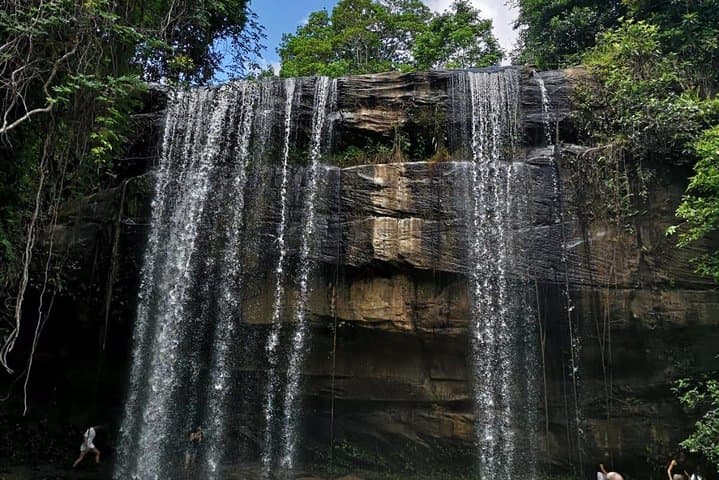
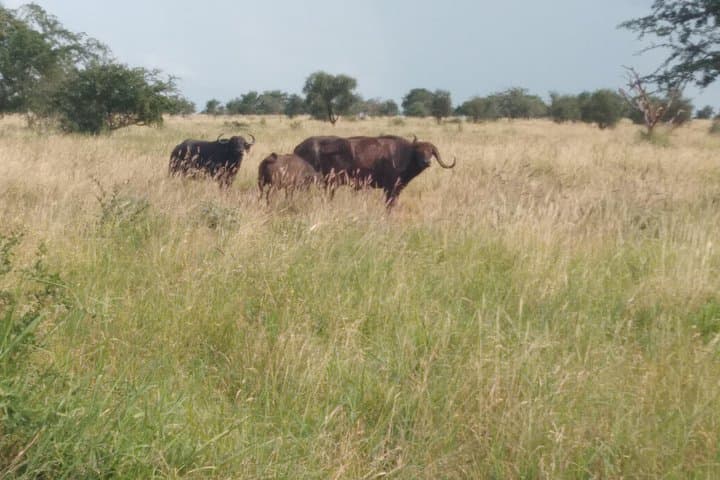
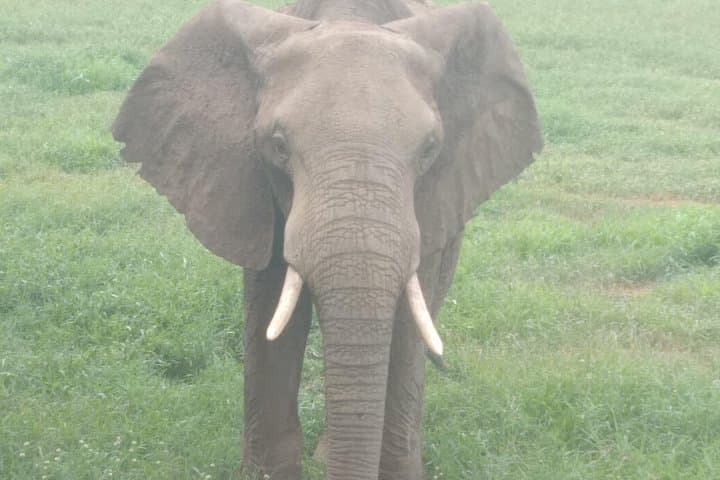
The day opens with sunrise light leaking through coastal forest, and a private jeep crunching along red earth toward a green rim where the land drops away. Early morning game drive brings you into pockets of shy life — herds moving in dappled shade, a lone antelope pausing as the jeep rolls by — before the group disembarks for a walking approach to Sheldrick (Sheldrick) Falls. The waterfall, framed by steep sandstone walls, dares you close with spray and a cool plunge pool suited for a careful swim.
The day opens with sunrise light leaking through coastal forest, and a private jeep crunching along red earth toward a green rim where the land drops away. Early morning game drive brings you into pockets of shy life — herds moving in dappled shade, a lone antelope pausing as the jeep rolls by — before the group disembarks for a walking approach to Sheldrick (Sheldrick) Falls. The waterfall, framed by steep sandstone walls, dares you close with spray and a cool plunge pool suited for a careful swim.
Shimba Hills National Reserve protects one of Kenya’s last expanses of coastal rainforest and river-cut gorges; the area became a formal reserve in the late 20th century to conserve rare sable antelope and resident elephant corridors. Geologically the reserve is a series of hardened plateaus and eroded valleys, which give both sweeping overlooks and tight, green ravines. Local coastal communities mix Swahili culture and Mijikenda heritage—guides often point out indigenous tree species used in traditional crafts.
Practical guidance: departures commonly start around 7:00 a.m. for cooler wildlife activity; expect a roughly 10‑hour outing with a mix of vehicle time and a moderate walk to the falls. Wear closed, grippy shoes for uneven trails, bring at least 1–2 liters of water, sun protection, and insect repellent. Respect posted signs at the pools—swimming is possible but currents and slippery rocks make caution essential. Private transportation and lunch are usually included; confirm pick-up details and any mobility needs when booking.