THE ADVENTURE COLLECTIVE® · Independent discovery and booking for outdoor travel

Ride and ride the Shimanto’s clear water on a private tour that pairs a local train journey with a 20–25 km bicycle ride along Japan’s last undammed river. Expect quiet villages, submersible chikabashi bridges, and calm riverbanks that reveal a living river culture.
Ride and ride the Shimanto’s clear water on a private tour that pairs a local train journey with a 20–25 km bicycle ride along Japan’s last undammed river. Expect quiet villages, submersible chikabashi bridges, and calm riverbanks that reveal a living river culture.
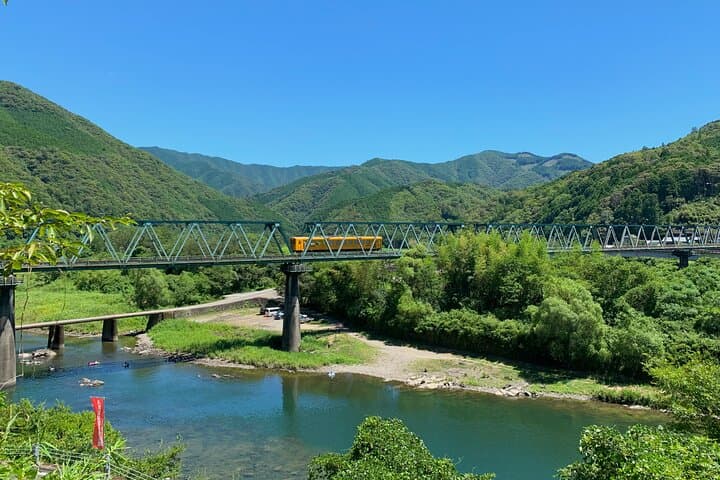
Dawn at JR Kubokawa Station: mist lifts off the Shimanto River and a local train hisses along the rails, windows framing long stretches of glass-clear water and low, squat chikabashi—submersible bridges that disappear under high flows and reappear like scars on the landscape.
Verified experiences and guided adventures in the surrounding area.
Operated by Kochi Escapes · Kubokawa, Kochi Prefecture
Dawn at JR Kubokawa Station: mist lifts off the Shimanto River and a local train hisses along the rails, windows framing long stretches of glass-clear water and low, squat chikabashi—submersible bridges that disappear under high flows and reappear like scars on the landscape.
The Shimanto is one of Japan’s last undammed rivers, running roughly 196 km from its headwaters to the Pacific. Geologically it is a mature river with wide alluvial plains, gravel bars and slow meanders carved over millennia. The chikabashi were engineered to resist flood pressure by letting water wash over them; they shape both the river’s look and the lives of riverside communities. Cultural touchstones—small fishing hamlets, rice paddies that ripple with the seasons, and pilgrimage stops like Iwamoto-ji—still mark this valley.
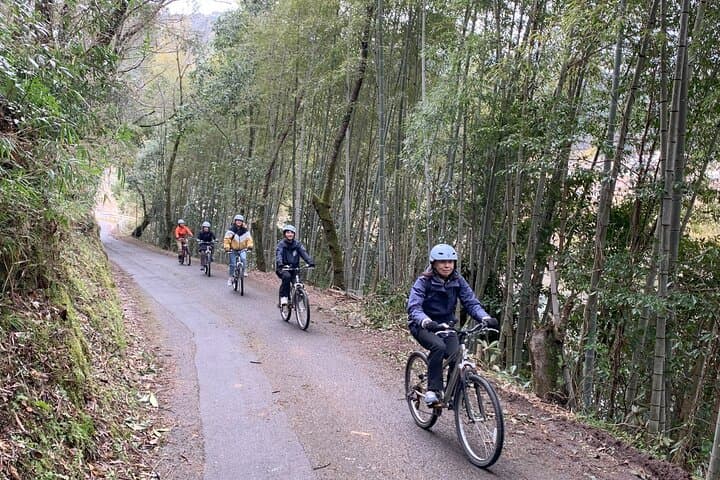
On this combined rail-and-bike route you’ll ride 20–25 km of flat to gently rolling river roads and well-maintained local lanes. Expect a mix of paved riverbanks, narrow village streets and occasional gravel shoulders; the river’s presence dominates the experience, daring you to slow down and notice kingfishers flash, eels slip beneath stones, and farmers tending fields by hand.
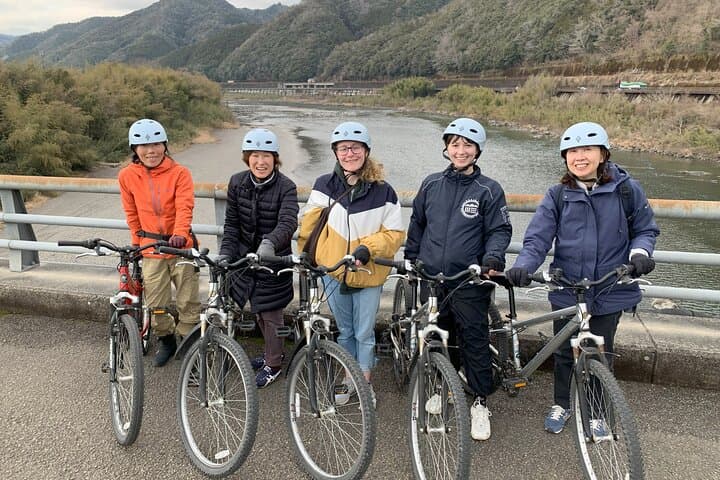
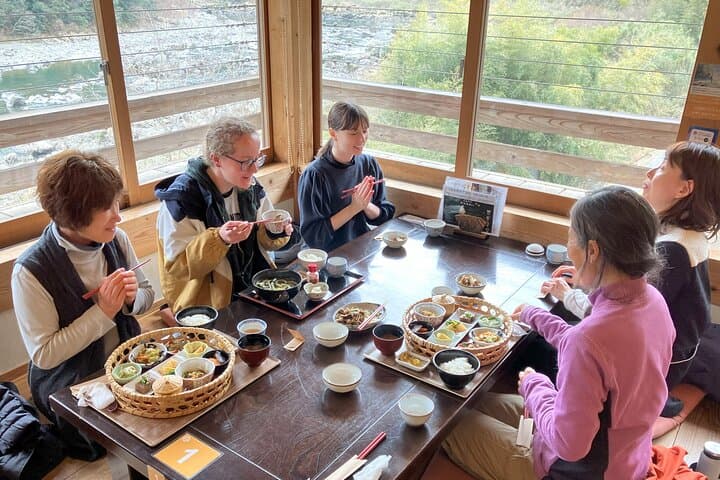
Practical guidance: trains connect Kubokawa with riverside stops, and bicycle rental is included. The route is moderate in effort—suitable for riders comfortable with sustained pedal time but not technical singletrack. Carry water, a basic repair kit, sun and rain protection, and some cash for teahouses in villages. Time your trip for morning light or late afternoon to avoid the midday sun and to catch the river at its most contemplative.
moderate.
6–8 hours.
Moderate cardio and leg strength to ride 20–25 km with stops; comfortable with several hours of cycling.
The ride is mostly flat to gently rolling along river roads; 20–25 km is manageable for anyone used to casual day rides, though riders should expect several hours of pedaling including stops.
Bicycle rental is included; verify whether helmets are supplied or bring your own—many operators provide them but sizes vary.
Local trains accept small to moderate luggage; for larger bags, check with the operator in advance or store items at JR Kubokawa Station.
Children with basic cycling ability can join, but confirm bike sizes and discuss safety with the tour operator; parental supervision is recommended near riverbanks.
The Shimanto River region remained largely undammed and agricultural; chikabashi bridges were intentionally low to reduce structural damage in floods, reflecting centuries of adaptation to river cycles.
Local communities and prefectural groups work to maintain water quality and traditional river uses; visitors should avoid disturbing riverbanks and carry out trash to protect spawning habitats.
Kochi Escapes operates guided outdoor trips and adventures with an emphasis on safety, stewardship, and memorable experiences.
Dawn at JR Kubokawa Station: mist lifts off the Shimanto River and a local train hisses along the rails, windows framing long stretches of glass-clear water and low, squat chikabashi—submersible bridges that disappear under high flows and reappear like scars on the landscape.
Dawn at JR Kubokawa Station: mist lifts off the Shimanto River and a local train hisses along the rails, windows framing long stretches of glass-clear water and low, squat chikabashi—submersible bridges that disappear under high flows and reappear like scars on the landscape.
The Shimanto is one of Japan’s last undammed rivers, running roughly 196 km from its headwaters to the Pacific. Geologically it is a mature river with wide alluvial plains, gravel bars and slow meanders carved over millennia. The chikabashi were engineered to resist flood pressure by letting water wash over them; they shape both the river’s look and the lives of riverside communities. Cultural touchstones—small fishing hamlets, rice paddies that ripple with the seasons, and pilgrimage stops like Iwamoto-ji—still mark this valley.
On this combined rail-and-bike route you’ll ride 20–25 km of flat to gently rolling river roads and well-maintained local lanes. Expect a mix of paved riverbanks, narrow village streets and occasional gravel shoulders; the river’s presence dominates the experience, daring you to slow down and notice kingfishers flash, eels slip beneath stones, and farmers tending fields by hand.
Practical guidance: trains connect Kubokawa with riverside stops, and bicycle rental is included. The route is moderate in effort—suitable for riders comfortable with sustained pedal time but not technical singletrack. Carry water, a basic repair kit, sun and rain protection, and some cash for teahouses in villages. Time your trip for morning light or late afternoon to avoid the midday sun and to catch the river at its most contemplative.