THE ADVENTURE COLLECTIVE® · Independent discovery and booking for outdoor travel

A half-day guided visit that brings you to the sweeping white domes and ornate interiors of Sheikh Zayed Grand Mosque. Practical tips on timing, dress code, and what to expect make this an accessible cultural stop for travelers based in Dubai or Abu Dhabi.
A half-day guided visit that brings you to the sweeping white domes and ornate interiors of Sheikh Zayed Grand Mosque. Practical tips on timing, dress code, and what to expect make this an accessible cultural stop for travelers based in Dubai or Abu Dhabi.
Morning light skims the white domes of Sheikh Zayed Grand Mosque, the marble facades catching a pale glare as the air carries faint city noise from Abu Dhabi’s avenues. You step from an air-conditioned van onto polished walkways, the scale of the complex folding outward—reflective pools, towering columns, and the main prayer hall’s chandelier looming like a crafted sun.
Verified experiences and guided adventures in the surrounding area.
Operated by privatedubaitours.com · Abu Dhabi, Abu Dhabi
Morning light skims the white domes of Sheikh Zayed Grand Mosque, the marble facades catching a pale glare as the air carries faint city noise from Abu Dhabi’s avenues. You step from an air-conditioned van onto polished walkways, the scale of the complex folding outward—reflective pools, towering columns, and the main prayer hall’s chandelier looming like a crafted sun.
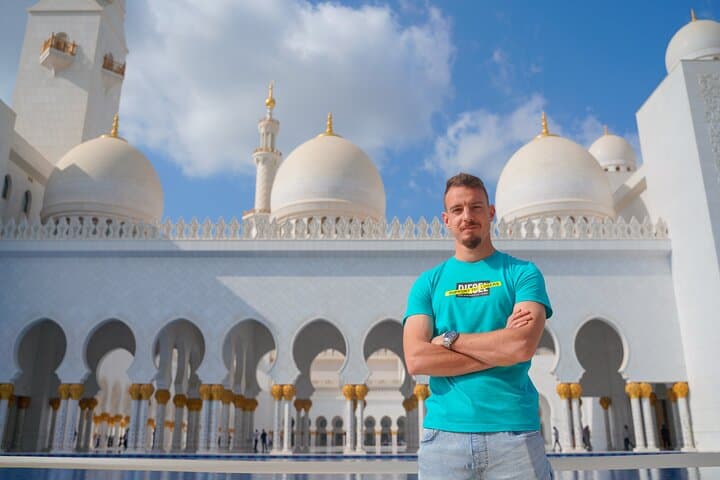
Completed in 2007 after 11 years of work, the mosque blends traditional Islamic ornament with global materials: Sivec marble from the Balkans, hand-woven carpets from Iran, and chandeliers layered with Swarovski crystals. Architecturally it borrows Ottoman, Mamluk and Fatimid motifs; stretched across low coastal plain, the complex emphasizes horizontal planes and expansive courtyards rather than elevation.
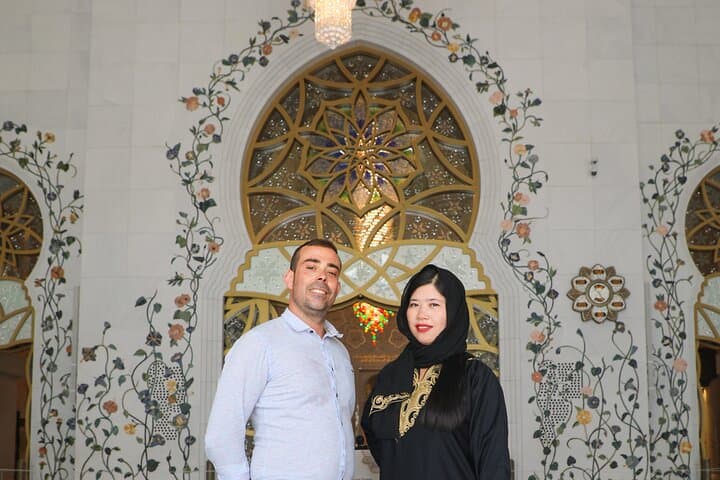
Culturally the site functions as both an active house of worship and a civic welcome to visitors. The mosque’s calligraphic inscriptions, mosaic florals and mirrored pools are best appreciated with context: this is contemporary Islamic architecture designed to read in daylight and reflected light alike, and visits are governed by clear etiquette—modest dress, quiet behavior and restricted entry windows during Friday prayers.
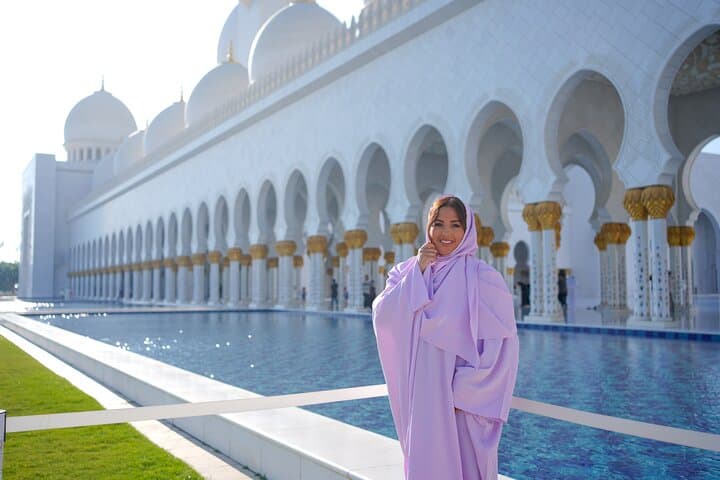
Practical guidance: plan a half-day tour—expect roughly 5–6 hours from Dubai including transit and about 90 minutes inside the mosque. Wear lightweight, full-coverage clothing; women are offered abayas on-site if needed. Bring water, sun protection for courtyard exposure, and shoes that slip off easily for prayer hall access. Early morning or late afternoon delivers the best light and cooler temperatures; midday is hottest and busiest.
Respect the spiritual nature of the place, cover tattoos if requested and keep conversation low. With simple preparation, the visit is accessible, visually striking and informative about modern Islamic craft and civic identity.
easy.
5–6 hours.
Light walking and standing for up to 90 minutes; suitable for most travelers
Yes—both men and women must wear modest clothing covering shoulders and legs; women should cover their hair. The mosque provides abayas if needed.
Photography is permitted in most public areas, but avoid photographing worshippers, and follow staff directions on restricted zones and tripod use.
Guided visits typically include about 60–90 minutes inside the mosque; the full tour from Dubai runs approximately 5–6 hours including transport.
The complex has ramps and paved courtyards; the tour is generally accessible, but check with the operator about specific mobility needs and assisted transport.
The Sheikh Zayed Grand Mosque was completed in 2007 after 11 years of construction and was commissioned to unite traditional design principles with contemporary materials.
Visitors are asked to respect the sacred site by disposing of waste properly and following signage; the mosque management enforces strict cleanliness and preservation measures to protect marble and mosaic surfaces.
privatedubaitours.com operates guided outdoor trips and adventures with an emphasis on safety, stewardship, and memorable experiences.
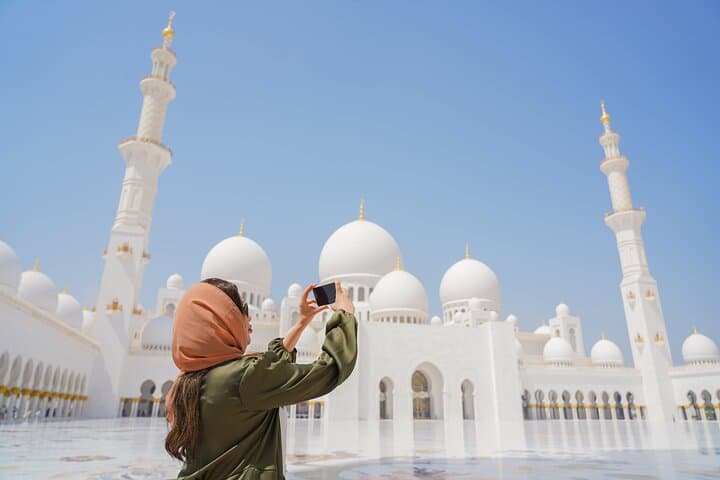
Morning light skims the white domes of Sheikh Zayed Grand Mosque, the marble facades catching a pale glare as the air carries faint city noise from Abu Dhabi’s avenues. You step from an air-conditioned van onto polished walkways, the scale of the complex folding outward—reflective pools, towering columns, and the main prayer hall’s chandelier looming like a crafted sun.
Morning light skims the white domes of Sheikh Zayed Grand Mosque, the marble facades catching a pale glare as the air carries faint city noise from Abu Dhabi’s avenues. You step from an air-conditioned van onto polished walkways, the scale of the complex folding outward—reflective pools, towering columns, and the main prayer hall’s chandelier looming like a crafted sun.
Completed in 2007 after 11 years of work, the mosque blends traditional Islamic ornament with global materials: Sivec marble from the Balkans, hand-woven carpets from Iran, and chandeliers layered with Swarovski crystals. Architecturally it borrows Ottoman, Mamluk and Fatimid motifs; stretched across low coastal plain, the complex emphasizes horizontal planes and expansive courtyards rather than elevation.
Culturally the site functions as both an active house of worship and a civic welcome to visitors. The mosque’s calligraphic inscriptions, mosaic florals and mirrored pools are best appreciated with context: this is contemporary Islamic architecture designed to read in daylight and reflected light alike, and visits are governed by clear etiquette—modest dress, quiet behavior and restricted entry windows during Friday prayers.
Practical guidance: plan a half-day tour—expect roughly 5–6 hours from Dubai including transit and about 90 minutes inside the mosque. Wear lightweight, full-coverage clothing; women are offered abayas on-site if needed. Bring water, sun protection for courtyard exposure, and shoes that slip off easily for prayer hall access. Early morning or late afternoon delivers the best light and cooler temperatures; midday is hottest and busiest.
Respect the spiritual nature of the place, cover tattoos if requested and keep conversation low. With simple preparation, the visit is accessible, visually striking and informative about modern Islamic craft and civic identity.