THE ADVENTURE COLLECTIVE® · Independent discovery and booking for outdoor travel

A three‑hour private tour that pairs Sheikh Zayed Grand Mosque’s monumental marble halls with the reflective, national memorial Wahat Al Karama. Ideal for travelers who want a paced, accessible introduction to Abu Dhabi’s recent history and architectural craft.
A three‑hour private tour that pairs Sheikh Zayed Grand Mosque’s monumental marble halls with the reflective, national memorial Wahat Al Karama. Ideal for travelers who want a paced, accessible introduction to Abu Dhabi’s recent history and architectural craft.
Morning light strips across white domes and long colonnades; the mosque’s marble feels cool underfoot even when the coastal air pushes warmth across the plaza. Visitors step from an air-conditioned vehicle into a hush—crystal chandeliers hang like quiet constellations and the world’s largest hand‑knotted carpet stretches like a woven plain beneath the prayer hall.
Verified experiences and guided adventures in the surrounding area.
Operated by Riyago Tourism · Abu Dhabi, Abu Dhabi
Morning light strips across white domes and long colonnades; the mosque’s marble feels cool underfoot even when the coastal air pushes warmth across the plaza. Visitors step from an air-conditioned vehicle into a hush—crystal chandeliers hang like quiet constellations and the world’s largest hand‑knotted carpet stretches like a woven plain beneath the prayer hall.
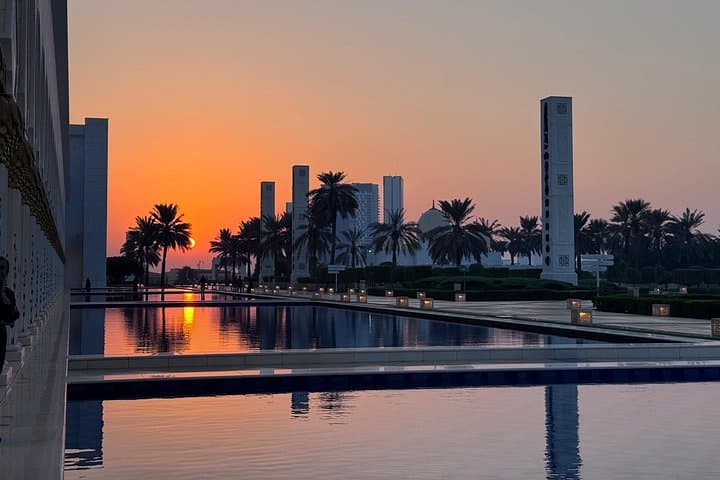
Completed in 2007 and named for Sheikh Zayed bin Sultan Al Nahyan, the Grand Mosque combines imported white marble, intricate floral mosaic inlays and Islamic geometric patterns to produce a modern monument rooted in traditional craftsmanship. Opposite it, Wahat Al Karama (Oasis of Dignity) is a sober national memorial honoring Emirati martyrs; its engraved Pavilion of Honor and Martyrs’ Monument use minimal forms to hold weighty meaning. The complex sits near reclaimed coastal land, so the salt air and intense sun are part of the site’s ongoing preservation story.
This private, three‑hour outing typically allows roughly 90 minutes inside the mosque and 45 minutes at Wahat Al Karama, plus transit. Practicalities matter: dress modestly (long sleeves, long trousers or an abaya/headscarf for women), remove shoes where required, and follow staff directions—some areas close during prayer. Mornings or late afternoons deliver cooler temperatures and softer light for photography; bottled water is provided on the tour but carry a refillable bottle to reduce waste. The route is wheelchair accessible and suitable for most travelers; plan to arrive 10–15 minutes early for security checks and to clear photographs without rush.
easy.
3 hours.
Suitable for all physical fitness levels; mostly walking on flat surfaces with brief standing periods
This tour includes entrance fees; under normal circumstances public entry to the mosque is free but organized tours commonly cover any administrative fees.
Dress conservatively: long sleeves and long trousers for men and women; women should also cover their hair—tour operators typically provide abayas and scarves if needed.
Yes—both the mosque and Wahat Al Karama have ramped access and accessible surfaces; transport and some facilities on this tour are wheelchair accessible.
Yes in most public areas, but avoid photographing people during prayer and respect signs that indicate restricted or private zones.
Sheikh Zayed Grand Mosque was completed in 2007 and combines marble from several countries and traditional Islamic motifs; Wahat Al Karama was inaugurated after 2016 to honor fallen Emirati service members.
The complex is actively managed to protect marble and mosaics from coastal weathering; visitors are asked to avoid littering and to follow site rules to minimize impact.
Riyago Tourism operates guided outdoor trips and adventures with an emphasis on safety, stewardship, and memorable experiences.
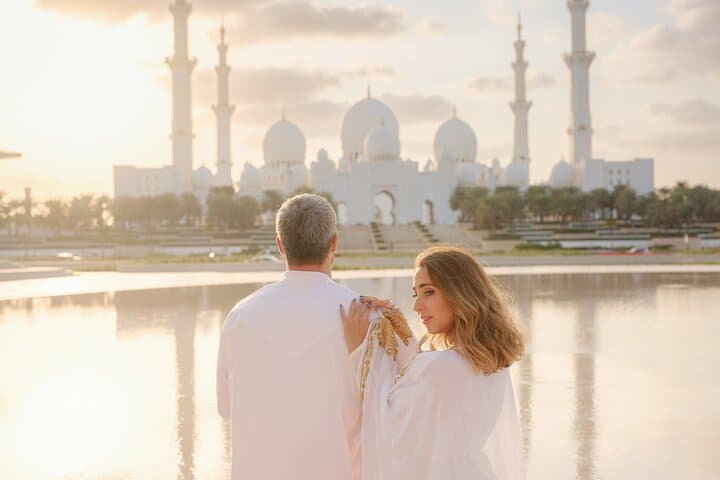
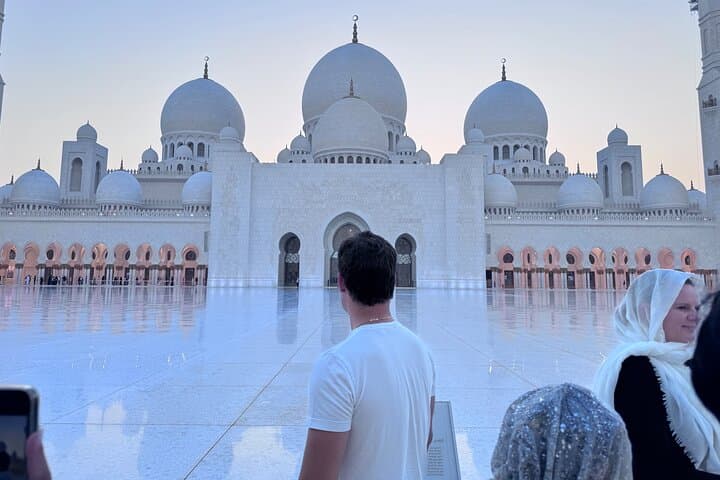
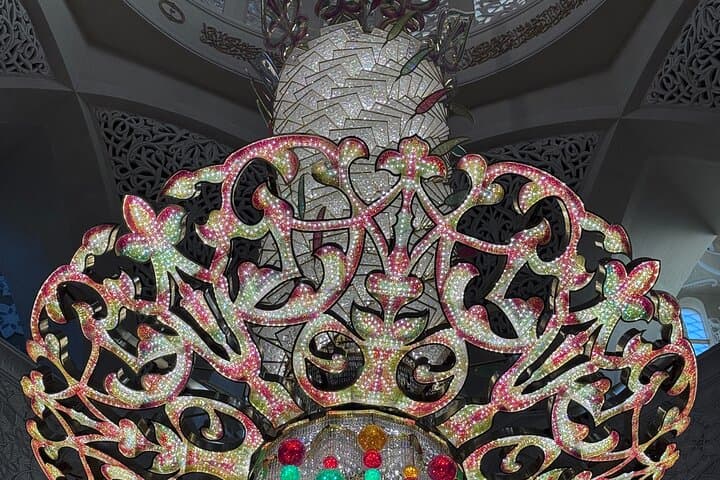
Morning light strips across white domes and long colonnades; the mosque’s marble feels cool underfoot even when the coastal air pushes warmth across the plaza. Visitors step from an air-conditioned vehicle into a hush—crystal chandeliers hang like quiet constellations and the world’s largest hand‑knotted carpet stretches like a woven plain beneath the prayer hall.
Morning light strips across white domes and long colonnades; the mosque’s marble feels cool underfoot even when the coastal air pushes warmth across the plaza. Visitors step from an air-conditioned vehicle into a hush—crystal chandeliers hang like quiet constellations and the world’s largest hand‑knotted carpet stretches like a woven plain beneath the prayer hall.
Completed in 2007 and named for Sheikh Zayed bin Sultan Al Nahyan, the Grand Mosque combines imported white marble, intricate floral mosaic inlays and Islamic geometric patterns to produce a modern monument rooted in traditional craftsmanship. Opposite it, Wahat Al Karama (Oasis of Dignity) is a sober national memorial honoring Emirati martyrs; its engraved Pavilion of Honor and Martyrs’ Monument use minimal forms to hold weighty meaning. The complex sits near reclaimed coastal land, so the salt air and intense sun are part of the site’s ongoing preservation story.
This private, three‑hour outing typically allows roughly 90 minutes inside the mosque and 45 minutes at Wahat Al Karama, plus transit. Practicalities matter: dress modestly (long sleeves, long trousers or an abaya/headscarf for women), remove shoes where required, and follow staff directions—some areas close during prayer. Mornings or late afternoons deliver cooler temperatures and softer light for photography; bottled water is provided on the tour but carry a refillable bottle to reduce waste. The route is wheelchair accessible and suitable for most travelers; plan to arrive 10–15 minutes early for security checks and to clear photographs without rush.