THE ADVENTURE COLLECTIVE® · Independent discovery and booking for outdoor travel

Explore the Sharm El-Sheikh Museum’s animal mummies, papyrus collections and regional artifacts, then lose yourself in the aromatic alleys of the Old Market. This three-hour tour pairs archaeological context with hands-on cultural exchange—perfect for curious travelers.
Explore the Sharm El-Sheikh Museum’s animal mummies, papyrus collections and regional artifacts, then lose yourself in the aromatic alleys of the Old Market. This three-hour tour pairs archaeological context with hands-on cultural exchange—perfect for curious travelers.
You step off the air-conditioned van into a sun-baked street and the museum’s limestone façade cools the air like a hand on a forehead. Inside the Grand Hall animal mummies line cases with quiet dignity; papyrus scrolls and Isetemheb’s carved coffins draw you toward quieter histories while the Old Market’s alleys hum with bargaining voices an hour later. The museum arranges objects to narrate Sinai’s place between Nile civilizations and Red Sea trade—animal cults, funerary art, and everyday tools that map centuries of human adaptation.
Verified experiences and guided adventures in the surrounding area.
Operated by Sharm Gate · Sharm El-Sheikh, South Sinai
You step off the air-conditioned van into a sun-baked street and the museum’s limestone façade cools the air like a hand on a forehead. Inside the Grand Hall animal mummies line cases with quiet dignity; papyrus scrolls and Isetemheb’s carved coffins draw you toward quieter histories while the Old Market’s alleys hum with bargaining voices an hour later. The museum arranges objects to narrate Sinai’s place between Nile civilizations and Red Sea trade—animal cults, funerary art, and everyday tools that map centuries of human adaptation.
Sharm El-Sheikh itself is a young city layered over ancient routes: a fishing and Bedouin crossroads that swelled into an international resort in the 20th century. Geologically, the Sinai plateaus give way to coastal sands and reefs; culturally you’ll see that marine life inspired both ancient ritual and modern livelihoods. The Old Market preserves a lively commercial culture—spice stalls, brass lamps, and rooftop tea vendors—where haggling is part of the performance.
Practical guidance: allow three hours, bring local cash for small purchases, and wear respectful clothing for indoor and religious spaces. Photography rules can vary—ask before shooting artifacts or shop interiors. Mornings are cooler for walking; late afternoon light softens the market and makes rooftop tea especially pleasant. Pace yourself: the museum rewards slow reading of labels, while the market rewards curiosity and a willingness to haggle. Stay hydrated, keep valuables secure, and leave space in your bag for a small handcrafted souvenir—this tour balances quiet archaeological contemplation with the lively push-and-pull of a working bazaar.
easy.
3 hours.
Suitable for most travelers; involves walking on even surfaces and short stair sections
The itinerary indicates museum admission may not be included—confirm at booking and have local currency available if a separate ticket is required.
Yes; the listing notes wheelchair and stroller access, and the museum has accessible surfaces, but notify the operator ahead for pickup logistics.
Yes; bargaining is expected for souvenirs and textiles—start around 40–60% of the asking price and negotiate politely.
Morning visits avoid peak heat and crowds; late afternoon combines cooler temperatures with atmospheric light and active market life.
Sharm El-Sheikh grew from a Bedouin fishing community into an international resort; the museum emphasizes Sinai’s unique bridge between Nile civilizations and Red Sea trade.
Respect the artifacts by not touching displays and support sustainable local businesses; the region faces water scarcity and tourism impacts, so minimize waste and water use.
Sharm Gate operates guided outdoor trips and adventures with an emphasis on safety, stewardship, and memorable experiences.
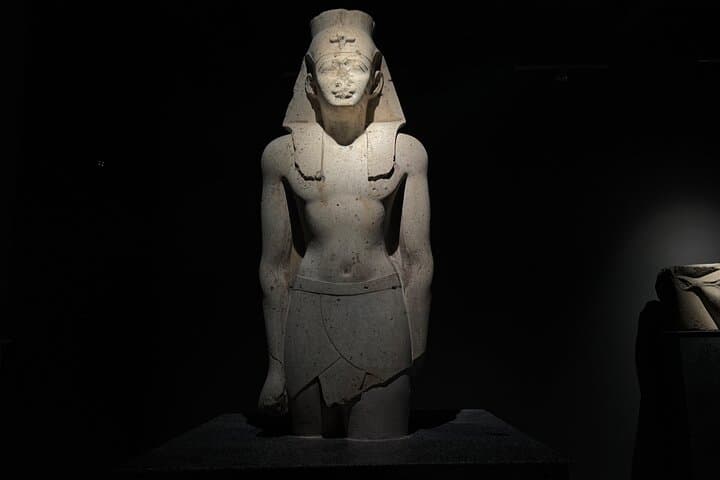


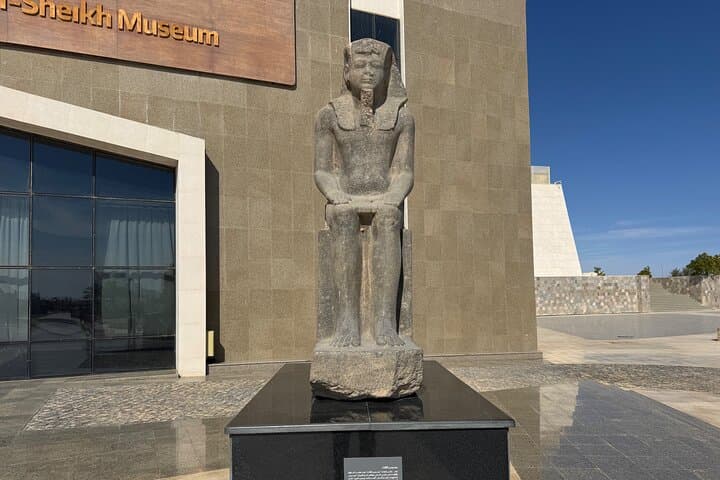
You step off the air-conditioned van into a sun-baked street and the museum’s limestone façade cools the air like a hand on a forehead. Inside the Grand Hall animal mummies line cases with quiet dignity; papyrus scrolls and Isetemheb’s carved coffins draw you toward quieter histories while the Old Market’s alleys hum with bargaining voices an hour later. The museum arranges objects to narrate Sinai’s place between Nile civilizations and Red Sea trade—animal cults, funerary art, and everyday tools that map centuries of human adaptation.
You step off the air-conditioned van into a sun-baked street and the museum’s limestone façade cools the air like a hand on a forehead. Inside the Grand Hall animal mummies line cases with quiet dignity; papyrus scrolls and Isetemheb’s carved coffins draw you toward quieter histories while the Old Market’s alleys hum with bargaining voices an hour later. The museum arranges objects to narrate Sinai’s place between Nile civilizations and Red Sea trade—animal cults, funerary art, and everyday tools that map centuries of human adaptation.
Sharm El-Sheikh itself is a young city layered over ancient routes: a fishing and Bedouin crossroads that swelled into an international resort in the 20th century. Geologically, the Sinai plateaus give way to coastal sands and reefs; culturally you’ll see that marine life inspired both ancient ritual and modern livelihoods. The Old Market preserves a lively commercial culture—spice stalls, brass lamps, and rooftop tea vendors—where haggling is part of the performance.
Practical guidance: allow three hours, bring local cash for small purchases, and wear respectful clothing for indoor and religious spaces. Photography rules can vary—ask before shooting artifacts or shop interiors. Mornings are cooler for walking; late afternoon light softens the market and makes rooftop tea especially pleasant. Pace yourself: the museum rewards slow reading of labels, while the market rewards curiosity and a willingness to haggle. Stay hydrated, keep valuables secure, and leave space in your bag for a small handcrafted souvenir—this tour balances quiet archaeological contemplation with the lively push-and-pull of a working bazaar.