THE ADVENTURE COLLECTIVE® · Independent discovery and booking for outdoor travel

Watch sunset from a desert ridge, share a Bedouin barbecue, then learn the night sky through guided telescopes in Wadi Khroume. This five-hour evening blends culture, simple hiking and astronomy under some of Sinai’s darkest skies.
Watch sunset from a desert ridge, share a Bedouin barbecue, then learn the night sky through guided telescopes in Wadi Khroume. This five-hour evening blends culture, simple hiking and astronomy under some of Sinai’s darkest skies.
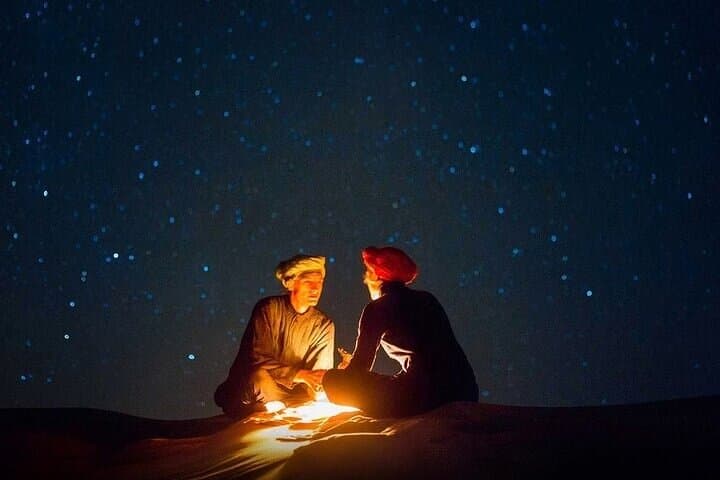
The sun slips behind the low Sinai ridges and the desert exhales a cooling breath — by the time the headlamps dim, a black dome of stars opens above Wadi Khroume. Guests arrive by air-conditioned shuttle, climb a low hill to watch sunset, then settle in a ring of Bedouin tents where the smell of grilled kofta and fresh bread warms the night.
Verified experiences and guided adventures in the surrounding area.
Operated by El Agamy Travel · Sharm El Sheikh, South Sinai Governorate
The sun slips behind the low Sinai ridges and the desert exhales a cooling breath — by the time the headlamps dim, a black dome of stars opens above Wadi Khroume. Guests arrive by air-conditioned shuttle, climb a low hill to watch sunset, then settle in a ring of Bedouin tents where the smell of grilled kofta and fresh bread warms the night.
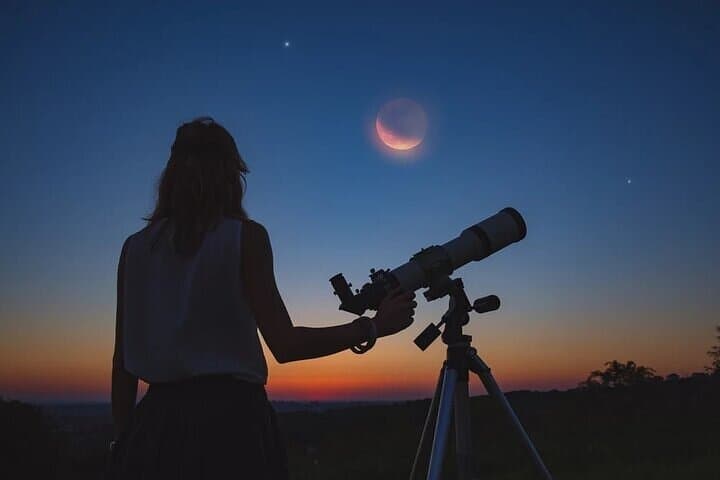
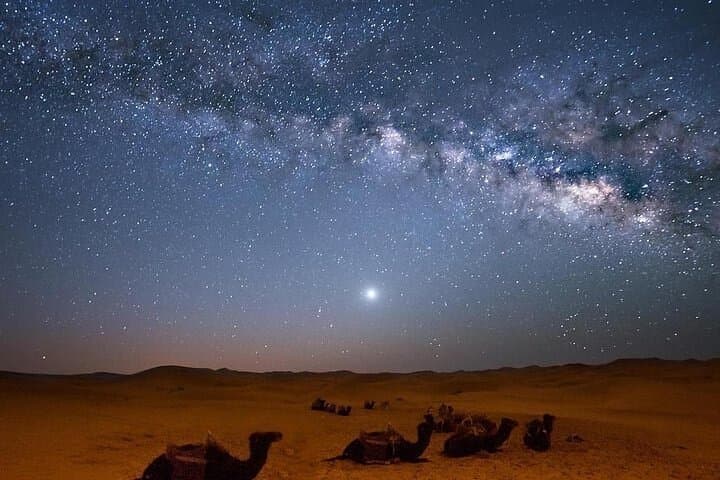
This experience sits at the intersection of Sinai natural history and Bedouin hospitality. Geologically the area is folded sandstone and granite carved by flash floods; its clear, dry air and low light pollution make it excellent for astronomy. Culturally, the evening showcases Sinai traditions: Bedouin bread baking, stringed music, and communal tea poured from a samovar. Guides point out constellations, planets and the Milky Way through telescopes while explaining how ancient mariners and local cultures read the sky.
Practical guidance follows the storytelling. Nights in the desert drop quickly — layers are essential. Terrain is sandy and uneven; closed shoes with traction make climbs to viewing points easier. Bring water and a camera with manual settings or a tripod for long exposures. The schedule commonly starts mid-afternoon for hotel pickup and returns after dark; the tour is family-friendly and physically easy but involves some walking on soft slopes.
Expect an open buffet of barbecue, soft drinks and Bedouin tea, live music, and a short camel encounter for photos. Respect the camp: remove litter, ask before photographing people, and follow the guide’s instructions around fires and telescopes. This is a compact cultural-night-sky package — both an introduction to desert astronomy and a practical, low-effort way to experience Sinai night life.
easy.
5 hours.
Minimal fitness required; participants should be able to walk short distances on loose sand and climb low hills.
The tour runs about five hours; pickup is typically mid-afternoon (times vary by hotel location) and returns after dark.
Yes — the activity is family-friendly and rated easy; children should be supervised around open fires and animals.
Yes — professional astronomy guides and telescopes are included so you can view constellations and planets up close.
Phone cameras can capture some stars, but better results require a tripod and manual settings; guides often allow time for personal photos.
Sinai has been a crossroads between Africa and Asia for millennia; Bedouin traditions in the area preserve nomadic practices of hospitality and star lore.
Tours operate in fragile desert ecosystems — stick to established camp areas, avoid off-trail driving, and take all trash back to designated collection points.
El Agamy Travel operates guided outdoor trips and adventures with an emphasis on safety, stewardship, and memorable experiences.

The sun slips behind the low Sinai ridges and the desert exhales a cooling breath — by the time the headlamps dim, a black dome of stars opens above Wadi Khroume. Guests arrive by air-conditioned shuttle, climb a low hill to watch sunset, then settle in a ring of Bedouin tents where the smell of grilled kofta and fresh bread warms the night.
The sun slips behind the low Sinai ridges and the desert exhales a cooling breath — by the time the headlamps dim, a black dome of stars opens above Wadi Khroume. Guests arrive by air-conditioned shuttle, climb a low hill to watch sunset, then settle in a ring of Bedouin tents where the smell of grilled kofta and fresh bread warms the night.
This experience sits at the intersection of Sinai natural history and Bedouin hospitality. Geologically the area is folded sandstone and granite carved by flash floods; its clear, dry air and low light pollution make it excellent for astronomy. Culturally, the evening showcases Sinai traditions: Bedouin bread baking, stringed music, and communal tea poured from a samovar. Guides point out constellations, planets and the Milky Way through telescopes while explaining how ancient mariners and local cultures read the sky.
Practical guidance follows the storytelling. Nights in the desert drop quickly — layers are essential. Terrain is sandy and uneven; closed shoes with traction make climbs to viewing points easier. Bring water and a camera with manual settings or a tripod for long exposures. The schedule commonly starts mid-afternoon for hotel pickup and returns after dark; the tour is family-friendly and physically easy but involves some walking on soft slopes.
Expect an open buffet of barbecue, soft drinks and Bedouin tea, live music, and a short camel encounter for photos. Respect the camp: remove litter, ask before photographing people, and follow the guide’s instructions around fires and telescopes. This is a compact cultural-night-sky package — both an introduction to desert astronomy and a practical, low-effort way to experience Sinai night life.