THE ADVENTURE COLLECTIVE® · Independent discovery and booking for outdoor travel

Board a small research-style vessel from Cape Town and head to the shark-rich waters off Gansbaai for a cage dive with experienced guides. Expect a ~4.5-hour excursion, wetsuit-provided dives, and naturalist-led briefings focused on safety and conservation.
Board a small research-style vessel from Cape Town and head to the shark-rich waters off Gansbaai for a cage dive with experienced guides. Expect a ~4.5-hour excursion, wetsuit-provided dives, and naturalist-led briefings focused on safety and conservation.
The boat slips free of the harbor and the Atlantic opens like a dare. Salt stings the air, the shoreline of Cape Town recedes, and ahead the churning water around Dyer Island promises a close encounter with the great white.
Verified experiences and guided adventures in the surrounding area.
Operated by T4C SOUTH AFRICAN TOURS · Gansbaai, Western Cape
The boat slips free of the harbor and the Atlantic opens like a dare. Salt stings the air, the shoreline of Cape Town recedes, and ahead the churning water around Dyer Island promises a close encounter with the great white.
This is a working stretch of coastline shaped by upwelling currents and granite headlands—geology that concentrates prey and draws sharks. Gansbaai’s fishing history and the decades of marine research around Dyer Island have turned the town into an international center for shark observation and conservation.
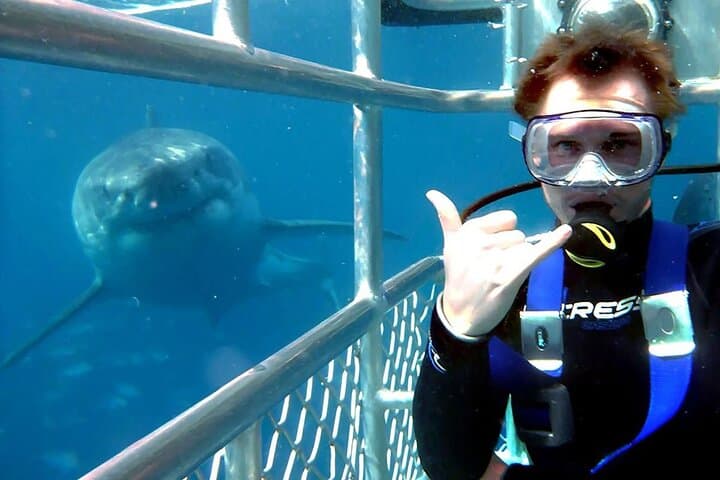
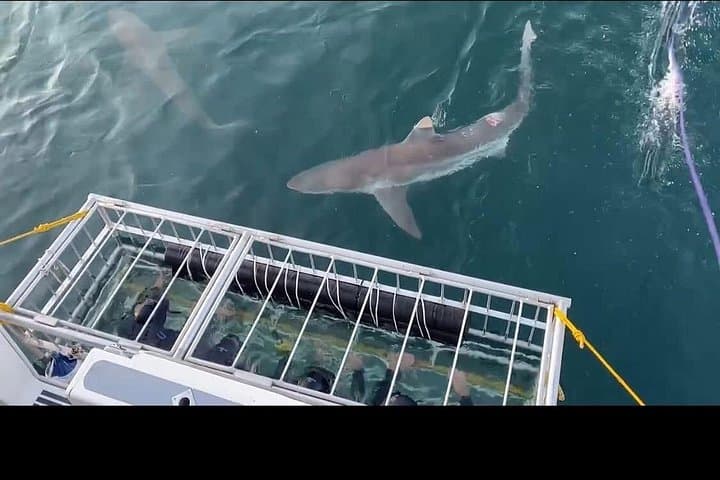
Onboard, guides double as naturalists: they explain identification markers, shark behavior, and the ethics of chumming. The cage hangs at the rail; when you step inside you trade dry land certainty for a raw, vertical view of a predator moving with patient purpose. The encounter itself varies by day—sometimes a single silhouette passes; other times several adults circle and nudge the bait boat, currents pushing toward the hull.
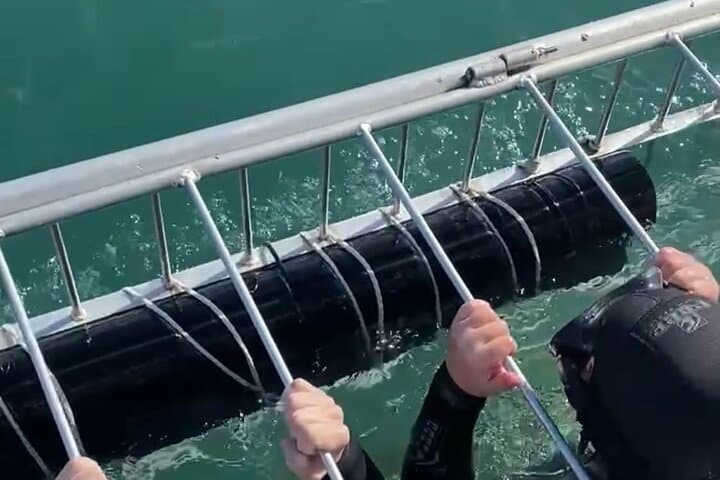
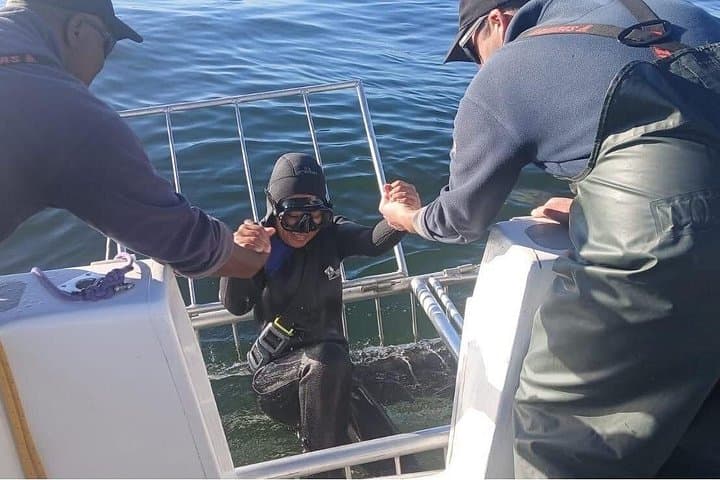
Practical notes: the full excursion takes about 4–4.5 hours from the operator’s base, with 2–3 hours at sea. Wetsuits are provided but bring warm layers for the crossing. Seas can be rough—antiemetics are a reasonable precaution. Respect crew briefings; climbing in and out of the cage requires basic mobility.
This trip balances adrenaline with education. It’s not about feeding frenzy spectacle but observation—supporting ongoing research while seeing one of the ocean’s most iconic predators on its terms.
moderate.
4–5 hours.
Light to moderate fitness; must be able to step into a cage and stand for short periods on a pitching deck
The full trip from arrival to return is about 4–4.5 hours, with roughly 2–3 hours at sea; cage time depends on shark activity and conditions.
Wetsuits are provided by the operator and recommended for anyone entering the cage to maintain body heat in cold Atlantic water.
Sharks are common in the area but sightings can't be guaranteed; encounters depend on seasonal movement and daily sea conditions.
Operators combine safety protocols with research-oriented briefings; chumming is used to attract sharks under regulated conditions that prioritize observation over feeding.
Gansbaai evolved from a fishing village into a shark-research hub thanks to Dyer Island’s rich marine life and decades of scientific study.
Operators typically partner with researchers and follow strict chumming and distance protocols to minimize disturbance and contribute to population monitoring.
T4C SOUTH AFRICAN TOURS operates guided outdoor trips and adventures with an emphasis on safety, stewardship, and memorable experiences.
The boat slips free of the harbor and the Atlantic opens like a dare. Salt stings the air, the shoreline of Cape Town recedes, and ahead the churning water around Dyer Island promises a close encounter with the great white.
The boat slips free of the harbor and the Atlantic opens like a dare. Salt stings the air, the shoreline of Cape Town recedes, and ahead the churning water around Dyer Island promises a close encounter with the great white.
This is a working stretch of coastline shaped by upwelling currents and granite headlands—geology that concentrates prey and draws sharks. Gansbaai’s fishing history and the decades of marine research around Dyer Island have turned the town into an international center for shark observation and conservation.
Onboard, guides double as naturalists: they explain identification markers, shark behavior, and the ethics of chumming. The cage hangs at the rail; when you step inside you trade dry land certainty for a raw, vertical view of a predator moving with patient purpose. The encounter itself varies by day—sometimes a single silhouette passes; other times several adults circle and nudge the bait boat, currents pushing toward the hull.
Practical notes: the full excursion takes about 4–4.5 hours from the operator’s base, with 2–3 hours at sea. Wetsuits are provided but bring warm layers for the crossing. Seas can be rough—antiemetics are a reasonable precaution. Respect crew briefings; climbing in and out of the cage requires basic mobility.
This trip balances adrenaline with education. It’s not about feeding frenzy spectacle but observation—supporting ongoing research while seeing one of the ocean’s most iconic predators on its terms.