THE ADVENTURE COLLECTIVE® · Independent discovery and booking for outdoor travel

Board a full-day trip from Cape Town to Gansbaai and Dyer Island for a controlled, close-up encounter with great white sharks. This experience combines a guided marine briefing, a short cruise to prime shark habitat, and up to two hours observing sharks from a secure steel cage.
Board a full-day trip from Cape Town to Gansbaai and Dyer Island for a controlled, close-up encounter with great white sharks. This experience combines a guided marine briefing, a short cruise to prime shark habitat, and up to two hours observing sharks from a secure steel cage.
A salt-stiff breeze hits your face before sunrise as the van pulls away from Cape Town, the city shrinking behind Table Mountain’s grey flank. The road south opens onto patchwork farmland and the pale curve of Walker Bay; by midmorning you’re at the Great White House in Gansbaai, tying on a wetsuit and listening to a marine biologist map out what to expect.
Verified experiences and guided adventures in the surrounding area.
Operated by Paul polano tours · Gansbaai, Western Cape
A salt-stiff breeze hits your face before sunrise as the van pulls away from Cape Town, the city shrinking behind Table Mountain’s grey flank. The road south opens onto patchwork farmland and the pale curve of Walker Bay; by midmorning you’re at the Great White House in Gansbaai, tying on a wetsuit and listening to a marine biologist map out what to expect.
Dyer Island sits a short cruise from the harbor—rocky, wind-sculpted and ringed by a noisy colony of Cape fur seals. Upwelling currents here drive nutrient-rich water to the surface, concentrating baitfish and, in turn, attracting great white sharks. The region has a long history of sea trade and small-scale fishing; in recent decades it’s become a focal point for shark research and responsible wildlife tourism.
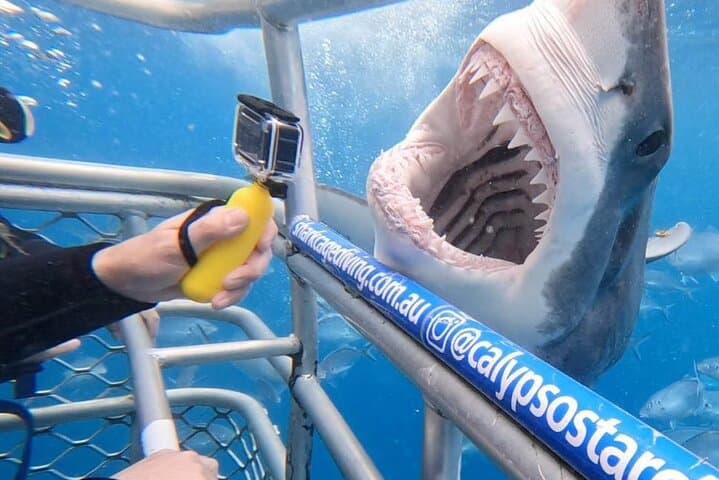
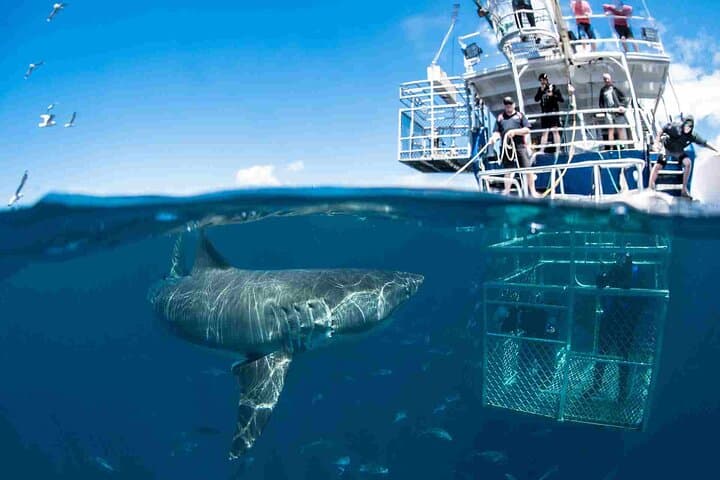
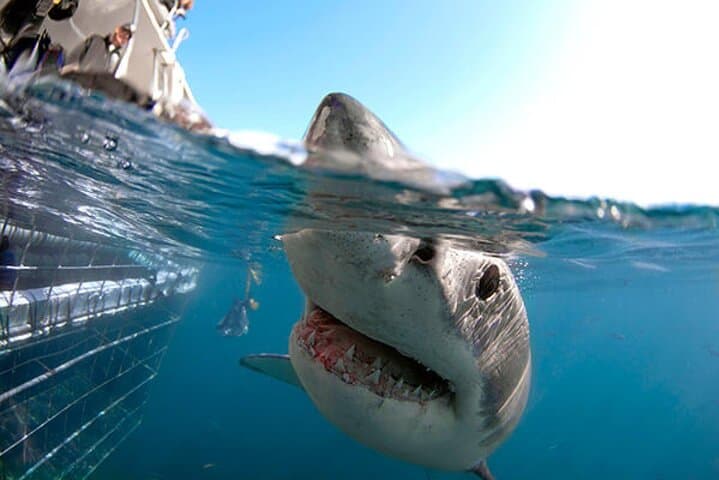
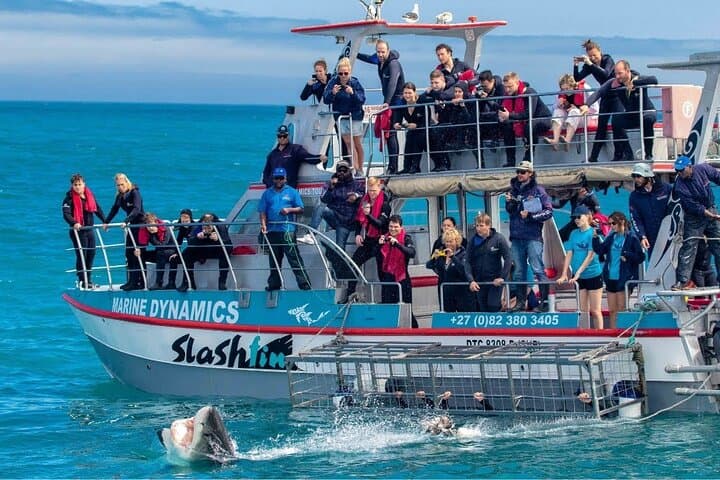
On the water the crew anchors, lowers the steel cage and the ocean suddenly has direction—surface ripples that dare you to peer down. Two hours in the cage is a compact but intense window: sharks project power in slow turns, then accelerate in brief, precise bursts. Above, the boat crew and biologist narrate behavior; below, professional photographers work to capture the moments.
Practical guidance: expect a full-day commitment (hotel pickup from Cape Town, ~2–2.5 hour drive each way), bring motion-sickness meds, wear layered clothing, and leave valuables on shore or in a dry bag. Trips can be canceled for weather; fitness should be moderate—climbing in and out of the cage and standing on a rolling deck are part of the job. Book early in peak season and respect crew guidance to keep the encounter safe for you and the animals.
moderate.
10 hours (full-day).
Moderate fitness—must be able to climb in/out of a low ladder, stand on a moving deck, and follow safety briefings
The cruise is typically about 15–30 minutes depending on sea conditions; crews aim for the shortest safe transit to prime viewing spots.
No scuba certification is required; participants enter a surface-locked steel cage while wearing a wetsuit—breathing equipment is not needed.
Dyer Island is one of the best places for sightings, but wildlife is unpredictable; trips run at prime feeding sites to maximize chances and encounters are common but not guaranteed.
Operators set age and health limits—children are often allowed with guardians, but pregnant travelers and those with serious heart problems should not participate; always disclose health conditions when booking.
Gansbaai and Dyer Island have long been fishing hubs; the area’s marine abundance led to early scientific studies of apex predators and modern eco-tourism centered on research collaboration.
Responsible operators follow strict chumming guidelines and support local research programs—stay with licensed operators to minimize disturbance to seal and shark populations.
Paul polano tours operates guided outdoor trips and adventures with an emphasis on safety, stewardship, and memorable experiences.
A salt-stiff breeze hits your face before sunrise as the van pulls away from Cape Town, the city shrinking behind Table Mountain’s grey flank. The road south opens onto patchwork farmland and the pale curve of Walker Bay; by midmorning you’re at the Great White House in Gansbaai, tying on a wetsuit and listening to a marine biologist map out what to expect.
A salt-stiff breeze hits your face before sunrise as the van pulls away from Cape Town, the city shrinking behind Table Mountain’s grey flank. The road south opens onto patchwork farmland and the pale curve of Walker Bay; by midmorning you’re at the Great White House in Gansbaai, tying on a wetsuit and listening to a marine biologist map out what to expect.
Dyer Island sits a short cruise from the harbor—rocky, wind-sculpted and ringed by a noisy colony of Cape fur seals. Upwelling currents here drive nutrient-rich water to the surface, concentrating baitfish and, in turn, attracting great white sharks. The region has a long history of sea trade and small-scale fishing; in recent decades it’s become a focal point for shark research and responsible wildlife tourism.
On the water the crew anchors, lowers the steel cage and the ocean suddenly has direction—surface ripples that dare you to peer down. Two hours in the cage is a compact but intense window: sharks project power in slow turns, then accelerate in brief, precise bursts. Above, the boat crew and biologist narrate behavior; below, professional photographers work to capture the moments.
Practical guidance: expect a full-day commitment (hotel pickup from Cape Town, ~2–2.5 hour drive each way), bring motion-sickness meds, wear layered clothing, and leave valuables on shore or in a dry bag. Trips can be canceled for weather; fitness should be moderate—climbing in and out of the cage and standing on a rolling deck are part of the job. Book early in peak season and respect crew guidance to keep the encounter safe for you and the animals.