THE ADVENTURE COLLECTIVE® · Independent discovery and booking for outdoor travel

Board at dawn and head into the lagoon where wild dolphins patrol reef channels. This 2.5-hour shared trip from the west coast of Mauritius offers observation from the boat and conditional in-water snorkeling with guides who follow strict approach rules.
Board at dawn and head into the lagoon where wild dolphins patrol reef channels. This 2.5-hour shared trip from the west coast of Mauritius offers observation from the boat and conditional in-water snorkeling with guides who follow strict approach rules.
You push off at first light and the western horizon is a hard line of silver; the boat cuts through glassy water while distant blows punctuate the calm. Dolphins break the surface in quick, efficient arcs—curious, fast, and indifferent to applause. When conditions allow, guides lower a ladder and you slip into warm, clear water to watch them roll and weave beyond the reef.
Verified experiences and guided adventures in the surrounding area.
Operated by Dolswim Ltd · Tamarin, Rivière Noire
You push off at first light and the western horizon is a hard line of silver; the boat cuts through glassy water while distant blows punctuate the calm. Dolphins break the surface in quick, efficient arcs—curious, fast, and indifferent to applause. When conditions allow, guides lower a ladder and you slip into warm, clear water to watch them roll and weave beyond the reef.
The west coast of Mauritius has long been a meeting place between people and sea: small fishing villages have read the patterns of currents and pods for generations, and today responsible operators follow local approach rules to keep encounters low-impact. Geologically, Mauritius is an ancient volcanic island ringed by a living coral reef; the lagoon and reef structure create channels that concentrate fish and, in turn, dolphins.
Culturally the morning sea still runs on local rhythms—boats launching at dawn, Creole communities tending nets—and many operators provide live commentary so guests learn about species, behavior, and reef ecology while transiting.
Practical notes: the trip runs about 2.5 hours, with groups capped around 14; snorkeling equipment is provided and bottled water is included. Swimming with dolphins is conditional—guides assess animal behavior and sea state and will only allow in-water interactions when safe and respectful. Wear reef-safe sunscreen, bring a waterproof camera or housing, and plan for an early start to increase sighting odds. If you’re prone to seasickness, take medication before boarding; if mobility is limited, inform the operator—guests can be carried onto the boat but wheelchair users are not taken into the water. This experience balances the thrill of a wild encounter with straightforward, conservation-minded practices.
easy.
2–3 hours.
Suitable for most fitness levels; basic swimming ability and comfort in open water required for in-water snorkeling.
Yes, but only when guides determine conditions and animal behavior are safe; the swim is always controlled and respectful to the animals.
No; dolphins are wild and sightings depend on pod movement and sea conditions—operators prioritize safe, non-disruptive encounters.
Yes, snorkeling equipment is provided and bottled water and live onboard commentary are included.
Children must be accompanied by an adult; wheelchair guests can be carried onto the boat but cannot enter the water—disclose mobility needs at booking.
West-coast communities historically combined small-scale fishing with launching craft at dawn; modern dolphin tours evolved from local knowledge of pod routes through reef channels.
Operators follow approach guidelines to minimize disturbance; choose providers that brief guests, limit in-water time, and avoid baiting or chasing animals.
Dolswim Ltd operates guided outdoor trips and adventures with an emphasis on safety, stewardship, and memorable experiences.

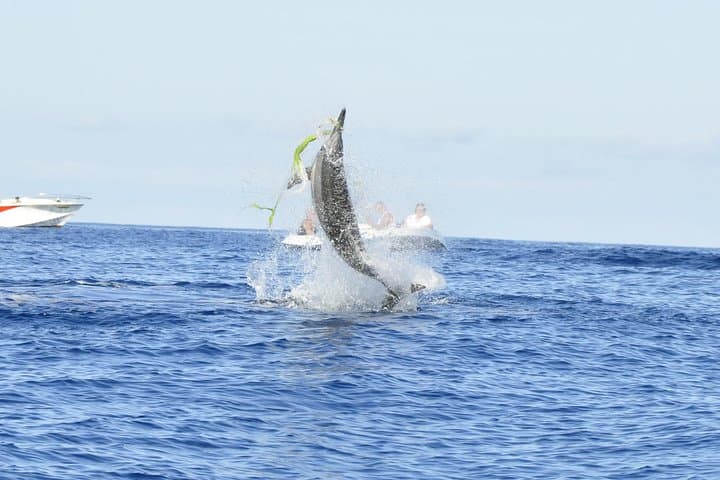
You push off at first light and the western horizon is a hard line of silver; the boat cuts through glassy water while distant blows punctuate the calm. Dolphins break the surface in quick, efficient arcs—curious, fast, and indifferent to applause. When conditions allow, guides lower a ladder and you slip into warm, clear water to watch them roll and weave beyond the reef.
You push off at first light and the western horizon is a hard line of silver; the boat cuts through glassy water while distant blows punctuate the calm. Dolphins break the surface in quick, efficient arcs—curious, fast, and indifferent to applause. When conditions allow, guides lower a ladder and you slip into warm, clear water to watch them roll and weave beyond the reef.
The west coast of Mauritius has long been a meeting place between people and sea: small fishing villages have read the patterns of currents and pods for generations, and today responsible operators follow local approach rules to keep encounters low-impact. Geologically, Mauritius is an ancient volcanic island ringed by a living coral reef; the lagoon and reef structure create channels that concentrate fish and, in turn, dolphins.
Culturally the morning sea still runs on local rhythms—boats launching at dawn, Creole communities tending nets—and many operators provide live commentary so guests learn about species, behavior, and reef ecology while transiting.
Practical notes: the trip runs about 2.5 hours, with groups capped around 14; snorkeling equipment is provided and bottled water is included. Swimming with dolphins is conditional—guides assess animal behavior and sea state and will only allow in-water interactions when safe and respectful. Wear reef-safe sunscreen, bring a waterproof camera or housing, and plan for an early start to increase sighting odds. If you’re prone to seasickness, take medication before boarding; if mobility is limited, inform the operator—guests can be carried onto the boat but wheelchair users are not taken into the water. This experience balances the thrill of a wild encounter with straightforward, conservation-minded practices.