THE ADVENTURE COLLECTIVE® · Independent discovery and booking for outdoor travel

Two hours of guided Taichi on a Shanghai rooftop or studio, pairing slow forms with breathwork and guzheng music. Ideal for beginners and those seeking mindful movement and posture correction.
Two hours of guided Taichi on a Shanghai rooftop or studio, pairing slow forms with breathwork and guzheng music. Ideal for beginners and those seeking mindful movement and posture correction.
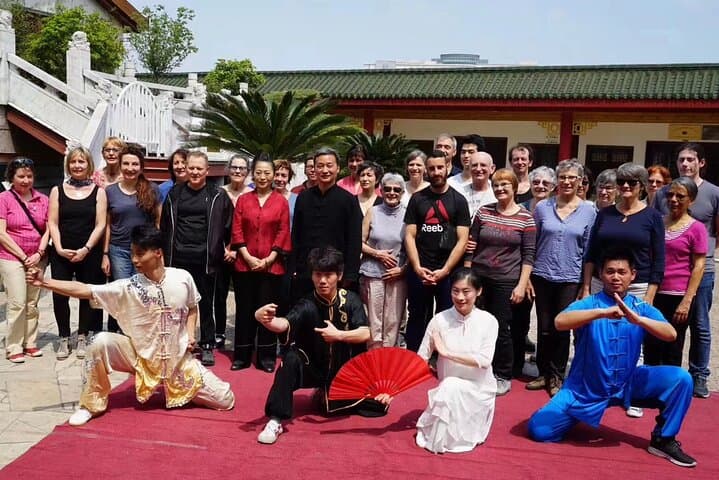
Morning light on a Shanghai roof garden flattens the city’s angles and lets the air behave like a teacher: slow, patient, insistently present. You stand with a small group, mirror in front and coach at the helm, and the first inhale rearranges your posture — shoulders drop, knees soften, the body wakes into rhythm.
Verified experiences and guided adventures in the surrounding area.
Operated by Miukia Business and Trading Co., Ltd. · Shanghai, Shanghai
Morning light on a Shanghai roof garden flattens the city’s angles and lets the air behave like a teacher: slow, patient, insistently present. You stand with a small group, mirror in front and coach at the helm, and the first inhale rearranges your posture — shoulders drop, knees soften, the body wakes into rhythm.
Taichi (taijiquan) traces back centuries in China as a martial art turned health practice; in urban Shanghai it's often taught alongside traditional guzheng music to steady cadence and focus. The class described follows a simple form: slow, linked movements, emphasis on coordinated breathing, and coach-led corrections using a mirror for immediate feedback. Roof gardens and park pavements became popular training spots in the 20th century when urban dwellers sought green air and sunlight.
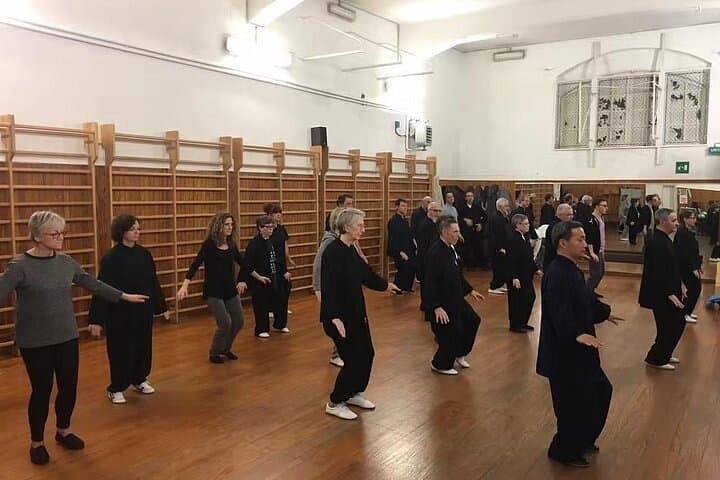
Expect two hours of guided repetition: learning primary postures, timing inhale-exhale with motion, and hand-by-hand adjustments. The coach speaks English and works with participants of varying ability — the program is accessible for beginners yet useful for those refining alignment.
Practical notes: wear loose, flat-soled shoes or practice barefoot on the mat; bring a water bottle and arrive 10–15 minutes early to warm up. The class can run outdoors on a rooftop or inside a practice room with mirrors; classes are wheelchair accessible and capped at about 15 people. If you plan ongoing practice, ask the coach for a short at-home routine and tempo cues to practice breath control.
This session favors quiet attention more than exertion — it refines balance, calms the nervous system, and leaves you moving through the city with a steadier gait.
easy.
2 hours.
Suitable for all fitness levels; best if you can stand and shift weight for extended periods.
No; the session is designed for beginners and includes foundational movements and breath timing.
Yes; the offering is wheelchair accessible and coaches adapt movements for mobility limitations.
The coach can speak English and will provide hands-on guidance and mirror-based corrections.
No; basic equipment is provided and Taichi fans are available if needed, though most sessions require only personal clothing and water.
Taichi evolved over centuries in China as a martial and meditative practice; in modern cities like Shanghai it is often taught in parks and rooftop gardens to combine fresh air with practice.
Small-group classes minimize environmental footprint; when held outdoors, avoid leaving mats or disposable bottles and follow venue rules to protect green roof plantings.
Miukia Business and Trading Co., Ltd. operates guided outdoor trips and adventures with an emphasis on safety, stewardship, and memorable experiences.
Morning light on a Shanghai roof garden flattens the city’s angles and lets the air behave like a teacher: slow, patient, insistently present. You stand with a small group, mirror in front and coach at the helm, and the first inhale rearranges your posture — shoulders drop, knees soften, the body wakes into rhythm.
Morning light on a Shanghai roof garden flattens the city’s angles and lets the air behave like a teacher: slow, patient, insistently present. You stand with a small group, mirror in front and coach at the helm, and the first inhale rearranges your posture — shoulders drop, knees soften, the body wakes into rhythm.
Taichi (taijiquan) traces back centuries in China as a martial art turned health practice; in urban Shanghai it's often taught alongside traditional guzheng music to steady cadence and focus. The class described follows a simple form: slow, linked movements, emphasis on coordinated breathing, and coach-led corrections using a mirror for immediate feedback. Roof gardens and park pavements became popular training spots in the 20th century when urban dwellers sought green air and sunlight.
Expect two hours of guided repetition: learning primary postures, timing inhale-exhale with motion, and hand-by-hand adjustments. The coach speaks English and works with participants of varying ability — the program is accessible for beginners yet useful for those refining alignment.
Practical notes: wear loose, flat-soled shoes or practice barefoot on the mat; bring a water bottle and arrive 10–15 minutes early to warm up. The class can run outdoors on a rooftop or inside a practice room with mirrors; classes are wheelchair accessible and capped at about 15 people. If you plan ongoing practice, ask the coach for a short at-home routine and tempo cues to practice breath control.
This session favors quiet attention more than exertion — it refines balance, calms the nervous system, and leaves you moving through the city with a steadier gait.