THE ADVENTURE COLLECTIVE® · Independent discovery and booking for outdoor travel

See Kenai Fjords from a helicopter on a 60-minute flight that sweeps over Resurrection Bay, Bear Glacier, and the Harding Icefield. Expect whale sightings, dramatic icefields, and concise local insights for planning your trip.
See Kenai Fjords from a helicopter on a 60-minute flight that sweeps over Resurrection Bay, Bear Glacier, and the Harding Icefield. Expect whale sightings, dramatic icefields, and concise local insights for planning your trip.
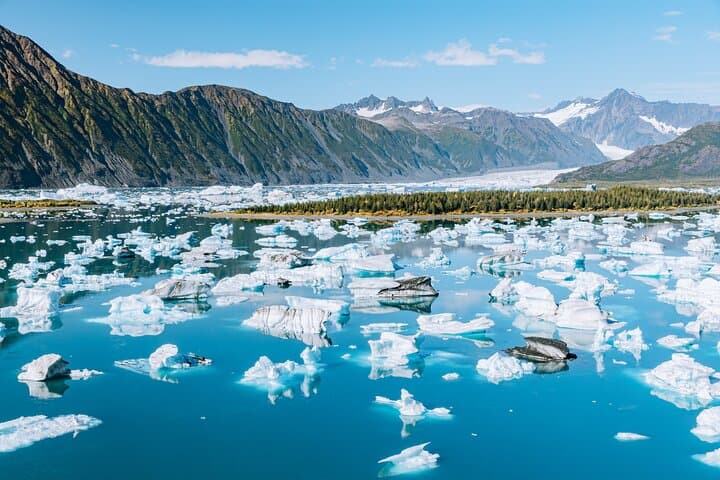
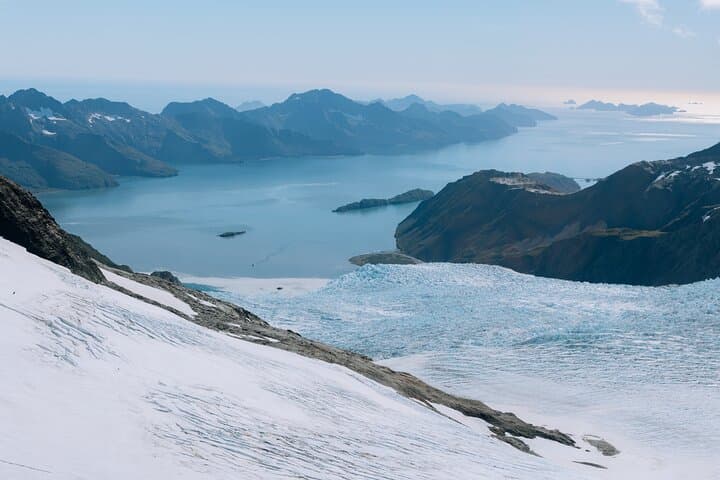
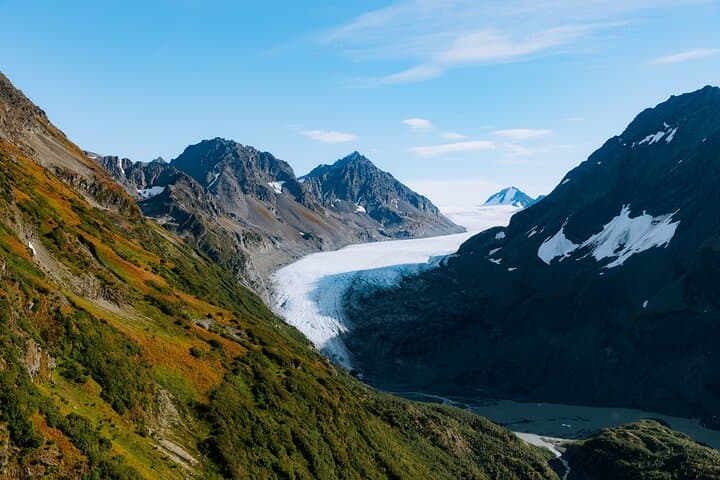
The helicopter lifts, and Seward shrinks: a ribbon of highway, the quilted rooflines of a harbor town, and then the landscape opens — black-peaked ridges giving way to white that feels lived-in rather than pristine. In this 60-minute flightseeing loop, the aircraft threads the spine of the Kenai Mountains, arcs over Resurrection Bay, and follows the ice that feeds Bear Glacier and the Harding Icefield. Icefields push glaciers downhill; fjords keep score in deep water and steep rock.
Verified experiences and guided adventures in the surrounding area.
Operated by Alaska Helicopter Tours · Seward, Alaska
The helicopter lifts, and Seward shrinks: a ribbon of highway, the quilted rooflines of a harbor town, and then the landscape opens — black-peaked ridges giving way to white that feels lived-in rather than pristine. In this 60-minute flightseeing loop, the aircraft threads the spine of the Kenai Mountains, arcs over Resurrection Bay, and follows the ice that feeds Bear Glacier and the Harding Icefield. Icefields push glaciers downhill; fjords keep score in deep water and steep rock.
Human history here runs deep. The Alutiiq (Sugpiaq) people have moved along these shores for millennia, living off salmon and seal long before Russian and American contact reshaped the coast. Geologically, the Kenai Fjords are recent by standards of rock — sculpted in the last Ice Age and still being re-cut by active glaciers that calve into the sea.
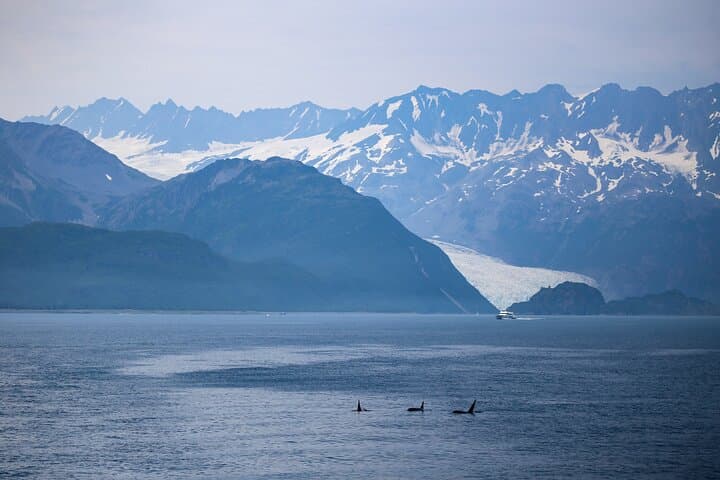
From the air you’ll watch whales surface, sea lions haul out on rocky islets, and mountain goats pick narrow ledges like tightrope walkers. Pilots point out Bear Glacier’s fractured face and the blue of newly exposed ice. Cultural notes — old fishing outposts and the rail-to-road history of Seward — dot the shoreline view.
Practical notes: the tour departs from the check-in visible from Seward Highway (turn between the adventure park and feed store). Expect chilly wind on landing and bring layered outerwear, a camera with a fast shutter, and nausea remedies if you’re sensitive to motion. Flights can cancel for weather; the best visibility is often mid-morning to early afternoon when winds haven’t stiffened. For minimal impact, follow crew guidance on window doors and disturbance-free wildlife viewing — from the air you can see, but not touch, these fragile places.
easy.
60 minutes.
No special fitness required; passengers should be able to board a helicopter and remain seated for the duration.
Tours are accessible to most ages and fitness levels; infants may sit on laps and specialized infant seats are available — disclose ages at booking.
Flights may be canceled for poor visibility or unsafe winds; operators typically refund or offer rescheduling if canceled due to weather.
Wildlife sightings are common but not guaranteed; humpback whales and Steller sea lions are frequently observed, especially in spring and summer.
Helicopters have weight limits and manifest procedures — provide accurate passenger weights during booking to ensure safe weight and balance.
The Kenai Peninsula has long been home to the Alutiiq (Sugpiaq) people; Kenai Fjords National Park was designated in 1980 to protect the glaciers and marine ecosystems.
Aerial tours must balance visitor access with wildlife disturbance; follow crew instructions, stay at legal altitudes, and choose operators who observe National Park and marine wildlife guidelines.
Alaska Helicopter Tours operates guided outdoor trips and adventures with an emphasis on safety, stewardship, and memorable experiences.
The helicopter lifts, and Seward shrinks: a ribbon of highway, the quilted rooflines of a harbor town, and then the landscape opens — black-peaked ridges giving way to white that feels lived-in rather than pristine. In this 60-minute flightseeing loop, the aircraft threads the spine of the Kenai Mountains, arcs over Resurrection Bay, and follows the ice that feeds Bear Glacier and the Harding Icefield. Icefields push glaciers downhill; fjords keep score in deep water and steep rock.
The helicopter lifts, and Seward shrinks: a ribbon of highway, the quilted rooflines of a harbor town, and then the landscape opens — black-peaked ridges giving way to white that feels lived-in rather than pristine. In this 60-minute flightseeing loop, the aircraft threads the spine of the Kenai Mountains, arcs over Resurrection Bay, and follows the ice that feeds Bear Glacier and the Harding Icefield. Icefields push glaciers downhill; fjords keep score in deep water and steep rock.
Human history here runs deep. The Alutiiq (Sugpiaq) people have moved along these shores for millennia, living off salmon and seal long before Russian and American contact reshaped the coast. Geologically, the Kenai Fjords are recent by standards of rock — sculpted in the last Ice Age and still being re-cut by active glaciers that calve into the sea.
From the air you’ll watch whales surface, sea lions haul out on rocky islets, and mountain goats pick narrow ledges like tightrope walkers. Pilots point out Bear Glacier’s fractured face and the blue of newly exposed ice. Cultural notes — old fishing outposts and the rail-to-road history of Seward — dot the shoreline view.
Practical notes: the tour departs from the check-in visible from Seward Highway (turn between the adventure park and feed store). Expect chilly wind on landing and bring layered outerwear, a camera with a fast shutter, and nausea remedies if you’re sensitive to motion. Flights can cancel for weather; the best visibility is often mid-morning to early afternoon when winds haven’t stiffened. For minimal impact, follow crew guidance on window doors and disturbance-free wildlife viewing — from the air you can see, but not touch, these fragile places.