THE ADVENTURE COLLECTIVE® · Independent discovery and booking for outdoor travel

Walk the streets of Roman Hispania on a half-day private tour to Italica and historic Híspalis. Explore mosaics, the amphitheatre’s corridors, and learn how ancient Rome shaped modern Seville.
Walk the streets of Roman Hispania on a half-day private tour to Italica and historic Híspalis. Explore mosaics, the amphitheatre’s corridors, and learn how ancient Rome shaped modern Seville.
You step out of an air-conditioned minivan and into a sunlit sweep of cut stone and shadowed corridors — Italica’s ruins open like a city map erased and selectively redrawn. The stones underfoot remember markets, processions and gladiatorial roars; birds wheel above the amphitheatre, as if still deciding which gate to claim.
Verified experiences and guided adventures in the surrounding area.
Operated by Argania Travel · Santiponce, Andalusia
You step out of an air-conditioned minivan and into a sunlit sweep of cut stone and shadowed corridors — Italica’s ruins open like a city map erased and selectively redrawn. The stones underfoot remember markets, processions and gladiatorial roars; birds wheel above the amphitheatre, as if still deciding which gate to claim.
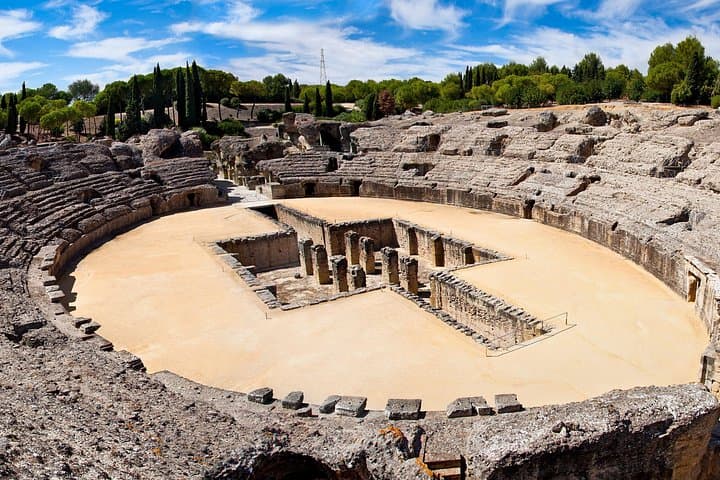
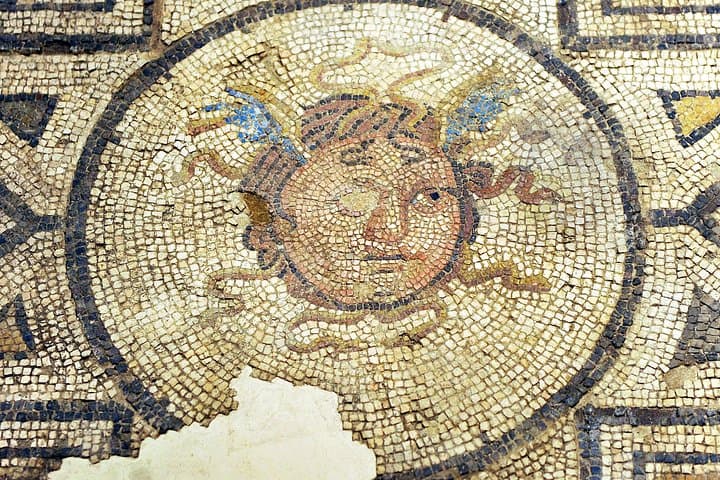
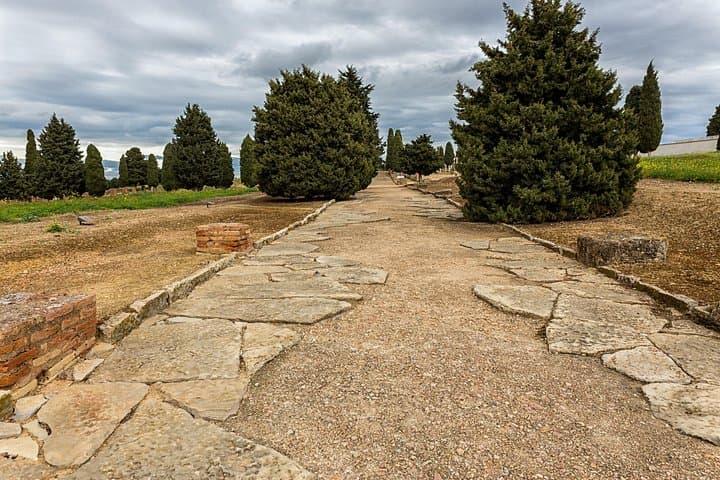
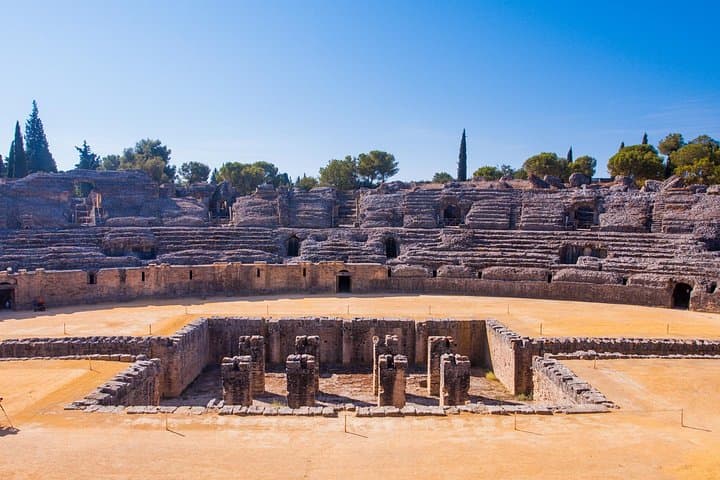
Italica and Híspalis were twin urban fabrics of Roman Hispania: one a purpose-built colony on the outskirts (Italica), the other the provincial hub that evolved into modern Seville (Híspalis). Italica’s grid streets, ornate mosaics and one of the region’s largest amphitheatres reveal imperial layout, local adaptation and centuries of re-use. The geology here — red clay and limestone — shaped Roman construction choices and the amphitheatre’s vaulted entrances, which you’ll pass through on a private guided walk.
The guide fills in cultural layers: Visigothic and later Moorish reuse, the transformation of Híspalis into Seville, and how Roman water management still influences city lines. Practicalities follow the narrative: this is a half-day, multi-site private tour with hotel pickup in Seville, mostly flat walking on archaeological paths and short stair sections in the amphitheatre.
Bring sun protection, a refillable water bottle and sturdy walking shoes; mornings are cooler and quieter, late afternoons cast long shadows across mosaics. The visit suits families and older travelers — paths accept strollers in parts, but sections of Italica require careful footing. Expect 3 hours of measured pace, close interpretation from an official guide, and an intimate look at Rome’s enduring footprint on Andalusia.
easy.
3 hours.
Suitable for most fitness levels; involves light walking and short stairs.
Yes — the itinerary includes admission to Italica and access to the amphitheatre as part of the private tour.
The tour lasts approximately 3 hours and moves at a moderate, interpretive walking pace with stops for explanation and photo opportunities.
Yes — private, air-conditioned pickup from hotels or specified meeting points in Seville is included.
The tour is family-friendly and stroller-accessible in many areas, but some amphitheatre sections have steps and uneven ground that require carrying or careful navigation.
Italica was founded in 206 BCE for wounded veterans and later produced emperors like Trajan and Hadrian; Híspalis grew into the urban core that became modern Seville.
Ongoing conservation focuses on mosaic stabilization and controlled visitor routing; visitors are asked to follow paths and avoid touching fragile surfaces.
Argania Travel operates guided outdoor trips and adventures with an emphasis on safety, stewardship, and memorable experiences.
You step out of an air-conditioned minivan and into a sunlit sweep of cut stone and shadowed corridors — Italica’s ruins open like a city map erased and selectively redrawn. The stones underfoot remember markets, processions and gladiatorial roars; birds wheel above the amphitheatre, as if still deciding which gate to claim.
You step out of an air-conditioned minivan and into a sunlit sweep of cut stone and shadowed corridors — Italica’s ruins open like a city map erased and selectively redrawn. The stones underfoot remember markets, processions and gladiatorial roars; birds wheel above the amphitheatre, as if still deciding which gate to claim.
Italica and Híspalis were twin urban fabrics of Roman Hispania: one a purpose-built colony on the outskirts (Italica), the other the provincial hub that evolved into modern Seville (Híspalis). Italica’s grid streets, ornate mosaics and one of the region’s largest amphitheatres reveal imperial layout, local adaptation and centuries of re-use. The geology here — red clay and limestone — shaped Roman construction choices and the amphitheatre’s vaulted entrances, which you’ll pass through on a private guided walk.
The guide fills in cultural layers: Visigothic and later Moorish reuse, the transformation of Híspalis into Seville, and how Roman water management still influences city lines. Practicalities follow the narrative: this is a half-day, multi-site private tour with hotel pickup in Seville, mostly flat walking on archaeological paths and short stair sections in the amphitheatre.
Bring sun protection, a refillable water bottle and sturdy walking shoes; mornings are cooler and quieter, late afternoons cast long shadows across mosaics. The visit suits families and older travelers — paths accept strollers in parts, but sections of Italica require careful footing. Expect 3 hours of measured pace, close interpretation from an official guide, and an intimate look at Rome’s enduring footprint on Andalusia.