THE ADVENTURE COLLECTIVE® · Independent discovery and booking for outdoor travel

Get hands-on with flamenco in a historic Seville corralón: learn palmas, arm styling and basic tangos in a 60‑minute class taught by a professional. Ideal for beginners who want cultural context and lively practice in an authentic local space.
Get hands-on with flamenco in a historic Seville corralón: learn palmas, arm styling and basic tangos in a 60‑minute class taught by a professional. Ideal for beginners who want cultural context and lively practice in an authentic local space.
You step off a narrow Seville street into a sun-warmed corralón where plastered walls keep the noise at bay and the wooden floor still remembers countless rehearsals. The air smells faintly of orange blossom and polish; a professional dancer claps a steady compás and the room answers back.
Verified experiences and guided adventures in the surrounding area.
Operated by Danzaora · Seville, Andalusia
You step off a narrow Seville street into a sun-warmed corralón where plastered walls keep the noise at bay and the wooden floor still remembers countless rehearsals. The air smells faintly of orange blossom and polish; a professional dancer claps a steady compás and the room answers back.
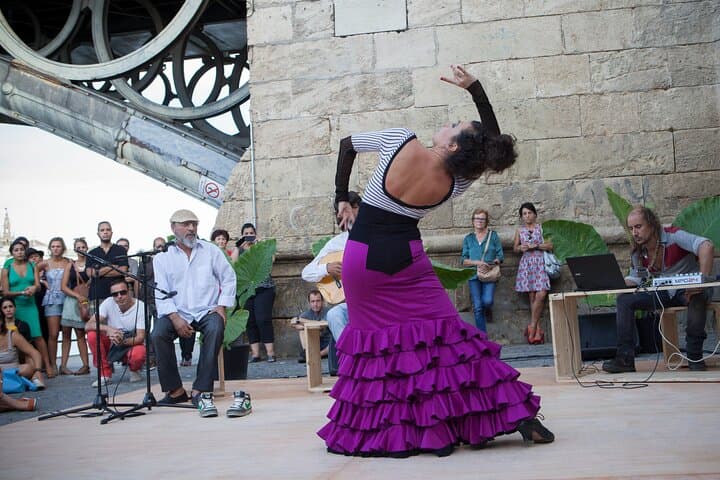
Flamenco grew from Andalusia’s mix of Gypsy, Moorish and local folk traditions; in Seville it took on a particular sharpness—the tangos rhythm here is direct and percussive. The city sits on the Guadalquivir’s broad alluvial plain, and that same openness finds its way into flamenco’s big gestures and bold footwork. Learning in a corralón gives a cultural context: these communal courtyards were once working spaces for artisans and have become pockets of living heritage.
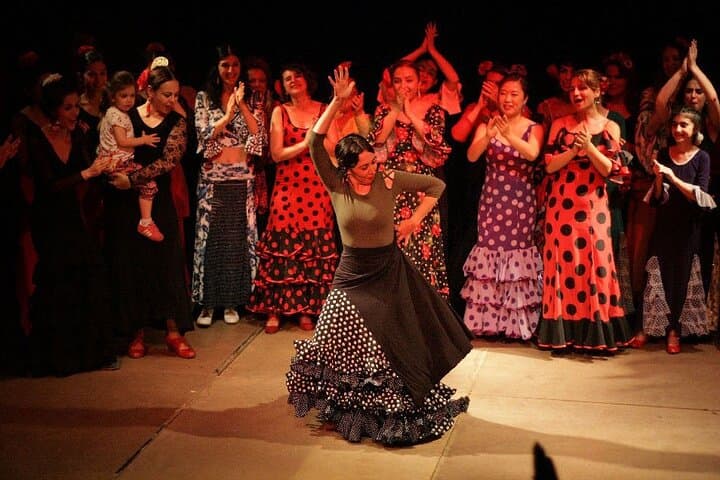
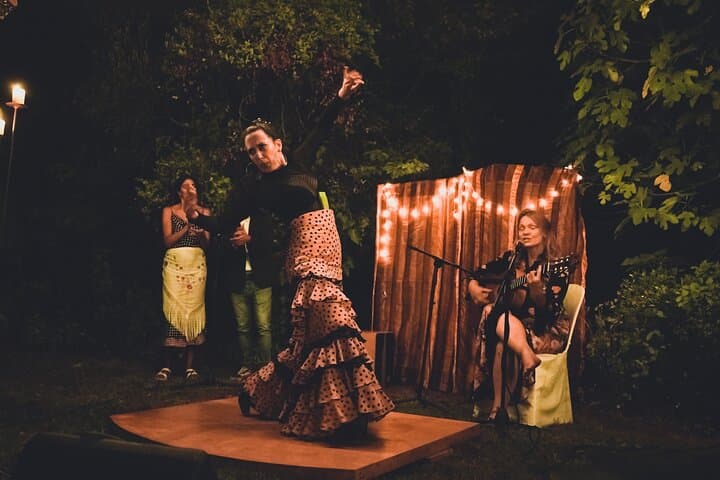
Expect a compact, hands-on lesson: palmas (hand clapping to the compás), arm and hand styling, basic footwork for tangos, and a short called sequence that ends in a group dance. The teacher encourages questions about technique and history, and often finishes with a sung lyric so you experience the dance with music.
Practical notes: the session runs about 60 minutes, capped for small groups, and is suitable for all abilities; you'll stand and move in a confined indoor courtyard. Wear comfortable, closed-toe shoes and breathable clothes, bring water, and arrive 10 minutes early to warm up. This class pairs well with an afternoon wandering the Jewish Quarter or catching live fandango later in the evening.
easy.
1 hour.
Suitable for people of average mobility; light standing and basic coordination required.
No—this class is designed for beginners and focuses on basic palmas, arm movement and simple footwork.
The experience is family-friendly and listed as stroller-accessible, but check age suitability with the operator for very young children.
Classes are typically taught in Spanish but many teachers give explanations in basic English; ask at booking if you require another language.
Photography is usually allowed but be respectful—ask the instructor first, especially during the live singing portion.
Flamenco crystallized in 19th-century Andalusia from Romani, Moorish and local folk elements; corralones in Seville were communal artisan courtyards that fostered social performance.
Support local artists and historic courtyards by booking with reputable teachers; avoid loud rehearsal in fragile heritage spaces and follow venue rules to reduce wear on old floors and finishes.
Danzaora operates guided outdoor trips and adventures with an emphasis on safety, stewardship, and memorable experiences.
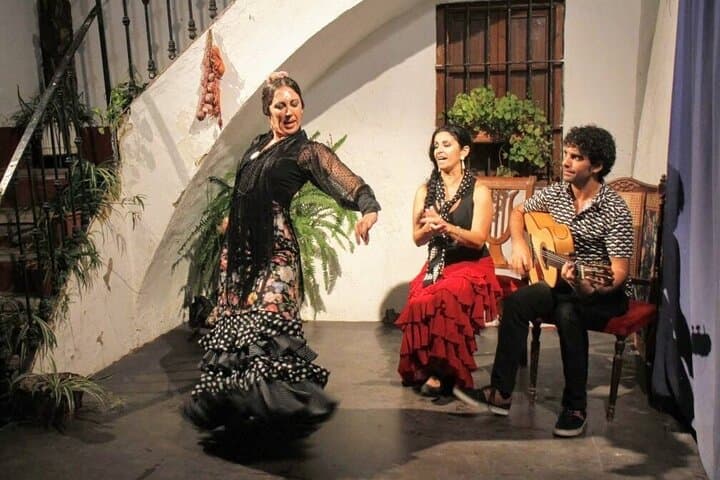
You step off a narrow Seville street into a sun-warmed corralón where plastered walls keep the noise at bay and the wooden floor still remembers countless rehearsals. The air smells faintly of orange blossom and polish; a professional dancer claps a steady compás and the room answers back.
You step off a narrow Seville street into a sun-warmed corralón where plastered walls keep the noise at bay and the wooden floor still remembers countless rehearsals. The air smells faintly of orange blossom and polish; a professional dancer claps a steady compás and the room answers back.
Flamenco grew from Andalusia’s mix of Gypsy, Moorish and local folk traditions; in Seville it took on a particular sharpness—the tangos rhythm here is direct and percussive. The city sits on the Guadalquivir’s broad alluvial plain, and that same openness finds its way into flamenco’s big gestures and bold footwork. Learning in a corralón gives a cultural context: these communal courtyards were once working spaces for artisans and have become pockets of living heritage.
Expect a compact, hands-on lesson: palmas (hand clapping to the compás), arm and hand styling, basic footwork for tangos, and a short called sequence that ends in a group dance. The teacher encourages questions about technique and history, and often finishes with a sung lyric so you experience the dance with music.
Practical notes: the session runs about 60 minutes, capped for small groups, and is suitable for all abilities; you'll stand and move in a confined indoor courtyard. Wear comfortable, closed-toe shoes and breathable clothes, bring water, and arrive 10 minutes early to warm up. This class pairs well with an afternoon wandering the Jewish Quarter or catching live fandango later in the evening.