THE ADVENTURE COLLECTIVE® · Independent discovery and booking for outdoor travel

Drive up to Vista do Rei and find two lakes that look like they belong to different worlds. This full-day Sete Cidades visit combines panoramic viewpoints, short crater-side walks and local insights to make the most of São Miguel's signature caldera.
Drive up to Vista do Rei and find two lakes that look like they belong to different worlds. This full-day Sete Cidades visit combines panoramic viewpoints, short crater-side walks and local insights to make the most of São Miguel's signature caldera.
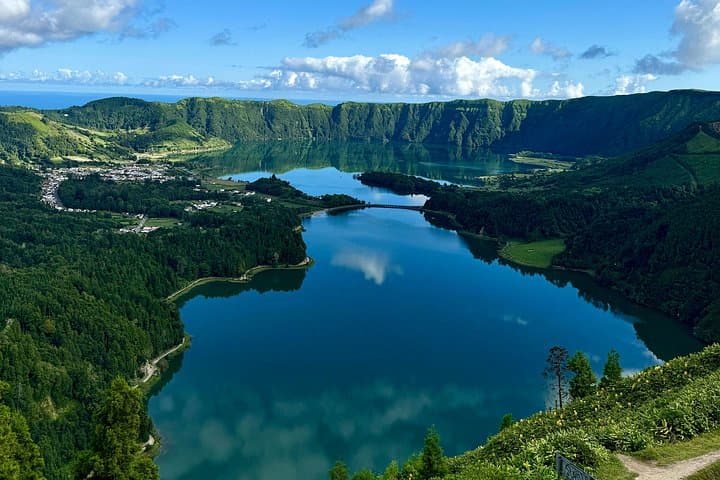
A road curves up through pastures and hydrangea hedgerows, and then the island opens — a five-kilometer caldera dropping away like a green bowl. From the Vista do Rei viewpoint the two lakes sit side-by-side: the deep blue of Lagoa Azul and the moss-green of Lagoa Verde, colors that catch and argue with the changing light. Wind pushes low clouds across the crater rims; sheep dot the slopes and whales once passed offshore, watched now by former lookouts turned viewpoints.
Verified experiences and guided adventures in the surrounding area.
Operated by Azores Islands Experience · Sete Cidades, Azores
A road curves up through pastures and hydrangea hedgerows, and then the island opens — a five-kilometer caldera dropping away like a green bowl. From the Vista do Rei viewpoint the two lakes sit side-by-side: the deep blue of Lagoa Azul and the moss-green of Lagoa Verde, colors that catch and argue with the changing light. Wind pushes low clouds across the crater rims; sheep dot the slopes and whales once passed offshore, watched now by former lookouts turned viewpoints.
Geologically, Sete Cidades is a young volcanic caldera whose twin lakes occupy nested craters formed by collapse and later eruptions. Human history here blends rural Azorean farming with maritime traditions: small villages like Sete Cidades and Mosteiros grew from fishing and subsistence agriculture, and the ruined Monte Palace hotel hints at mid-20th-century aspirations to turn volcanic scenery into luxury tourism.
Local culture favors slow meals—fresh fish, cozido cooked in thermal soil elsewhere on the island—and guides often point out native laurel forest remnants and endemic plants along roadside stops.
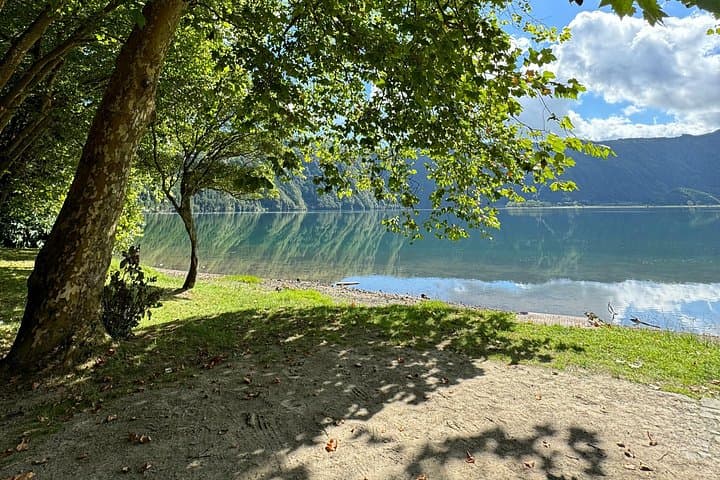
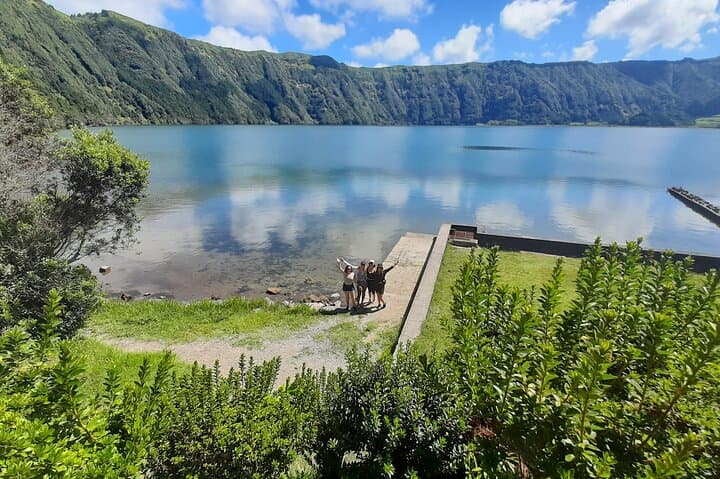
Practical guidance: the shared full-day tour typically runs about 3–4 hours on-site within a 3.5-hour excursion, with stops at Vista do Rei, Cerrado das Freiras, Lagoa de Santiago and other viewpoints. Wear sturdy walking shoes for short trails and damp grass, pack a windproof layer and a reusable water bottle, and plan for changing weather—fog can arrive fast. Photography is best in morning or late afternoon when the crater light separates lake colors. Respect fencing and private farmland: many lookouts sit beside active fields.
moderate.
3–4 hours.
Suitable for most people with basic mobility; requires short walks and getting in/out of the vehicle several times.
The full excursion allocates around 3–4 hours on-site within a roughly 3.5‑hour itinerary, including multiple viewpoint stops and short walks.
Swimming is possible in some lake access points but water is cool and access is limited; snorkeling trips are usually arranged separately along suitable coastlines.
Some viewpoints like parts of Vista do Rei have roadside parking and short paved access, but many trails are uneven—check with your operator about specific accessibility needs.
Drone use is restricted in many protected and populated areas—verify local regulations and respect privacy and safety when flying.
Sete Cidades developed around volcanic activity and farming; the crater's lookouts were later used to spot whales and monitor the sea.
The Azores balance tourism with fragile ecosystems—stick to paths to avoid damaging endemic flora and support local guides who follow conservation practices.
Azores Islands Experience operates guided outdoor trips and adventures with an emphasis on safety, stewardship, and memorable experiences.
A road curves up through pastures and hydrangea hedgerows, and then the island opens — a five-kilometer caldera dropping away like a green bowl. From the Vista do Rei viewpoint the two lakes sit side-by-side: the deep blue of Lagoa Azul and the moss-green of Lagoa Verde, colors that catch and argue with the changing light. Wind pushes low clouds across the crater rims; sheep dot the slopes and whales once passed offshore, watched now by former lookouts turned viewpoints.
A road curves up through pastures and hydrangea hedgerows, and then the island opens — a five-kilometer caldera dropping away like a green bowl. From the Vista do Rei viewpoint the two lakes sit side-by-side: the deep blue of Lagoa Azul and the moss-green of Lagoa Verde, colors that catch and argue with the changing light. Wind pushes low clouds across the crater rims; sheep dot the slopes and whales once passed offshore, watched now by former lookouts turned viewpoints.
Geologically, Sete Cidades is a young volcanic caldera whose twin lakes occupy nested craters formed by collapse and later eruptions. Human history here blends rural Azorean farming with maritime traditions: small villages like Sete Cidades and Mosteiros grew from fishing and subsistence agriculture, and the ruined Monte Palace hotel hints at mid-20th-century aspirations to turn volcanic scenery into luxury tourism.
Local culture favors slow meals—fresh fish, cozido cooked in thermal soil elsewhere on the island—and guides often point out native laurel forest remnants and endemic plants along roadside stops.
Practical guidance: the shared full-day tour typically runs about 3–4 hours on-site within a 3.5-hour excursion, with stops at Vista do Rei, Cerrado das Freiras, Lagoa de Santiago and other viewpoints. Wear sturdy walking shoes for short trails and damp grass, pack a windproof layer and a reusable water bottle, and plan for changing weather—fog can arrive fast. Photography is best in morning or late afternoon when the crater light separates lake colors. Respect fencing and private farmland: many lookouts sit beside active fields.