THE ADVENTURE COLLECTIVE® · Independent discovery and booking for outdoor travel

Board from Sesimbra Harbor for a 2.5-hour eco-focused dolphin watch that combines marine biology commentary with floating-plastic collection along the Arrábida coast. Ideal for families and conservation-minded travelers, this outing blends wildlife viewing with practical stewardship.
Board from Sesimbra Harbor for a 2.5-hour eco-focused dolphin watch that combines marine biology commentary with floating-plastic collection along the Arrábida coast. Ideal for families and conservation-minded travelers, this outing blends wildlife viewing with practical stewardship.
The boat slips out of Sesimbra Harbor and the Atlantic presses cool air against your face, the coastline of Serra da Arrábida unfurling like a low, forested rampart. Dolphins often appear on the horizon first as quick arcs, then as close company riding the bow wave — curious, quick, and seemingly amused by the boat’s progress. The activity pairs calm observation with a hands-on coastal cleanup: volunteers scan the waterline and collect floating plastic as marine biologists point out behaviors and species.
Verified experiences and guided adventures in the surrounding area.
Operated by Anthia Diving Center · Sesimbra, Setúbal District
The boat slips out of Sesimbra Harbor and the Atlantic presses cool air against your face, the coastline of Serra da Arrábida unfurling like a low, forested rampart. Dolphins often appear on the horizon first as quick arcs, then as close company riding the bow wave — curious, quick, and seemingly amused by the boat’s progress. The activity pairs calm observation with a hands-on coastal cleanup: volunteers scan the waterline and collect floating plastic as marine biologists point out behaviors and species.
This stretch of coast sits at the mouth of the Sado Estuary, a rare European site where resident dolphins overwinter year-round. Geologically, Arrábida is limestone and schist; the cliffs and reefs create sheltered bays that concentrate nutrients and attract fish, and with them, dolphins. The region’s fishing and maritime culture is visible in Sesimbra’s harbor cafes and traditional boats, and conservation interest has grown since the area became part of regional protections in the late 20th century.
Expect a 2.5-hour outing aboard a small vessel, led by a skipper and a marine biologist, with life jackets provided. Weather can change quickly on the Atlantic side of the peninsula — mornings are usually flatter for sightings. Practical tips: bring non-slip shoes, sun protection, a light wind layer, and a small bag for any plastics you collect. Sightings aren’t guaranteed but the Sado’s resident population and seasonal movements make encounters likely.
The trip is as much about watching as it is about stewardship: you’ll leave with a clearer sense of local marine ecology and a small, direct action toward cleaner water.
easy.
2–3 hours.
Suitable for most fitness levels; requires standing and light walking on a boat and the ability to follow safety briefings
No—sightings are very likely in the Sado Estuary thanks to resident dolphins, but wildlife is unpredictable and cannot be guaranteed.
Meet at the Anthia Diving Center in Sesimbra Harbor; Sesimbra is reachable by car from Lisbon (~40–50 minutes) and by regional bus services.
Yes; it’s family-friendly. Infants must sit on an adult’s lap and children should be supervised; life jackets are provided.
Full refunds are available if you cancel at least 24 hours prior; operators may cancel for bad weather with a full refund or reschedule options.
The Sado Estuary and Arrábida coastline have long supported fishing communities; protection measures expanded in the late 20th century to conserve marine habitats and resident dolphin populations.
This outing incorporates plastic collection and environmental education; participants are encouraged to minimize single-use plastics and follow marine-wildlife-distance guidelines.
Anthia Diving Center operates guided outdoor trips and adventures with an emphasis on safety, stewardship, and memorable experiences.
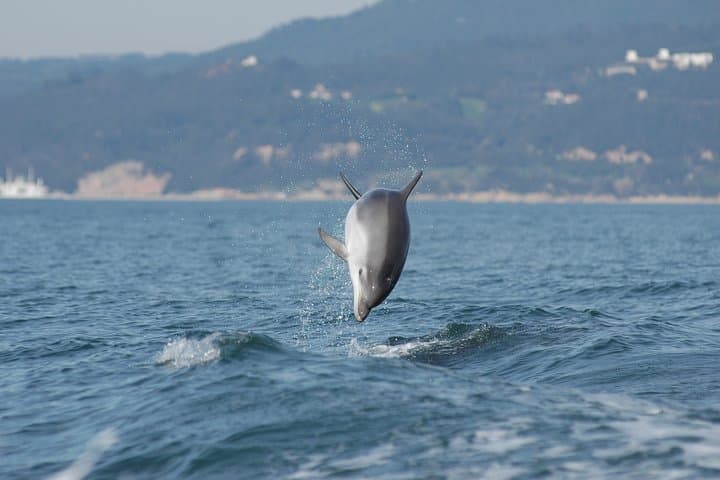


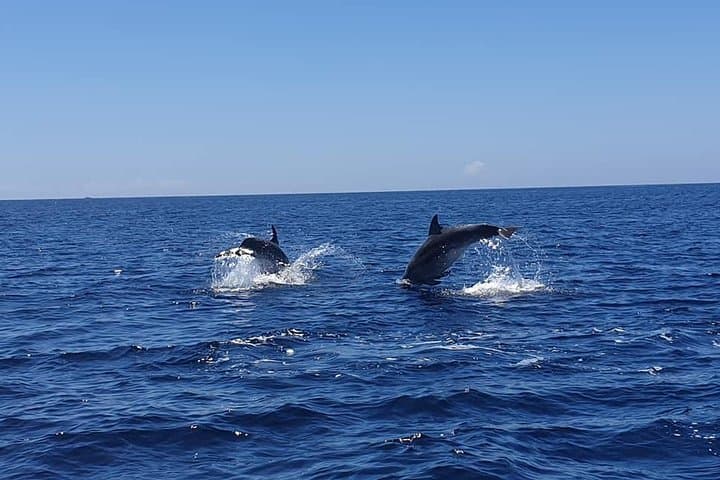
The boat slips out of Sesimbra Harbor and the Atlantic presses cool air against your face, the coastline of Serra da Arrábida unfurling like a low, forested rampart. Dolphins often appear on the horizon first as quick arcs, then as close company riding the bow wave — curious, quick, and seemingly amused by the boat’s progress. The activity pairs calm observation with a hands-on coastal cleanup: volunteers scan the waterline and collect floating plastic as marine biologists point out behaviors and species.
The boat slips out of Sesimbra Harbor and the Atlantic presses cool air against your face, the coastline of Serra da Arrábida unfurling like a low, forested rampart. Dolphins often appear on the horizon first as quick arcs, then as close company riding the bow wave — curious, quick, and seemingly amused by the boat’s progress. The activity pairs calm observation with a hands-on coastal cleanup: volunteers scan the waterline and collect floating plastic as marine biologists point out behaviors and species.
This stretch of coast sits at the mouth of the Sado Estuary, a rare European site where resident dolphins overwinter year-round. Geologically, Arrábida is limestone and schist; the cliffs and reefs create sheltered bays that concentrate nutrients and attract fish, and with them, dolphins. The region’s fishing and maritime culture is visible in Sesimbra’s harbor cafes and traditional boats, and conservation interest has grown since the area became part of regional protections in the late 20th century.
Expect a 2.5-hour outing aboard a small vessel, led by a skipper and a marine biologist, with life jackets provided. Weather can change quickly on the Atlantic side of the peninsula — mornings are usually flatter for sightings. Practical tips: bring non-slip shoes, sun protection, a light wind layer, and a small bag for any plastics you collect. Sightings aren’t guaranteed but the Sado’s resident population and seasonal movements make encounters likely.
The trip is as much about watching as it is about stewardship: you’ll leave with a clearer sense of local marine ecology and a small, direct action toward cleaner water.