THE ADVENTURE COLLECTIVE® · Independent discovery and booking for outdoor travel

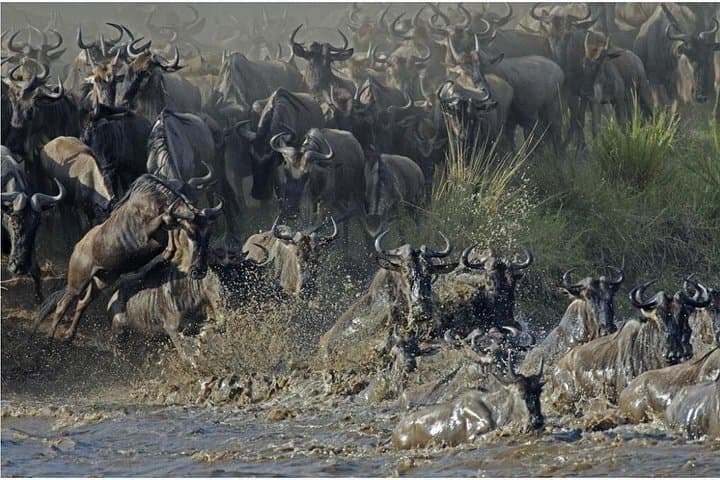
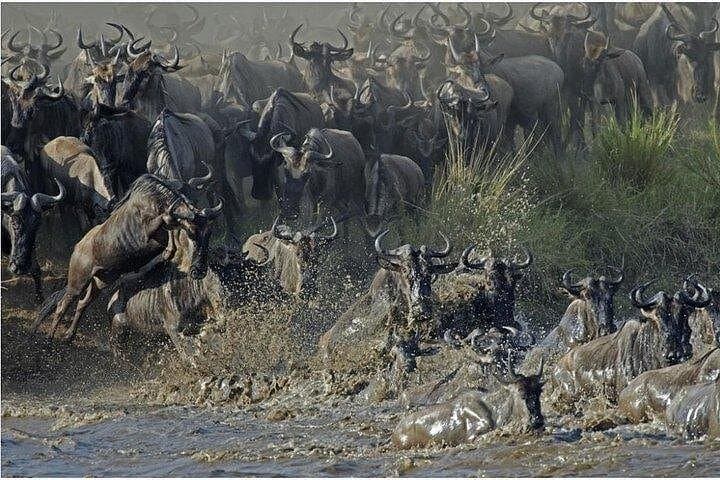
Witness the Great Migration and the Big Five on a five-day road safari from Arusha to Serengeti and Ngorongoro. Long drives lead to close encounters with river crossings, lions on kopjes, and crater wildlife in a compact, vehicle-led expedition.
Witness the Great Migration and the Big Five on a five-day road safari from Arusha to Serengeti and Ngorongoro. Long drives lead to close encounters with river crossings, lions on kopjes, and crater wildlife in a compact, vehicle-led expedition.
A low morning sun paints the grass gold as a single dust plume marks the line of vehicles cutting across the Serengeti. You arrive by road from Arusha—roughly 320–350 km and 6–7 hours on graded highway and later corrugated track—then step into a landscape where the plain itself seems to move: thunderous herds threading the horizon.
Verified experiences and guided adventures in the surrounding area.
Operated by SED Adventures Tours & Safaris Ltd · Serengeti, Mara Region
A low morning sun paints the grass gold as a single dust plume marks the line of vehicles cutting across the Serengeti. You arrive by road from Arusha—roughly 320–350 km and 6–7 hours on graded highway and later corrugated track—then step into a landscape where the plain itself seems to move: thunderous herds threading the horizon.
This five-day circuit follows the rhythm of the Great Migration and the territorial maps of Africa’s predators. Geologically the Serengeti is an uplifted volcanic plain sitting around 1,100–1,600 m; rivers like the Grumeti and Mara carve narrow, crocodile-lined corridors that force dramatic river crossings. Culture and history are close at hand—Olduvai Gorge, where hominin fossils altered our origin story, sits en route to Ngorongoro, whose 600 m-deep caldera frames a dense microcosm of East African wildlife.
Expect open savannah, scattered acacia and kopjes—rocky outcrops that give olive-green scrub and lions vantage points. Game drives run 3–6 hours; mornings are cooler, afternoons can climb above 25–30°C on the plains while Ngorongoro’s rim sits nearer 2,200–2,400 m and feels noticeably cooler.
Practical guidance: book with a driver-guide who reads animal movement; carry 1.5–2 L water daily, a 200–400 mm telephoto for wildlife, flat-soled walking shoes for short hikes around camps, and layers for crater mornings. Follow ranger guidance during river crossings and keep distances—wildlife sets the rules here.
easy.
5 days.
Suitable for travelers in average fitness; most activity is vehicle-based with short walks at lodges and picnic sites.
Migration timing shifts by year, but river crossings and large concentrations typically occur in the northern Serengeti from July to October; calving in the southern plains peaks January–March.
Travelers should check current Tanzanian entry and vaccination requirements—yellow fever vaccination may be required if arriving from certain countries; consult a travel clinic well before departure.
The operator notes wheelchair-accessible options, but game-viewing vehicles and some camps have limited accessibility; confirm details and vehicle needs at booking.
Park fees are usually included in organized itineraries; tipping guides and drivers is customary (guide: ~$10–20/day, driver: smaller amount); confirm what's included when booking.
The Serengeti and Ngorongoro regions hold key archaeological sites like Olduvai Gorge and long Maasai pastoral traditions along migration routes.
The Serengeti–Ngorongoro ecosystem is a UNESCO-recognized area where community-based tourism and regulated vehicle access help mitigate disturbance; stay on tracks and follow guide rules to limit impact.
SED Adventures Tours & Safaris Ltd operates guided outdoor trips and adventures with an emphasis on safety, stewardship, and memorable experiences.
A low morning sun paints the grass gold as a single dust plume marks the line of vehicles cutting across the Serengeti. You arrive by road from Arusha—roughly 320–350 km and 6–7 hours on graded highway and later corrugated track—then step into a landscape where the plain itself seems to move: thunderous herds threading the horizon.
A low morning sun paints the grass gold as a single dust plume marks the line of vehicles cutting across the Serengeti. You arrive by road from Arusha—roughly 320–350 km and 6–7 hours on graded highway and later corrugated track—then step into a landscape where the plain itself seems to move: thunderous herds threading the horizon.
This five-day circuit follows the rhythm of the Great Migration and the territorial maps of Africa’s predators. Geologically the Serengeti is an uplifted volcanic plain sitting around 1,100–1,600 m; rivers like the Grumeti and Mara carve narrow, crocodile-lined corridors that force dramatic river crossings. Culture and history are close at hand—Olduvai Gorge, where hominin fossils altered our origin story, sits en route to Ngorongoro, whose 600 m-deep caldera frames a dense microcosm of East African wildlife.
Expect open savannah, scattered acacia and kopjes—rocky outcrops that give olive-green scrub and lions vantage points. Game drives run 3–6 hours; mornings are cooler, afternoons can climb above 25–30°C on the plains while Ngorongoro’s rim sits nearer 2,200–2,400 m and feels noticeably cooler.
Practical guidance: book with a driver-guide who reads animal movement; carry 1.5–2 L water daily, a 200–400 mm telephoto for wildlife, flat-soled walking shoes for short hikes around camps, and layers for crater mornings. Follow ranger guidance during river crossings and keep distances—wildlife sets the rules here.