THE ADVENTURE COLLECTIVE® · Independent discovery and booking for outdoor travel

A six-day private safari from Arusha that follows the Serengeti’s seasonal rhythms: witness wildebeest and zebra migration, explore Central Serengeti game country, descend into Ngorongoro Crater, and finish at Lake Manyara.
A six-day private safari from Arusha that follows the Serengeti’s seasonal rhythms: witness wildebeest and zebra migration, explore Central Serengeti game country, descend into Ngorongoro Crater, and finish at Lake Manyara.
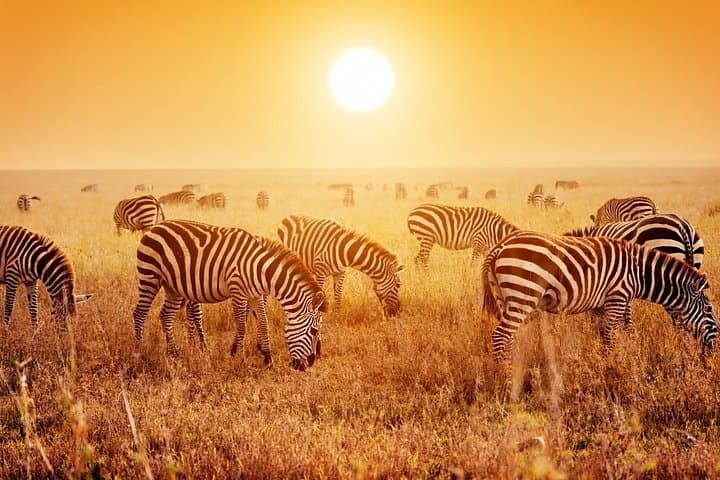
Dust on the window, a low sun slanting across golden grass — you leave Arusha before dawn and drive toward a horizon where the plains seem to go on forever. By noon the Serengeti opens: endless grass broken by kopjes, herds that roll like living waves, and the sudden stillness when a lion lifts its head.
Verified experiences and guided adventures in the surrounding area.
Operated by Guide Private · Arusha, Arusha Region
Dust on the window, a low sun slanting across golden grass — you leave Arusha before dawn and drive toward a horizon where the plains seem to go on forever. By noon the Serengeti opens: endless grass broken by kopjes, herds that roll like living waves, and the sudden stillness when a lion lifts its head.
The Serengeti is both an ecological engine and a place shaped by people. The park sits on ancient volcanic soils and seasonal rivers that steer the great wildebeest and zebra migration along predictable corridors: Ndutu to the south in the December–March calving season, and the Mara and northern corridor from July to November when river crossings concentrate predators and prey. Nearby Ngorongoro Crater is a collapsed volcanic caldera whose steep walls trap an extraordinary density of wildlife; Lake Manyara’s soda flats and groundwater forest host a contrasting floodplain ecosystem.
On a six-day private tour you should expect long, purposeful drives (Arusha to Serengeti about 5–7 hours / ~372 km), dawn and dusk game drives, bush breakfasts, and nights at simple lodges or tented camps in Pimbi/Seronera and Lobo. Practicalities matter: permits and park gates have closing times, 4x4s with guides are the norm, and road surfaces can turn from dust to rutted mud depending on rains. Bring layered clothing for cool mornings, sun protection for midday, and a telephoto lens or binoculars to make wildlife sightings count.
This itinerary balances ambitious migration viewing with classic crater and lake stops — a rhythm of long drives, short walks, and patient watching that rewards planning and patience.
moderate.
6 days.
Suitable for travelers of average fitness but able to handle repeated early mornings, climbing into 4x4s, and several hours on unsealed roads.
The road transfer is typically 5–7 hours (roughly 372 km) depending on route, vehicle, and road conditions; some operators combine with short flights.
Migration timing shifts with rain patterns, but generally Ndutu (southern corridor) is best December–March and the northern Mara crossings are most active July–November.
This itinerary uses a mix of tented camps and lodges such as Seronera/Pimbi and Lobo; standards vary but expect basic to comfortable amenities and communal dining.
Check travel health guidance for required and recommended vaccinations; park entry permits are typically handled by the operator and included in the tour arrangements.
Serengeti derives from the Maasai phrase 'siringet' meaning 'endless plains'; human use of the landscape by pastoralists and hunters predates formal park protection established in 1951.
The migration depends on cross-boundary rangelands and seasonal water; visitors should minimize disturbance, follow vehicle distance rules, and support operators that use sustainable camp practices.
Guide Private operates guided outdoor trips and adventures with an emphasis on safety, stewardship, and memorable experiences.
Dust on the window, a low sun slanting across golden grass — you leave Arusha before dawn and drive toward a horizon where the plains seem to go on forever. By noon the Serengeti opens: endless grass broken by kopjes, herds that roll like living waves, and the sudden stillness when a lion lifts its head.
Dust on the window, a low sun slanting across golden grass — you leave Arusha before dawn and drive toward a horizon where the plains seem to go on forever. By noon the Serengeti opens: endless grass broken by kopjes, herds that roll like living waves, and the sudden stillness when a lion lifts its head.
The Serengeti is both an ecological engine and a place shaped by people. The park sits on ancient volcanic soils and seasonal rivers that steer the great wildebeest and zebra migration along predictable corridors: Ndutu to the south in the December–March calving season, and the Mara and northern corridor from July to November when river crossings concentrate predators and prey. Nearby Ngorongoro Crater is a collapsed volcanic caldera whose steep walls trap an extraordinary density of wildlife; Lake Manyara’s soda flats and groundwater forest host a contrasting floodplain ecosystem.
On a six-day private tour you should expect long, purposeful drives (Arusha to Serengeti about 5–7 hours / ~372 km), dawn and dusk game drives, bush breakfasts, and nights at simple lodges or tented camps in Pimbi/Seronera and Lobo. Practicalities matter: permits and park gates have closing times, 4x4s with guides are the norm, and road surfaces can turn from dust to rutted mud depending on rains. Bring layered clothing for cool mornings, sun protection for midday, and a telephoto lens or binoculars to make wildlife sightings count.
This itinerary balances ambitious migration viewing with classic crater and lake stops — a rhythm of long drives, short walks, and patient watching that rewards planning and patience.