THE ADVENTURE COLLECTIVE® · Independent discovery and booking for outdoor travel

Step into Joseon-era pageantry in a rented hanbok and spend a full day moving through Gyeongbokgung’s gates, Bukchon’s hanok lanes, and the working alleys of Gwangjang Market. This private, 8–9 hour tour pairs cultural context with practical logistics for first-time visitors.
Step into Joseon-era pageantry in a rented hanbok and spend a full day moving through Gyeongbokgung’s gates, Bukchon’s hanok lanes, and the working alleys of Gwangjang Market. This private, 8–9 hour tour pairs cultural context with practical logistics for first-time visitors.
You step through Gwanghwamun and the city seems to shift: granite walls and lacquered doors frame the palace courtyard while distant traffic hums like an urban tide. Wearing a hanbok, your movement slows; fabric rustles against stone as Bukhansan watches from the north and the Han River threads the city to the south. The Changing of the Royal Guard at Gyeongbokgung punctuates the morning with drums and crisp steps—history made visible.
Verified experiences and guided adventures in the surrounding area.
Operated by Jeju K Tour(Jeju K Travel Agency Co., Ltd.) · Seoul, Seoul
You step through Gwanghwamun and the city seems to shift: granite walls and lacquered doors frame the palace courtyard while distant traffic hums like an urban tide. Wearing a hanbok, your movement slows; fabric rustles against stone as Bukhansan watches from the north and the Han River threads the city to the south. The Changing of the Royal Guard at Gyeongbokgung punctuates the morning with drums and crisp steps—history made visible.
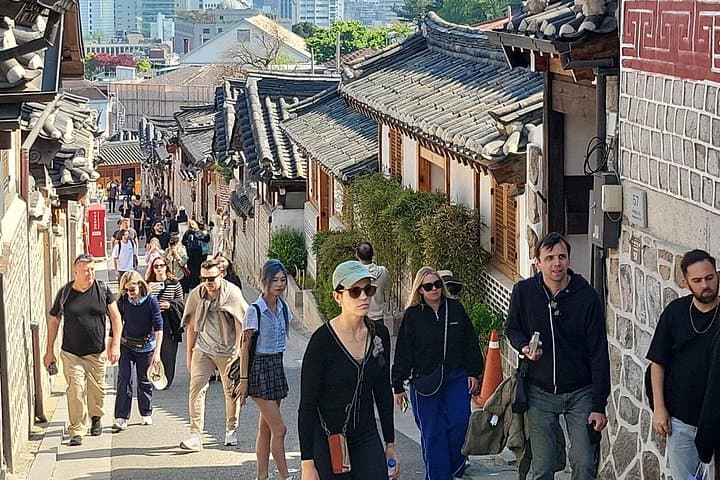
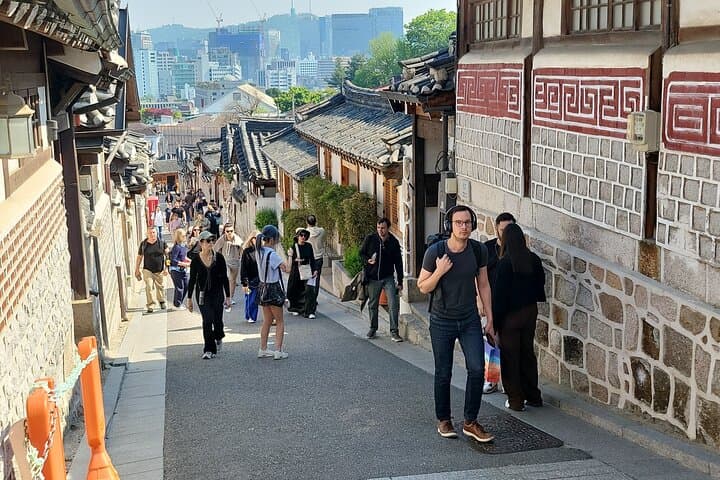
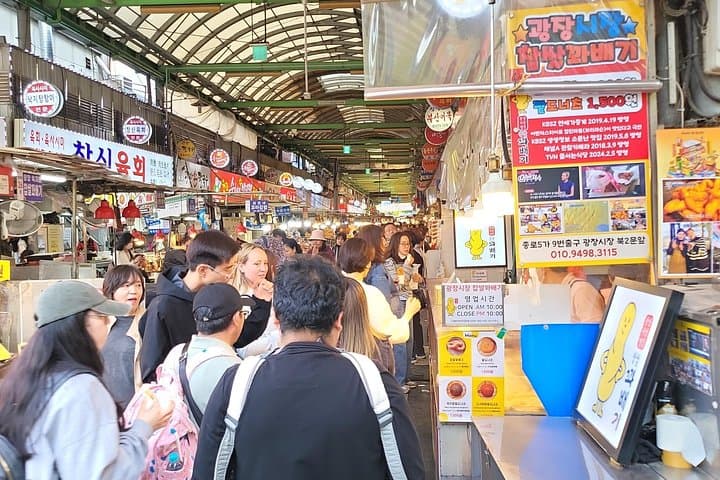
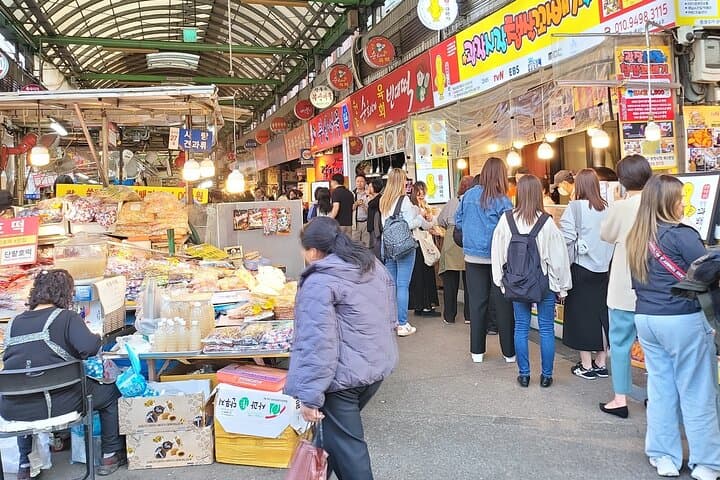
Seoul’s palaces are rooted in Joseon-era court culture and geomancy: Gyeongbokgung was designed to back onto Bukaksan mountain for protection, and the hanok lanes of Bukchon reflect centuries of urban wood-and-tile craft. Markets like Gwangjang trace modern commerce back to 1905, where street food and fabric stalls still crowd narrow alleys. Namsan’s elevation gives a rare topography to the metropolis; geology here is exposed granite and low ridgelines rather than alpine peaks.
Practical guide: expect 8–9 hours of mostly flat walking with periodic stairs in Bukchon and palace steps; hanbok rental is included so bring modest underlayers. The tour includes pick-up and door-to-door return; admissions listed in the itinerary are covered. Time the noon guard ceremony for the clearest experience and arrive with small bills for market snacks. Wear comfortable walking shoes—even in hanbok you’ll be on your feet—and carry water and sun protection for longer summer days. Bukchon asks for quiet, respectful photography near private homes. With a mix of curated history and hands-on cultural experiences, the day balances paced sightseeing with practical logistics so you can move through Seoul with both context and ease.
easy.
8–9 hours.
Suitable for people who can walk several miles at a relaxed pace with intermittent standing; minimal stamina required.
Yes—hanbok rental for use at sites like Gyeongbokgung or Bukchon is included as listed in the tour inclusions.
The tour provides pick-up and drop-off at airport, hotel, port, or stay house and returns to the original departure point.
Public transportation access and stroller/wheelchair accessibility are noted, but some palace areas and Bukchon lanes have stairs and uneven surfaces—check specific accessibility needs in advance.
All admission fees listed in the itinerary are included; confirm any optional add-ons like Namsan Tower observatory which may have separate costs.
Gyeongbokgung was the main palace of the Joseon Dynasty and was rebuilt multiple times; nearby markets like Gwangjang date to the early 20th century and reflect Seoul’s commercial evolution.
Bukchon asks visitors to practice silent tourism to protect residential life, and Seoul encourages using refillable water bottles and public transit to reduce urban waste.
Jeju K Tour(Jeju K Travel Agency Co., Ltd.) operates guided outdoor trips and adventures with an emphasis on safety, stewardship, and memorable experiences.
You step through Gwanghwamun and the city seems to shift: granite walls and lacquered doors frame the palace courtyard while distant traffic hums like an urban tide. Wearing a hanbok, your movement slows; fabric rustles against stone as Bukhansan watches from the north and the Han River threads the city to the south. The Changing of the Royal Guard at Gyeongbokgung punctuates the morning with drums and crisp steps—history made visible.
You step through Gwanghwamun and the city seems to shift: granite walls and lacquered doors frame the palace courtyard while distant traffic hums like an urban tide. Wearing a hanbok, your movement slows; fabric rustles against stone as Bukhansan watches from the north and the Han River threads the city to the south. The Changing of the Royal Guard at Gyeongbokgung punctuates the morning with drums and crisp steps—history made visible.
Seoul’s palaces are rooted in Joseon-era court culture and geomancy: Gyeongbokgung was designed to back onto Bukaksan mountain for protection, and the hanok lanes of Bukchon reflect centuries of urban wood-and-tile craft. Markets like Gwangjang trace modern commerce back to 1905, where street food and fabric stalls still crowd narrow alleys. Namsan’s elevation gives a rare topography to the metropolis; geology here is exposed granite and low ridgelines rather than alpine peaks.
Practical guide: expect 8–9 hours of mostly flat walking with periodic stairs in Bukchon and palace steps; hanbok rental is included so bring modest underlayers. The tour includes pick-up and door-to-door return; admissions listed in the itinerary are covered. Time the noon guard ceremony for the clearest experience and arrive with small bills for market snacks. Wear comfortable walking shoes—even in hanbok you’ll be on your feet—and carry water and sun protection for longer summer days. Bukchon asks for quiet, respectful photography near private homes. With a mix of curated history and hands-on cultural experiences, the day balances paced sightseeing with practical logistics so you can move through Seoul with both context and ease.