THE ADVENTURE COLLECTIVE® · Independent discovery and booking for outdoor travel

Cook four emblematic Korean dishes in a two-hour hands-on class in central Seoul, then tour a multi-level indoor market across the street to shop ingredients and learn local buying customs.
Cook four emblematic Korean dishes in a two-hour hands-on class in central Seoul, then tour a multi-level indoor market across the street to shop ingredients and learn local buying customs.
Step into a brightly lit Seoul studio where the scent of sesame oil and red pepper paste hints at what's coming. Long stainless counters hum with activity as instructors demonstrate the quick flips and pinched pleats that turn simple ingredients into Japchae, mandu, tteokbokki and fishcake — four cornerstones of contemporary Korean comfort food.
Verified experiences and guided adventures in the surrounding area.
Operated by sunnysdiningbz · Seoul, Seoul
Step into a brightly lit Seoul studio where the scent of sesame oil and red pepper paste hints at what's coming. Long stainless counters hum with activity as instructors demonstrate the quick flips and pinched pleats that turn simple ingredients into Japchae, mandu, tteokbokki and fishcake — four cornerstones of contemporary Korean comfort food.
Korean street and home cooking blends centuries of agriculture and trade: wheat and noodles from northern routes, dumpling forms from historic contacts with neighboring cultures, and chili paste that reshaped flavor profiles after the 16th century. In-class, you’ll learn technique and history in short, tactile bursts — how glass noodles soften, how rice cakes absorb spice, and why mandu fillings vary by region.
After tasting your dishes you’ll cross the street for a thirty-minute tour of a multi-floor indoor market, where vacuumed kimchi vats and aisles of seasonings show how modern Seoul shops ingredients for family meals and small businesses. Vendors will point out brands and customs, and there’s a quick primer on tax-free purchases for visitors.
Practical notes: the class is beginner-friendly and lasts about two hours; materials are provided and the kitchen is set up for photos so you can document finished plates. Bring an appetite, a camera, and a light jacket for cooler months. If you plan to shop after, bring your passport for tax refund eligibility and small bills for quick purchases. The experience balances hands-on cooking with market insight — a compact, practical introduction to the flavors that define Korean everyday eating.
easy.
2 hours.
Light — suitable for most fitness levels; standing and light food prep for the session
Yes — the class is designed for people with no prior Korean cooking experience; instructors guide each step.
Many restrictions can be handled if you notify the operator when booking; severe allergies should be discussed in advance.
Yes — the experience includes all ingredients, tools and packaging for what you make.
The market tour isn’t held on the second and fourth Sundays; the cooking session still runs but the market visit will be omitted.
Modern Korean staples like spicy tteokbokki evolved in the 20th century from older rice-cake traditions; mandu reflects longstanding regional exchanges with neighboring cuisines.
Opt for reusable containers and minimize single-use plastics when shopping; ask vendors about sustainable seafood choices when buying fishcake ingredients.
sunnysdiningbz operates guided outdoor trips and adventures with an emphasis on safety, stewardship, and memorable experiences.
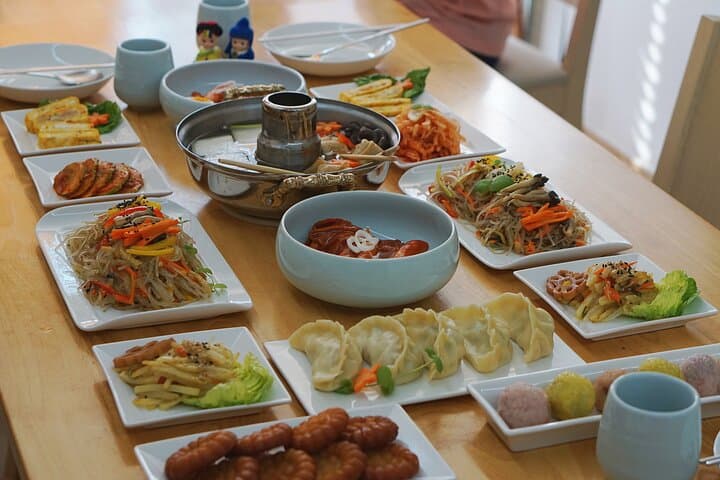
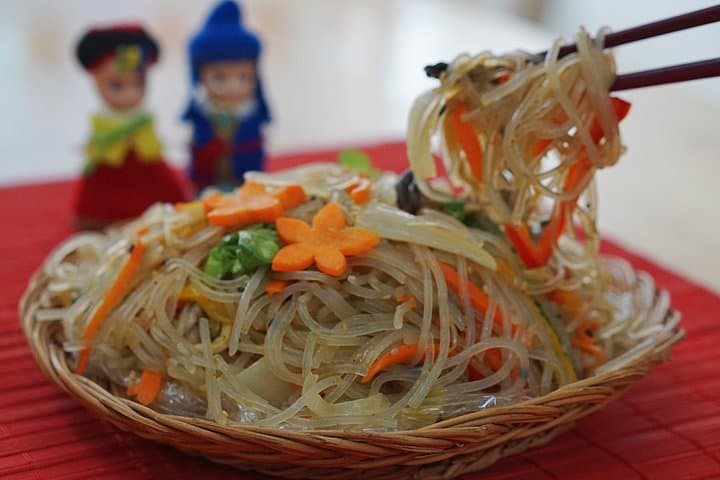
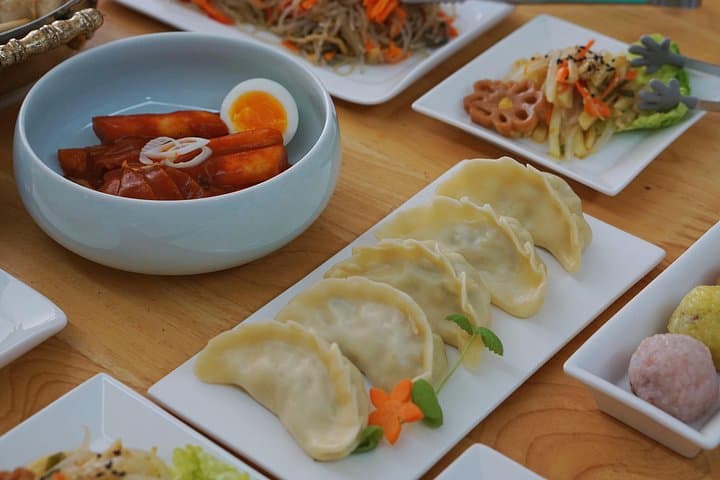
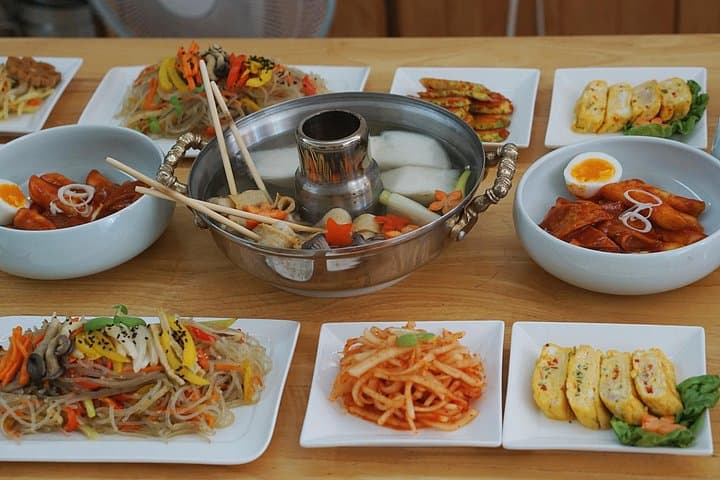
Step into a brightly lit Seoul studio where the scent of sesame oil and red pepper paste hints at what's coming. Long stainless counters hum with activity as instructors demonstrate the quick flips and pinched pleats that turn simple ingredients into Japchae, mandu, tteokbokki and fishcake — four cornerstones of contemporary Korean comfort food.
Step into a brightly lit Seoul studio where the scent of sesame oil and red pepper paste hints at what's coming. Long stainless counters hum with activity as instructors demonstrate the quick flips and pinched pleats that turn simple ingredients into Japchae, mandu, tteokbokki and fishcake — four cornerstones of contemporary Korean comfort food.
Korean street and home cooking blends centuries of agriculture and trade: wheat and noodles from northern routes, dumpling forms from historic contacts with neighboring cultures, and chili paste that reshaped flavor profiles after the 16th century. In-class, you’ll learn technique and history in short, tactile bursts — how glass noodles soften, how rice cakes absorb spice, and why mandu fillings vary by region.
After tasting your dishes you’ll cross the street for a thirty-minute tour of a multi-floor indoor market, where vacuumed kimchi vats and aisles of seasonings show how modern Seoul shops ingredients for family meals and small businesses. Vendors will point out brands and customs, and there’s a quick primer on tax-free purchases for visitors.
Practical notes: the class is beginner-friendly and lasts about two hours; materials are provided and the kitchen is set up for photos so you can document finished plates. Bring an appetite, a camera, and a light jacket for cooler months. If you plan to shop after, bring your passport for tax refund eligibility and small bills for quick purchases. The experience balances hands-on cooking with market insight — a compact, practical introduction to the flavors that define Korean everyday eating.