THE ADVENTURE COLLECTIVE® · Independent discovery and booking for outdoor travel

Explore Seoul in a single, well-paced day: palace rituals at Gyeongbokgung, a riverside stroll on Cheonggyecheon, hanok alleys, market flavors at Gwangjang, and a hands-on K-culture stop at HiKR Ground—with lunch and optional hanbok included.
Explore Seoul in a single, well-paced day: palace rituals at Gyeongbokgung, a riverside stroll on Cheonggyecheon, hanok alleys, market flavors at Gwangjang, and a hands-on K-culture stop at HiKR Ground—with lunch and optional hanbok included.
You step out from a subway mouth into a city that balances palace gates and glass towers within a single skyline. Morning light finds Gyeongbokgung’s painted eaves glowing against a backdrop of high-rises; later, a stream of footsteps follows Cheonggyecheon as office workers and visitors drift past public art. The day moves from quiet hanok alleys in Bukchon to the riotous colors and smells of Gwangjang Market, with a staged pop-culture interlude at HiKR Ground.
Verified experiences and guided adventures in the surrounding area.
Operated by ELIM TOUR · Seoul, Seoul
You step out from a subway mouth into a city that balances palace gates and glass towers within a single skyline. Morning light finds Gyeongbokgung’s painted eaves glowing against a backdrop of high-rises; later, a stream of footsteps follows Cheonggyecheon as office workers and visitors drift past public art. The day moves from quiet hanok alleys in Bukchon to the riotous colors and smells of Gwangjang Market, with a staged pop-culture interlude at HiKR Ground.
Seoul’s history is visible in layers: Joseon-era palaces rebuilt and refortified, modern river reclamation projects like Cheonggyecheon that rewrote urban planning, and neighborhoods that keep craft and culinary traditions alive. Geologically the city sits on low hills and alluvial plains fed by the Han River, which shaped settlement patterns and modern infrastructure. Culturally the tour threads traditional practices—hanbok, market stalls, palace rituals—with contemporary K-culture and commerce.
Practically, expect an active day of walking (roughly 8–9 hours including stops), photo opportunities at scheduled attractions, and at least one market lunch included. Wear comfortable walking shoes, carry a small daypack with water and a portable charger for your phone—many photo stops are digital-heavy. Timing matters: palace ceremonies and market lunch windows are fixed; public transit and walking make circulation efficient but be ready for crowds in Myeong-dong and Gwangjang.
This tour suits visitors who want a condensed, guided orientation to Seoul’s past and present—equal parts architecture, street food, and pop-culture spark—all delivered with local context and easy logistics.
easy.
8–9 hours.
Light-moderate: comfortable walking ability required for several short urban walks and standing at markets and attractions.
Yes, the tour includes admission to Gyeongbokgung as part of the itinerary.
Hanbok hire is offered (fee included in inclusions); inform the operator ahead for sizing and timing.
The tour notes stroller accessibility and tends to be family-friendly, though some streets and alleys can be crowded.
Language options aren’t specified here; check the booking page or contact the operator for guide language availability.
Seoul’s modern footprint grew around the Joseon capital; Gyeongbokgung, originally built in 1395, anchors the city’s royal legacy amid 20th-century reconstruction.
Cheonggyecheon’s restoration is a major urban conservation project that improved water quality and public access; visitors are encouraged to minimize litter and respect residential areas around hanok neighborhoods.
ELIM TOUR operates guided outdoor trips and adventures with an emphasis on safety, stewardship, and memorable experiences.
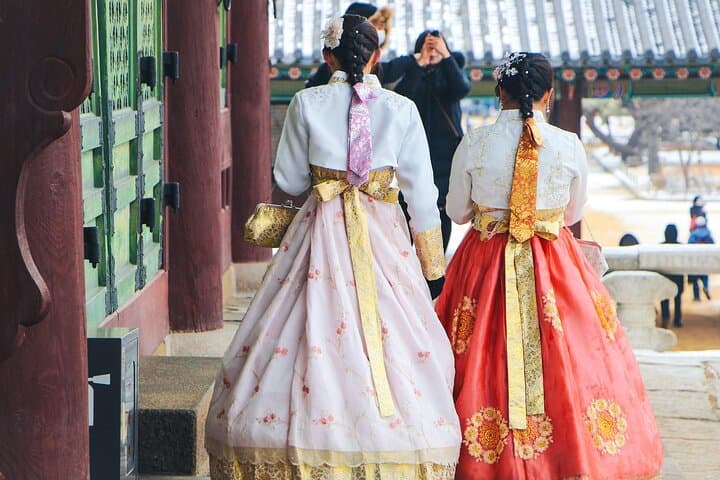


You step out from a subway mouth into a city that balances palace gates and glass towers within a single skyline. Morning light finds Gyeongbokgung’s painted eaves glowing against a backdrop of high-rises; later, a stream of footsteps follows Cheonggyecheon as office workers and visitors drift past public art. The day moves from quiet hanok alleys in Bukchon to the riotous colors and smells of Gwangjang Market, with a staged pop-culture interlude at HiKR Ground.
You step out from a subway mouth into a city that balances palace gates and glass towers within a single skyline. Morning light finds Gyeongbokgung’s painted eaves glowing against a backdrop of high-rises; later, a stream of footsteps follows Cheonggyecheon as office workers and visitors drift past public art. The day moves from quiet hanok alleys in Bukchon to the riotous colors and smells of Gwangjang Market, with a staged pop-culture interlude at HiKR Ground.
Seoul’s history is visible in layers: Joseon-era palaces rebuilt and refortified, modern river reclamation projects like Cheonggyecheon that rewrote urban planning, and neighborhoods that keep craft and culinary traditions alive. Geologically the city sits on low hills and alluvial plains fed by the Han River, which shaped settlement patterns and modern infrastructure. Culturally the tour threads traditional practices—hanbok, market stalls, palace rituals—with contemporary K-culture and commerce.
Practically, expect an active day of walking (roughly 8–9 hours including stops), photo opportunities at scheduled attractions, and at least one market lunch included. Wear comfortable walking shoes, carry a small daypack with water and a portable charger for your phone—many photo stops are digital-heavy. Timing matters: palace ceremonies and market lunch windows are fixed; public transit and walking make circulation efficient but be ready for crowds in Myeong-dong and Gwangjang.
This tour suits visitors who want a condensed, guided orientation to Seoul’s past and present—equal parts architecture, street food, and pop-culture spark—all delivered with local context and easy logistics.