THE ADVENTURE COLLECTIVE® · Independent discovery and booking for outdoor travel

Dress in a traditional hanbok and walk through Gyeongbokgung Palace, Gwanghwamun, Insadong and Ikseon-dong on a four-hour cultural stroll. Expect historic architecture, photo-ready hanok alleys, and practical tips for a smooth experience.
Dress in a traditional hanbok and walk through Gyeongbokgung Palace, Gwanghwamun, Insadong and Ikseon-dong on a four-hour cultural stroll. Expect historic architecture, photo-ready hanok alleys, and practical tips for a smooth experience.
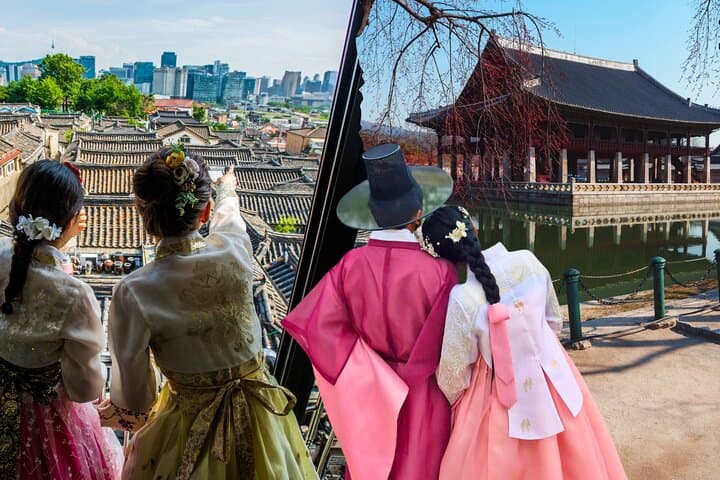
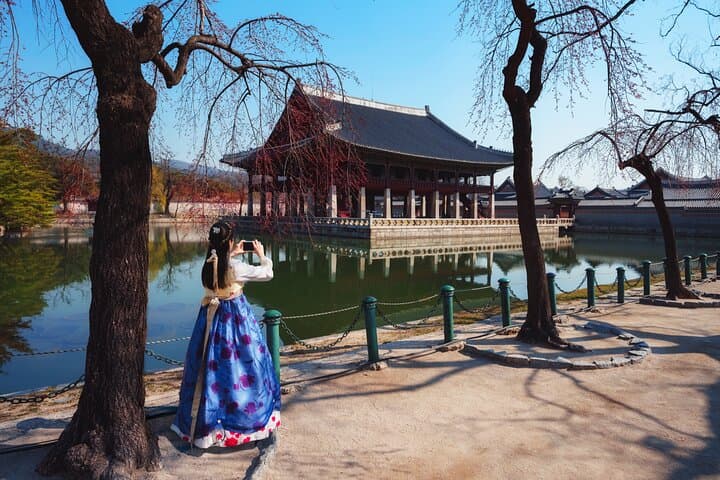
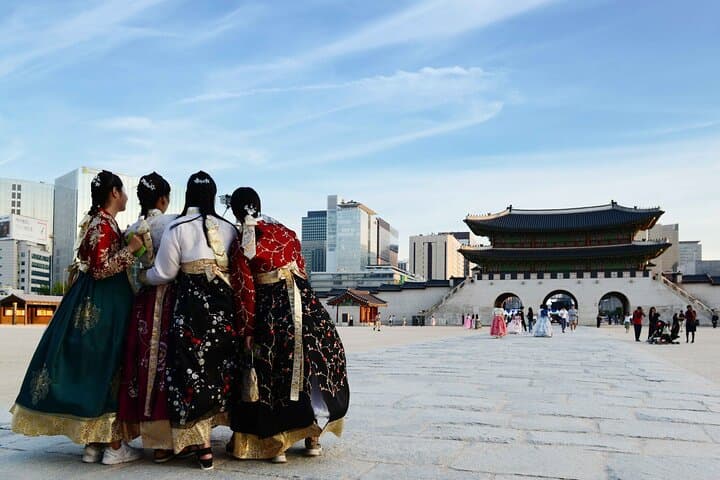
Morning light slides across the curved roofs of Gyeongbokgung as you step into a hanbok — silk sleeves brushing stone and the city’s hum folding around the palace walls. The air smells faintly of polished wood and pine from distant Bukhansan ridgelines; the changing-of-the-guard drum beats punctuate your first steps into Joseon-era pageantry.
Verified experiences and guided adventures in the surrounding area.
Operated by MyProGuide_Korea · Seoul, Seoul
Morning light slides across the curved roofs of Gyeongbokgung as you step into a hanbok — silk sleeves brushing stone and the city’s hum folding around the palace walls. The air smells faintly of polished wood and pine from distant Bukhansan ridgelines; the changing-of-the-guard drum beats punctuate your first steps into Joseon-era pageantry.
Gyeongbokgung, built in 1395, anchors this four-hour walk through Seoul’s layers: from royal compound to Gwanghwamun Square’s modern monuments, then into Insadong’s narrow lanes of tea houses and artisan shops, and finally the compact, photogenic alleys of Ikseon-dong Hanok Village. The palace sits on low-lying granite and reclaimed paddy land, a measured contrast to the jagged granite backbone of nearby Bukhansan that keeps the skyline rugged and distinctly Korean.
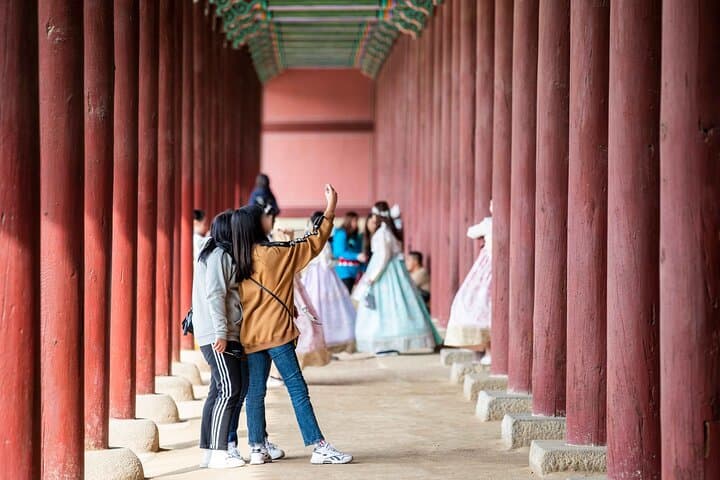
Culturally, the tour is both theatrical and practical: wearing a hanbok opens free admission to the palace and changes how locals greet you — expect polite bows, quick photos, and a few curious glances. Guides explain architectural details (gate names, painted dancheong patterns) and etiquette for sacred spaces.
Practical guidance: reserve hanbok size and ID ahead, arrive ready for 3–4 hours of slow urban walking, and wear comfortable shoes — many paths are stone or tile. Bring cash for hanbok upgrades and light snacks; remember that food and drink aren’t allowed inside palace buildings. Time your visit for early morning or late afternoon for softer light and smaller crowds. With modest planning, this blend of costume and history makes Seoul’s past vividly walkable.
easy.
3–4 hours.
Suitable for most fitness levels — requires several hours of standing and walking on mostly flat urban terrain.
Yes, most hanbok rental shops require a valid ID for the rental agreement and deposit.
Many palaces, including Gyeongbokgung, offer free entry if you wear a hanbok; confirm with the tour operator beforehand.
Palace grounds have paved areas but some buildings and stone steps are not fully accessible; inform the operator in advance for accommodations.
Food and drinks are prohibited inside palace buildings, but you can stop in Insadong or Ikseon-dong for snacks between visits.
Gyeongbokgung was the main royal palace of the Joseon Dynasty, reconstructed multiple times and restored in the 19th–20th centuries after war-related damage.
Visitors are asked to avoid touching painted woodwork and to follow pathways to minimize wear; local shops increasingly use reusable packaging to reduce waste.
MyProGuide_Korea operates guided outdoor trips and adventures with an emphasis on safety, stewardship, and memorable experiences.
Morning light slides across the curved roofs of Gyeongbokgung as you step into a hanbok — silk sleeves brushing stone and the city’s hum folding around the palace walls. The air smells faintly of polished wood and pine from distant Bukhansan ridgelines; the changing-of-the-guard drum beats punctuate your first steps into Joseon-era pageantry.
Morning light slides across the curved roofs of Gyeongbokgung as you step into a hanbok — silk sleeves brushing stone and the city’s hum folding around the palace walls. The air smells faintly of polished wood and pine from distant Bukhansan ridgelines; the changing-of-the-guard drum beats punctuate your first steps into Joseon-era pageantry.
Gyeongbokgung, built in 1395, anchors this four-hour walk through Seoul’s layers: from royal compound to Gwanghwamun Square’s modern monuments, then into Insadong’s narrow lanes of tea houses and artisan shops, and finally the compact, photogenic alleys of Ikseon-dong Hanok Village. The palace sits on low-lying granite and reclaimed paddy land, a measured contrast to the jagged granite backbone of nearby Bukhansan that keeps the skyline rugged and distinctly Korean.
Culturally, the tour is both theatrical and practical: wearing a hanbok opens free admission to the palace and changes how locals greet you — expect polite bows, quick photos, and a few curious glances. Guides explain architectural details (gate names, painted dancheong patterns) and etiquette for sacred spaces.
Practical guidance: reserve hanbok size and ID ahead, arrive ready for 3–4 hours of slow urban walking, and wear comfortable shoes — many paths are stone or tile. Bring cash for hanbok upgrades and light snacks; remember that food and drink aren’t allowed inside palace buildings. Time your visit for early morning or late afternoon for softer light and smaller crowds. With modest planning, this blend of costume and history makes Seoul’s past vividly walkable.