THE ADVENTURE COLLECTIVE® · Independent discovery and booking for outdoor travel

Spend a day moving from palace courtyards to bustling markets on a guided loop through Seoul’s history and food scene. This private nine-hour tour bundles admissions, hotel pickup, and an English-speaking licensed guide for a compact, practical introduction to the city.
Spend a day moving from palace courtyards to bustling markets on a guided loop through Seoul’s history and food scene. This private nine-hour tour bundles admissions, hotel pickup, and an English-speaking licensed guide for a compact, practical introduction to the city.
Morning light slices through the red gates of Gyeongbokgung as a line of colorfully uniformed guards marches into place; the city is awake, but still intimate enough to hear the clip of shoes on stone. From the palace to the low hum of Jogyesa Temple and the bubbling energy of Kwangjang Market, this full-day route stitches Seoul’s formal history to its everyday present.
Verified experiences and guided adventures in the surrounding area.
Operated by Bergen travel · Seoul, Seoul
Morning light slices through the red gates of Gyeongbokgung as a line of colorfully uniformed guards marches into place; the city is awake, but still intimate enough to hear the clip of shoes on stone. From the palace to the low hum of Jogyesa Temple and the bubbling energy of Kwangjang Market, this full-day route stitches Seoul’s formal history to its everyday present.
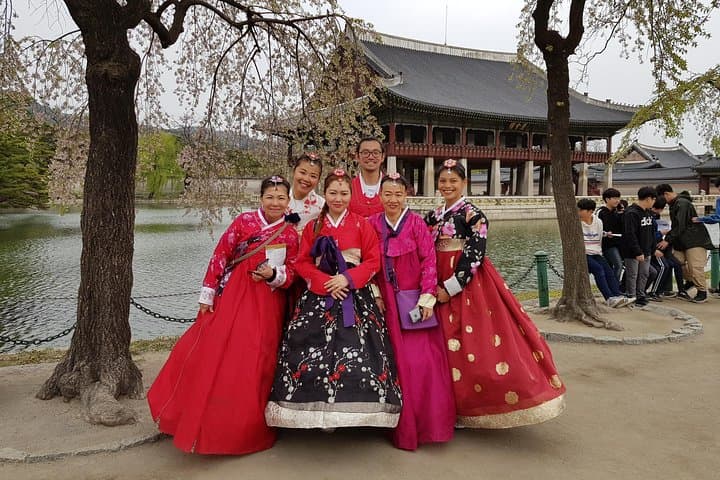
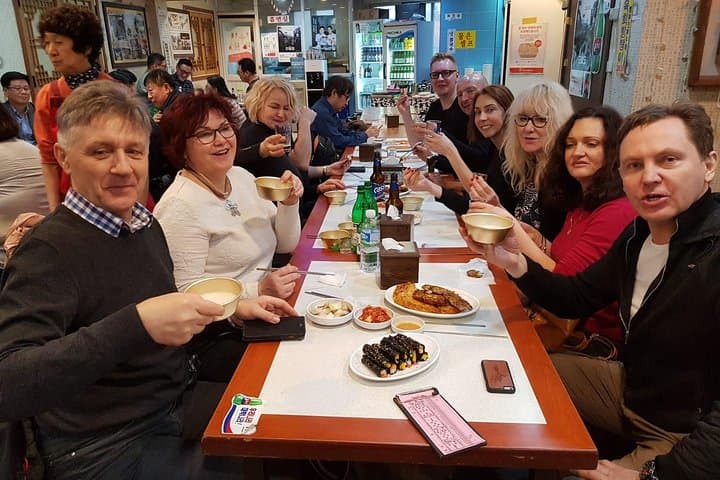
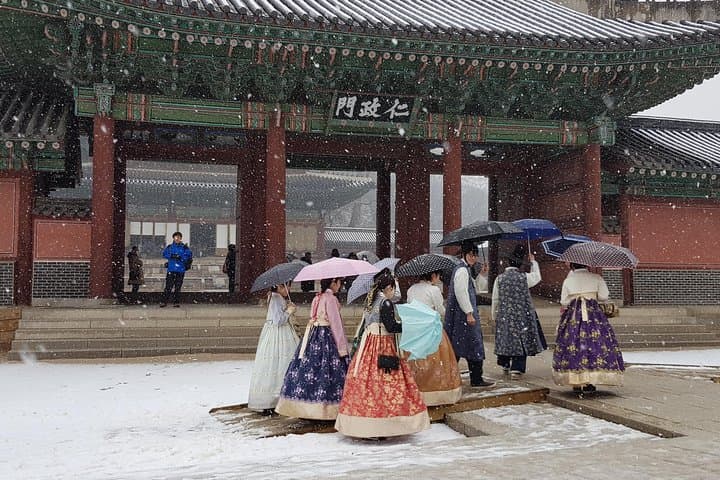
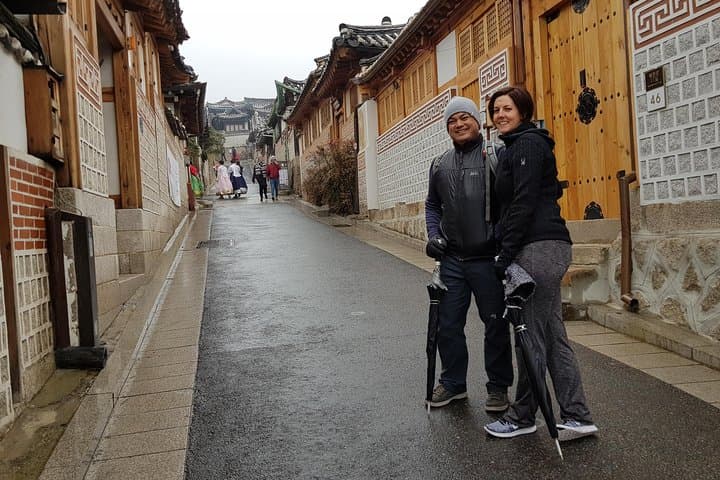
The loop begins in Joseon-era power—Gyeongbokgung, rebuilt after centuries of conflict—where palace halls and the surrounding hanok neighborhoods reflect urban planning guided by feng shui. Bukchon’s narrow lanes preserve traditional tiled roofs and hidden courtyards while Insadong’s galleries and teahouses point to Korea’s craft and literati culture. Cheonggyecheon, once covered by concrete, now dares you to slow down along its restored stream; the water is a modern reclamation project that doubled as urban renewal. Food sits at the center of the day: Kwangjang’s stalls serve mung-bean pancakes, yukhoe and tteokbokki that feel like living history.
Practicalities are straightforward: expect roughly nine hours with hotel pick-up and drop-off in an air-conditioned vehicle, an English-licensed guide, and admission fees included for listed sites. Wear cushioned walking shoes and layered clothing for variable weather, carry small local currency for market snacks, and pace yourself—the day balances several short walks and on-vehicle transfers. If you want photos without crowds, ask to shuffle the palace visit earlier. Cultural etiquette matters: lower your voice in temple spaces and remove shoes where requested. This tour gives a compact but textured view of Seoul’s past and present—equal parts architecture, ritual, and street-level flavor.
easy.
9 hours.
Suitable for most fitness levels; involves several hours of walking with short distances between stops.
Yes—private hotel pickup and drop-off in Seoul are included; confirm your pickup location when booking.
This tour includes admission fees and typically features guided stops for street food and market tastings; check the itinerary to see which meals or samples are provided.
Yes—advance notice of dietary restrictions is recommended so the guide can suggest suitable market stalls and restaurants.
Some sites have uneven surfaces and steps; while infants in strollers are accommodated, travelers with limited mobility should check specific site accessibility with the operator.
Many stops date to the Joseon dynasty—Gyeongbokgung was first built in 1395, later destroyed and extensively restored; Cheonggyecheon’s 2005 restoration turned a covered highway back into an urban stream.
Cheonggyecheon’s revival is a model of urban ecological restoration and Seoul emphasizes preservation of hanok neighborhoods while managing overcrowding through regulated access and heritage designation.
Bergen travel operates guided outdoor trips and adventures with an emphasis on safety, stewardship, and memorable experiences.
Morning light slices through the red gates of Gyeongbokgung as a line of colorfully uniformed guards marches into place; the city is awake, but still intimate enough to hear the clip of shoes on stone. From the palace to the low hum of Jogyesa Temple and the bubbling energy of Kwangjang Market, this full-day route stitches Seoul’s formal history to its everyday present.
Morning light slices through the red gates of Gyeongbokgung as a line of colorfully uniformed guards marches into place; the city is awake, but still intimate enough to hear the clip of shoes on stone. From the palace to the low hum of Jogyesa Temple and the bubbling energy of Kwangjang Market, this full-day route stitches Seoul’s formal history to its everyday present.
The loop begins in Joseon-era power—Gyeongbokgung, rebuilt after centuries of conflict—where palace halls and the surrounding hanok neighborhoods reflect urban planning guided by feng shui. Bukchon’s narrow lanes preserve traditional tiled roofs and hidden courtyards while Insadong’s galleries and teahouses point to Korea’s craft and literati culture. Cheonggyecheon, once covered by concrete, now dares you to slow down along its restored stream; the water is a modern reclamation project that doubled as urban renewal. Food sits at the center of the day: Kwangjang’s stalls serve mung-bean pancakes, yukhoe and tteokbokki that feel like living history.
Practicalities are straightforward: expect roughly nine hours with hotel pick-up and drop-off in an air-conditioned vehicle, an English-licensed guide, and admission fees included for listed sites. Wear cushioned walking shoes and layered clothing for variable weather, carry small local currency for market snacks, and pace yourself—the day balances several short walks and on-vehicle transfers. If you want photos without crowds, ask to shuffle the palace visit earlier. Cultural etiquette matters: lower your voice in temple spaces and remove shoes where requested. This tour gives a compact but textured view of Seoul’s past and present—equal parts architecture, ritual, and street-level flavor.