THE ADVENTURE COLLECTIVE® · Independent discovery and booking for outdoor travel

Walk the Sentiero degli Dei with Saveria “Ladybug,” a Positano-born guide who blends geology, herb lore, and local hospitality on one of southern Italy’s most spectacular ridge trails. Expect dramatic coastal views, stone staircases, and tastings from hillside farmers.
Walk the Sentiero degli Dei with Saveria “Ladybug,” a Positano-born guide who blends geology, herb lore, and local hospitality on one of southern Italy’s most spectacular ridge trails. Expect dramatic coastal views, stone staircases, and tastings from hillside farmers.
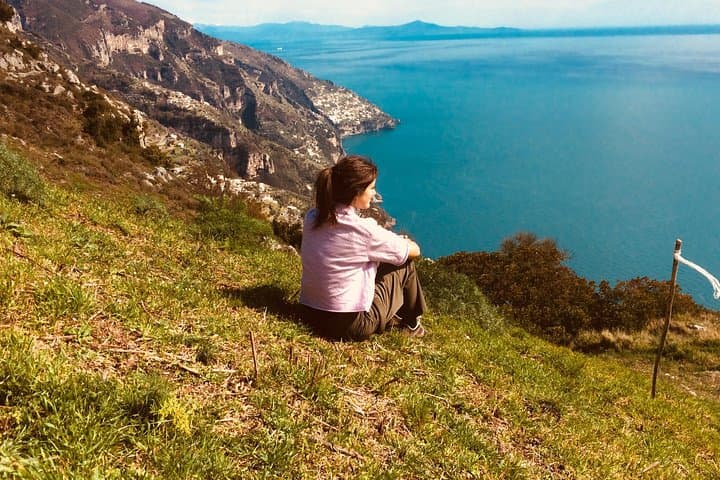
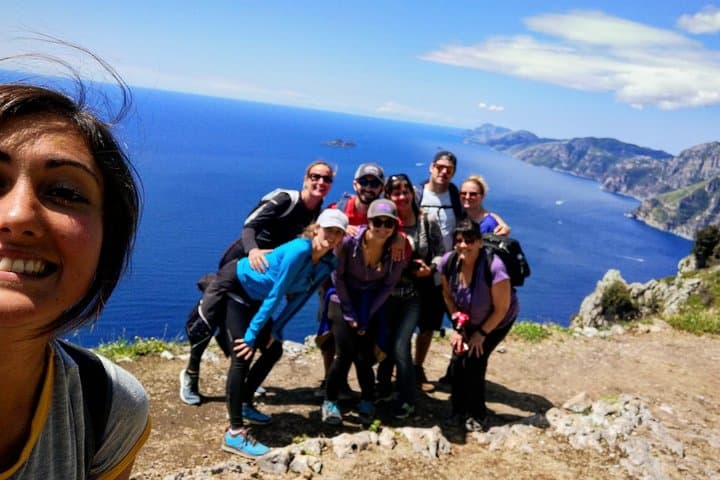
You step out of the narrow bus, the spray of the Tyrrhenian at your back and a stone stairway before you that seems to climb the sky. Saveria—“Ladybug,” to everyone who knows her—meets the group in the small parking lot of Nocelle, the last stop above Positano. Her voice is low, practiced, already pointing to the folds of coastline below: villages pinned to the cliffs, terraces of lemon trees, the sea keeping time with distant ferry horns.
Verified experiences and guided adventures in the surrounding area.
Operated by Saveria Fiore "Ladybug" hiking Tour on the Path of the gods · Positano, Campania
You step out of the narrow bus, the spray of the Tyrrhenian at your back and a stone stairway before you that seems to climb the sky. Saveria—“Ladybug,” to everyone who knows her—meets the group in the small parking lot of Nocelle, the last stop above Positano. Her voice is low, practiced, already pointing to the folds of coastline below: villages pinned to the cliffs, terraces of lemon trees, the sea keeping time with distant ferry horns.
The Path of the Gods (Sentiero degli Dei) is not a new scenic gimmick; it’s a pedestrian artery that once carried people, goats, and goods between mountain hamlets long before the coastal road stitched the Amalfi towns together. You hike a trail cut into limestone and volcanic flanks, where folded rock and scree give way to panoramic shelves. Geologically, you’re on the edge of the Lattari Mountains, a compact ridge whose erosion carved the dramatic Amalfi escarpment; every step reveals strata and small caves that speak to millennia of sea and tectonics.
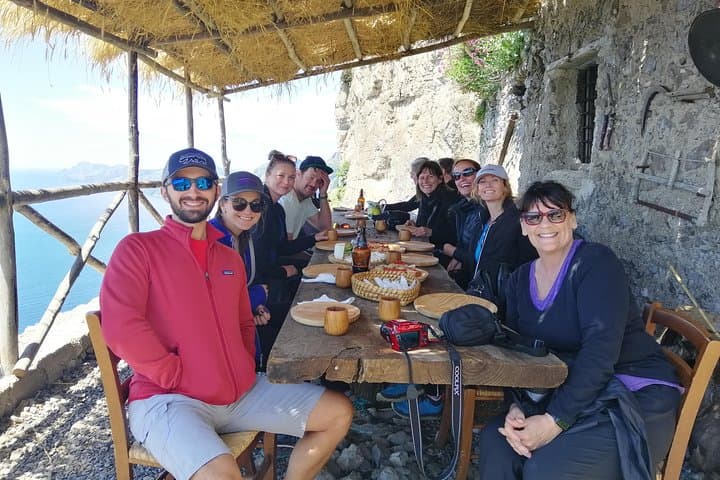
Saveria threads history and herb lore into the walk. She identifies wild fennel tucked in crevices, shows how shepherds used to rub local rosemary into sore muscles, and introduces you to farmers who still tend tiny plots on impossibly steep terraces. Along the way you’ll taste a few genuine products—soft goat cheese, dense figs, a wedge of lemon-soaked cake—offered by people who remember when this path was the main road.
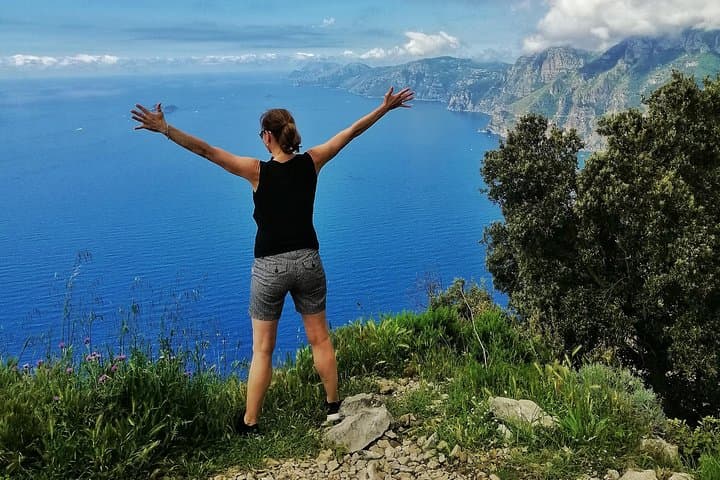
The trail is classic Mediterranean: singletrack with stone staircases, sections of loose gravel, and exposed ridgelines with little shade. Expect about 7–8 km of walking if you follow the main Bomerano–Nocelle corridor, with a net elevation change of roughly 400–600 m depending on the exact start and finish. The guide paces the group to open senses—scent of rock and herb, bird calls, the view that keeps unfurling toward Capri and the Amalfi coast.
Practical notes: meet in Nocelle’s parking lot (last local bus stop). The company provides snacks; carry 1–1.5 liters of water per person in summer. Wear sturdy trail shoes—there are many uneven flagstones and stairs—and bring layers for the wind on the ridge. Spring and fall offer the most comfortable temperatures, summer can be hot and exposed, and winter hikes are shorter and dependent on weather. The tour is moderate in difficulty: you need good balance and steady legs rather than technical skills. If you want vivid photo moments, ask Saveria to pause on the big viewpoint east of the main ridge—the cliff-edge framing Positano makes for a shot you won’t forget.
By the end of the walk you understand why locals treated this as a working road: the trail connects community, food, and landscape in a way that a highway never could. Saveria’s walk leaves you with a clearer map of the Amalfi’s culture—its plants, its people, and the practical history etched into every step.
moderate.
4–6 hours.
Moderately fit—comfortable on uneven ground, able to handle sustained walking and stair descents/ascents.
Meet in the parking lot of Nocelle (the last local bus stop above Positano); Saveria will be waiting there.
The trail is rated moderate—uneven stone steps and some exposed ridgelines require balance and steady legs, but no technical climbing.
The tour includes snacks and tastings from local producers, but bring extra food for longer appetites or dietary needs.
Older children who are used to long walks and stairs can join, but the operator advises moderate fitness; inquire about age-specific suitability.
The operator cancels tours in bad weather for safety; confirm before you set out—rain makes the stone very slippery.
Local SITA buses and scheduled ferries to Positano connect to Nocelle via a short bus ride or a steep walk; check current local timetables.
The path served as a pedestrian artery between mountain hamlets before the 19th-century coastal road; its stone steps trace routes used for centuries for trade and transhumance.
Stick to the trail and avoid trampling terraces—local farmers maintain fragile dry-stone walls and endemic plants, and guides encourage respectful sampling.
Saveria Fiore "Ladybug" hiking Tour on the Path of the gods operates guided outdoor trips and adventures with an emphasis on safety, stewardship, and memorable experiences.
You step out of the narrow bus, the spray of the Tyrrhenian at your back and a stone stairway before you that seems to climb the sky. Saveria—“Ladybug,” to everyone who knows her—meets the group in the small parking lot of Nocelle, the last stop above Positano. Her voice is low, practiced, already pointing to the folds of coastline below: villages pinned to the cliffs, terraces of lemon trees, the sea keeping time with distant ferry horns.
You step out of the narrow bus, the spray of the Tyrrhenian at your back and a stone stairway before you that seems to climb the sky. Saveria—“Ladybug,” to everyone who knows her—meets the group in the small parking lot of Nocelle, the last stop above Positano. Her voice is low, practiced, already pointing to the folds of coastline below: villages pinned to the cliffs, terraces of lemon trees, the sea keeping time with distant ferry horns.
The Path of the Gods (Sentiero degli Dei) is not a new scenic gimmick; it’s a pedestrian artery that once carried people, goats, and goods between mountain hamlets long before the coastal road stitched the Amalfi towns together. You hike a trail cut into limestone and volcanic flanks, where folded rock and scree give way to panoramic shelves. Geologically, you’re on the edge of the Lattari Mountains, a compact ridge whose erosion carved the dramatic Amalfi escarpment; every step reveals strata and small caves that speak to millennia of sea and tectonics.
Saveria threads history and herb lore into the walk. She identifies wild fennel tucked in crevices, shows how shepherds used to rub local rosemary into sore muscles, and introduces you to farmers who still tend tiny plots on impossibly steep terraces. Along the way you’ll taste a few genuine products—soft goat cheese, dense figs, a wedge of lemon-soaked cake—offered by people who remember when this path was the main road.
The trail is classic Mediterranean: singletrack with stone staircases, sections of loose gravel, and exposed ridgelines with little shade. Expect about 7–8 km of walking if you follow the main Bomerano–Nocelle corridor, with a net elevation change of roughly 400–600 m depending on the exact start and finish. The guide paces the group to open senses—scent of rock and herb, bird calls, the view that keeps unfurling toward Capri and the Amalfi coast.
Practical notes: meet in Nocelle’s parking lot (last local bus stop). The company provides snacks; carry 1–1.5 liters of water per person in summer. Wear sturdy trail shoes—there are many uneven flagstones and stairs—and bring layers for the wind on the ridge. Spring and fall offer the most comfortable temperatures, summer can be hot and exposed, and winter hikes are shorter and dependent on weather. The tour is moderate in difficulty: you need good balance and steady legs rather than technical skills. If you want vivid photo moments, ask Saveria to pause on the big viewpoint east of the main ridge—the cliff-edge framing Positano makes for a shot you won’t forget.
By the end of the walk you understand why locals treated this as a working road: the trail connects community, food, and landscape in a way that a highway never could. Saveria’s walk leaves you with a clearer map of the Amalfi’s culture—its plants, its people, and the practical history etched into every step.