THE ADVENTURE COLLECTIVE® · Independent discovery and booking for outdoor travel

Trek from Senaru through rainforest to camp on Rinjani’s crater rim for sunset and sunrise views across the Gilis and Bali. This two-day, one-night route is designed for beginners and families with steady fitness and a taste for high-altitude grassland.
Trek from Senaru through rainforest to camp on Rinjani’s crater rim for sunset and sunrise views across the Gilis and Bali. This two-day, one-night route is designed for beginners and families with steady fitness and a taste for high-altitude grassland.
You step off the minivan in Senaru and the rainforest immediately reaches for you—warm, humid, alive. Guides check packs, porters adjust straps, and the trail slips into green: lowland jungle giving way to mossy trunks, then open grass under a thinning sky. By late afternoon the crater rim opens like a stage, holding a camp of tents with views that pull the eye to the Gili islands, Bali’s Mount Agung, and the jagged summit of Rinjani.
Verified experiences and guided adventures in the surrounding area.
Operated by Lombok Volcano Trekking · Senaru, West Nusa Tenggara
You step off the minivan in Senaru and the rainforest immediately reaches for you—warm, humid, alive. Guides check packs, porters adjust straps, and the trail slips into green: lowland jungle giving way to mossy trunks, then open grass under a thinning sky. By late afternoon the crater rim opens like a stage, holding a camp of tents with views that pull the eye to the Gili islands, Bali’s Mount Agung, and the jagged summit of Rinjani.
Rinjani is a young volcanic complex shaped by repeated eruptions; the Senaru route climbs from about 600 m to the crater rim at roughly 2,640 m. The route follows old lava-scarred ridges and eroded trails through tropical forest, montane scrub, and alpine grassland. Senaru village has Sasak cultural roots—local guides often share stories and practical knowledge handed down over generations.
Expect two days of steady climbing and descent: day one through dense forest and steeper grass slopes to camp on the rim for sunset; day two for a sunrise show and a measured return. Weather shifts quickly—sun, wind and sudden rain are all part of the package—so layer and hike steadily. Porters carry tents and cooking gear; you carry daypack and water (operators usually supply 3 L/day).
Practical tips: register at the Rinjani Trek Centre in Senaru before starting, budget time for rest at Pos 1–3, and bring snacks for energy between provided meals. The trek suits fit beginners with moderate fitness; if you have back, heart or pregnancy concerns, discuss options with the operator. Leave no trace: campsites are fragile and the crater rim deserves careful footsteps.
moderate.
2 days (approx. 8–12 hours hiking total).
Suitable for hikers with moderate fitness—able to walk 4–6 hours with elevation gain and carry a daypack.
Yes—permits are required and are handled through the Rinjani Trek Centre; the operator will invoice park ticket fees separately after booking.
The route is classed moderate: sustained uphill sections, elevation to ~2,640 m, and uneven terrain; no technical climbing is required.
Professional porters are included to carry tents, cooking gear and communal equipment; hikers should carry a daypack with personal items and water.
The dry season (April–October) offers clearer skies and more stable hiking conditions; wet season trails can be slippery and visibility reduced.
Rinjani and its surrounding villages are central to Sasak culture; traditional mountain beliefs and agriculture shaped early routes and local guiding practices.
The national park restricts camping to designated sites and requires registered guides; stick to paths, pack out waste, and support local guides to reduce ecological impact.
Lombok Volcano Trekking operates guided outdoor trips and adventures with an emphasis on safety, stewardship, and memorable experiences.
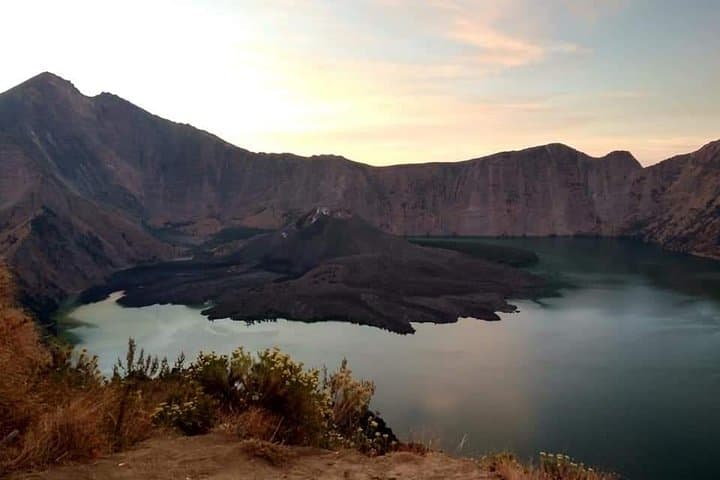
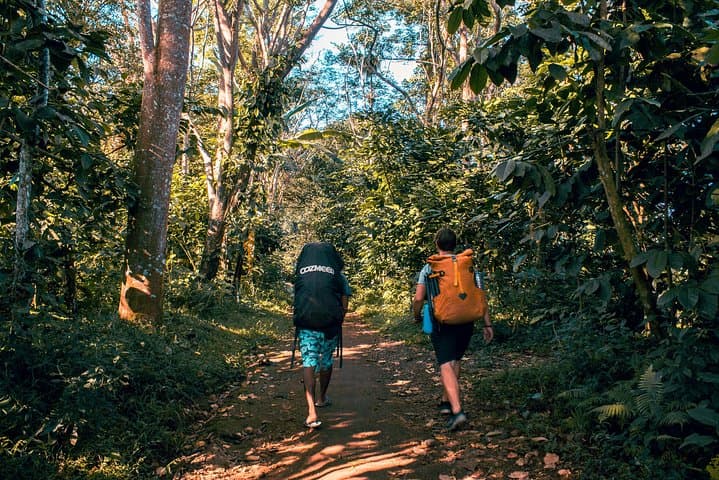
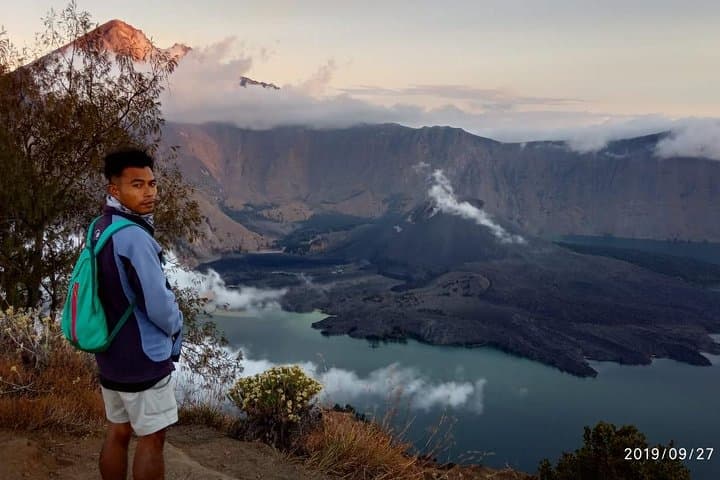
You step off the minivan in Senaru and the rainforest immediately reaches for you—warm, humid, alive. Guides check packs, porters adjust straps, and the trail slips into green: lowland jungle giving way to mossy trunks, then open grass under a thinning sky. By late afternoon the crater rim opens like a stage, holding a camp of tents with views that pull the eye to the Gili islands, Bali’s Mount Agung, and the jagged summit of Rinjani.
You step off the minivan in Senaru and the rainforest immediately reaches for you—warm, humid, alive. Guides check packs, porters adjust straps, and the trail slips into green: lowland jungle giving way to mossy trunks, then open grass under a thinning sky. By late afternoon the crater rim opens like a stage, holding a camp of tents with views that pull the eye to the Gili islands, Bali’s Mount Agung, and the jagged summit of Rinjani.
Rinjani is a young volcanic complex shaped by repeated eruptions; the Senaru route climbs from about 600 m to the crater rim at roughly 2,640 m. The route follows old lava-scarred ridges and eroded trails through tropical forest, montane scrub, and alpine grassland. Senaru village has Sasak cultural roots—local guides often share stories and practical knowledge handed down over generations.
Expect two days of steady climbing and descent: day one through dense forest and steeper grass slopes to camp on the rim for sunset; day two for a sunrise show and a measured return. Weather shifts quickly—sun, wind and sudden rain are all part of the package—so layer and hike steadily. Porters carry tents and cooking gear; you carry daypack and water (operators usually supply 3 L/day).
Practical tips: register at the Rinjani Trek Centre in Senaru before starting, budget time for rest at Pos 1–3, and bring snacks for energy between provided meals. The trek suits fit beginners with moderate fitness; if you have back, heart or pregnancy concerns, discuss options with the operator. Leave no trace: campsites are fragile and the crater rim deserves careful footsteps.