THE ADVENTURE COLLECTIVE® · Independent discovery and booking for outdoor travel

Tour Semidale Tea Factory near Deniyaya for a 90-minute behind-the-scenes look at Ceylon tea production, ending in a guided tasting and boutique shopping. Perfect for curious travelers who want flavour with context.
Tour Semidale Tea Factory near Deniyaya for a 90-minute behind-the-scenes look at Ceylon tea production, ending in a guided tasting and boutique shopping. Perfect for curious travelers who want flavour with context.
Mist hangs low over the processing halls as you step from the humid shade of low-country tea bushes into the cool, metallic scent of machinery and fresh leaf. At Semidale, the leaves still arrive damp from the hillside, rolling forward like a living conveyor of flavour; the guides move among them with practiced ease, explaining each stage from withering to cooling.
Verified experiences and guided adventures in the surrounding area.
Operated by Semidale Tea Factory · Deniyaya, Southern Province
Mist hangs low over the processing halls as you step from the humid shade of low-country tea bushes into the cool, metallic scent of machinery and fresh leaf. At Semidale, the leaves still arrive damp from the hillside, rolling forward like a living conveyor of flavour; the guides move among them with practiced ease, explaining each stage from withering to cooling.
Tea in this part of Sri Lanka grew into an industry under British colonial planters in the 19th century, and the low-grown Ceylon teas around Deniyaya reflect a different profile from the highland varieties—herbal, bright, and often paired with the rainforest’s humidity. Geologically, the area sits on older metamorphic rock that supports deep, acidic soils ideal for tea; culturally, production ties local villages to craft, small-scale factories, and boutique tasting rooms where families sell single-estate batches.
Expect about 90 minutes on-site: a guided walkthrough of the factory floor, a hands-on look at processing, and a tasting session that walks you through black, green, and flavored local blends. The boutique offers factory-fresh packets if you want to bring the taste home.
Practical tips: arrive in the morning when leaves are freshest, wear closed-toe shoes for factory floors, and allow time for a relaxed tasting so you can compare cups. Public transport reaches nearby towns, and the site notes wheelchair and stroller access, but factory floors can be slippery—move carefully. A short visit, it’s ideal for tea-curious travelers who want context as well as flavor.
easy.
1–1.5 hours.
Suitable for most fitness levels; involves short walks and standing on the factory floor.
The standard tour lasts about 90 minutes, including a guided walkthrough and a tasting session.
Tastings are included in the tour; boutique purchases are extra and sold on-site.
The experience lists wheelchair and stroller accessibility, but factory floors may be wet—contact the operator in advance for specific access needs.
For a full refund cancel at least 24 hours before the scheduled departure time; same-day cancellations are not refundable.
Tea production here expanded during the 19th-century British colonial era; low-country estates developed distinct processing suited to humid coastal highlands.
Small factories often source from local smallholders—choose certified or clearly labeled single-estate teas and stick to marked paths to limit erosion and undergrowth disturbance.
Semidale Tea Factory operates guided outdoor trips and adventures with an emphasis on safety, stewardship, and memorable experiences.
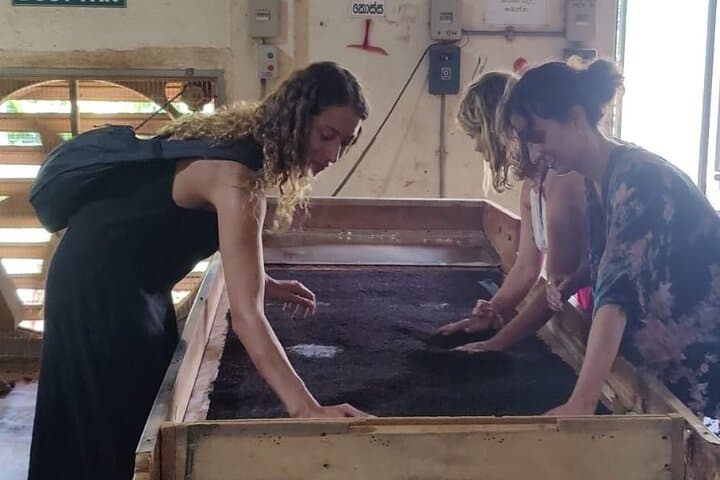
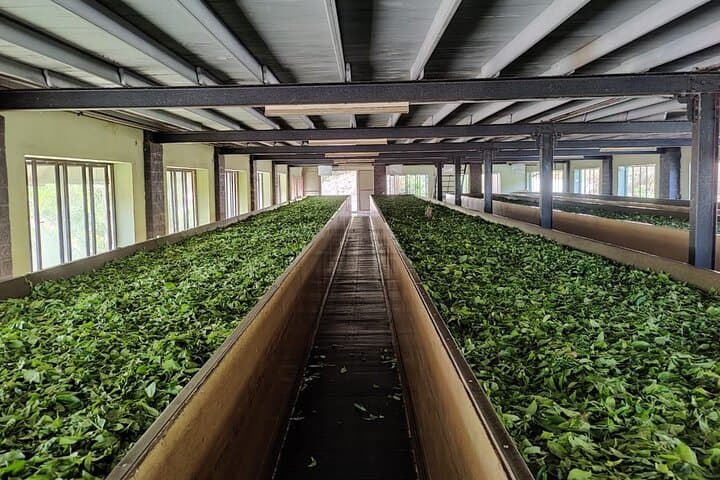
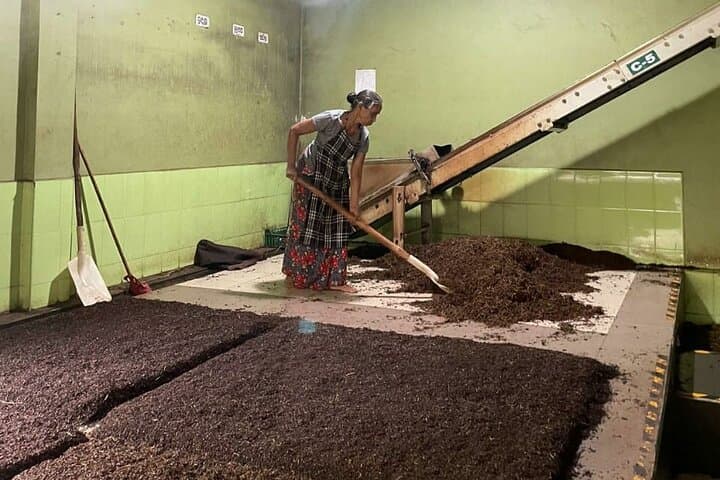
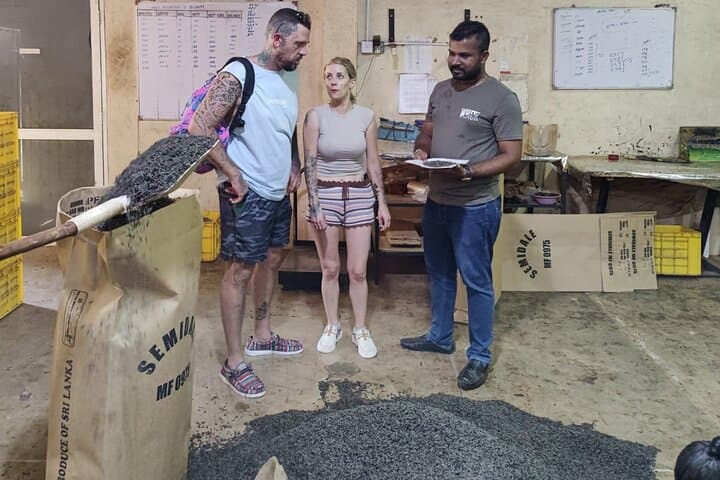
Mist hangs low over the processing halls as you step from the humid shade of low-country tea bushes into the cool, metallic scent of machinery and fresh leaf. At Semidale, the leaves still arrive damp from the hillside, rolling forward like a living conveyor of flavour; the guides move among them with practiced ease, explaining each stage from withering to cooling.
Mist hangs low over the processing halls as you step from the humid shade of low-country tea bushes into the cool, metallic scent of machinery and fresh leaf. At Semidale, the leaves still arrive damp from the hillside, rolling forward like a living conveyor of flavour; the guides move among them with practiced ease, explaining each stage from withering to cooling.
Tea in this part of Sri Lanka grew into an industry under British colonial planters in the 19th century, and the low-grown Ceylon teas around Deniyaya reflect a different profile from the highland varieties—herbal, bright, and often paired with the rainforest’s humidity. Geologically, the area sits on older metamorphic rock that supports deep, acidic soils ideal for tea; culturally, production ties local villages to craft, small-scale factories, and boutique tasting rooms where families sell single-estate batches.
Expect about 90 minutes on-site: a guided walkthrough of the factory floor, a hands-on look at processing, and a tasting session that walks you through black, green, and flavored local blends. The boutique offers factory-fresh packets if you want to bring the taste home.
Practical tips: arrive in the morning when leaves are freshest, wear closed-toe shoes for factory floors, and allow time for a relaxed tasting so you can compare cups. Public transport reaches nearby towns, and the site notes wheelchair and stroller access, but factory floors can be slippery—move carefully. A short visit, it’s ideal for tea-curious travelers who want context as well as flavor.