THE ADVENTURE COLLECTIVE® · Independent discovery and booking for outdoor travel

Visit Semenggoh Wildlife Centre for a close-up look at rehabilitated Bornean orangutans and an informative interpretation area. This short, guided transfer from Kuching combines cultural context, botanical displays and the best chance to see semi-wild orangutans during scheduled feedings.
Visit Semenggoh Wildlife Centre for a close-up look at rehabilitated Bornean orangutans and an informative interpretation area. This short, guided transfer from Kuching combines cultural context, botanical displays and the best chance to see semi-wild orangutans during scheduled feedings.
The feeding platform sits in a clearing where humid air tastes of earth and ripe fruit. Early morning mist lifts through lowland Borneo rainforest and a rustle becomes a slow, deliberate presence—orangutans moving along canopy arcs, sometimes dropping to the understory as if answering a call.
Verified experiences and guided adventures in the surrounding area.
Operated by Malaysia Tours by Travel Yamu · Kuching, Sarawak
The feeding platform sits in a clearing where humid air tastes of earth and ripe fruit. Early morning mist lifts through lowland Borneo rainforest and a rustle becomes a slow, deliberate presence—orangutans moving along canopy arcs, sometimes dropping to the understory as if answering a call.
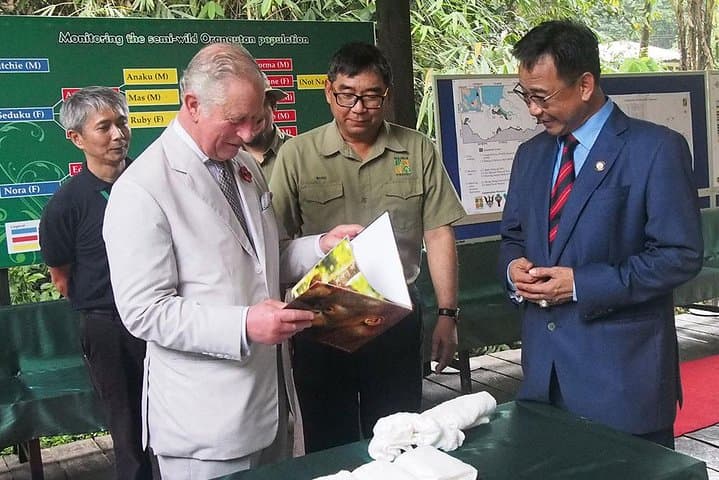
Founded in 1975, Semenggoh Wildlife Centre began as a rehabilitation site for injured and orphaned orangutans; its program helped return many animals to the surrounding forest and informed later efforts at Sepilok and Matang. Geologically the area is flat to gently rolling tropical lowland—peat-swamp and dipterocarp forest soils that feed the diverse botanical research plots at the centre. Local Dayak and Malay communities have long interacted with these forests, and the centre’s Orangutan Gallery provides context on human–wildlife history in Sarawak.
On a standard two-hour tour from Kuching, visitors move between an interpretation area, botanical displays and the feeding platform where semi-wild orangutans may appear for scheduled feedings. Sightings depend on fruiting cycles—when the forest offers abundant natural food, fewer animals come to feed. The experience is sensory and patient: binoculars, a quiet voice, and time reward observers.
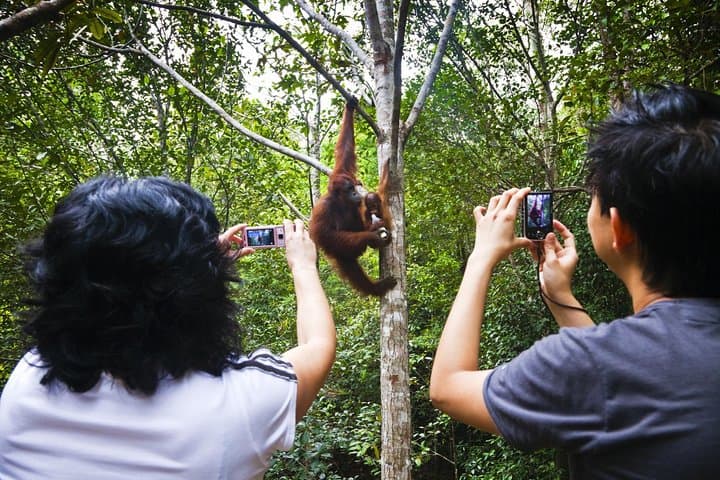
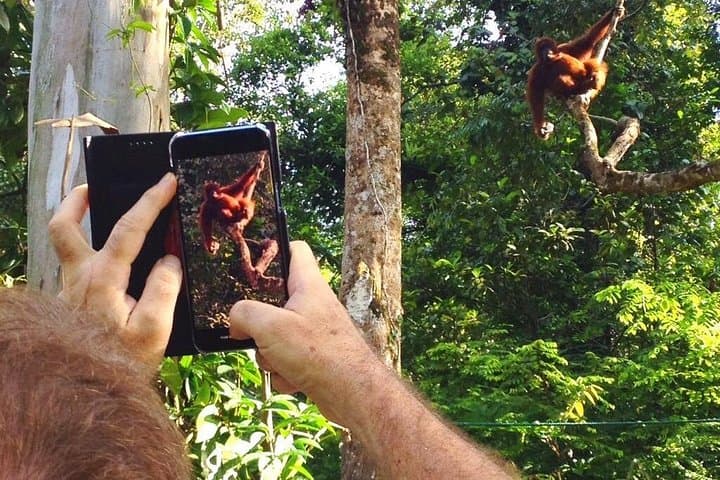
Practicalities: the transfer from Kuching is typically 30–45 minutes by air-conditioned vehicle; wear quick-dry clothing, insect protection and sturdy footwear for muddy trails. Respect distance guidelines, avoid flash photography, and budget time for the small interpretive centre. For photographers and naturalists, visiting both morning and afternoon sessions increases the chance of seeing different individuals.
easy.
2 hours.
Suitable for all fitness levels; involves short boardwalks and gentle forest trails with brief standing at viewing platform.
Sightings are common but not guaranteed; most visitors see semi-wild orangutans during scheduled feedings, though fruiting seasons in the forest can reduce visits to the platform.
The tour is typically two hours including transfers; feedings are usually in the morning and mid-afternoon—confirm current times with your operator on the day.
Yes—paths to the interpretation area are accessible and staff accommodate strollers; some forest trails are uneven, so mobility varies by route.
Most day tours from Kuching include hotel pick-up/drop-off, an English-speaking driver and admission to the centre; confirm any surcharge for distant pickup locations.
Semenggoh was established in 1975 as a rehabilitation centre for orphaned and injured orangutans; its program influenced rehabilitation approaches across Malaysian Borneo.
The centre showcases rehabilitation success and relies on visitor fees and donations; following centre rules reduces stress on animals and supports long-term conservation efforts.
Malaysia Tours by Travel Yamu operates guided outdoor trips and adventures with an emphasis on safety, stewardship, and memorable experiences.
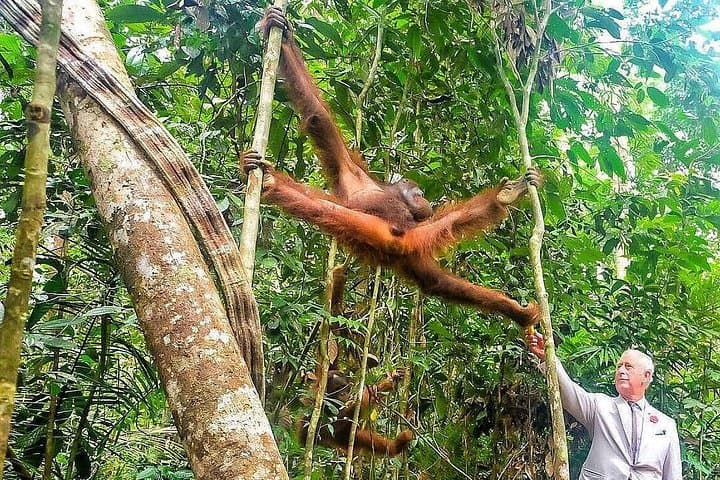
The feeding platform sits in a clearing where humid air tastes of earth and ripe fruit. Early morning mist lifts through lowland Borneo rainforest and a rustle becomes a slow, deliberate presence—orangutans moving along canopy arcs, sometimes dropping to the understory as if answering a call.
The feeding platform sits in a clearing where humid air tastes of earth and ripe fruit. Early morning mist lifts through lowland Borneo rainforest and a rustle becomes a slow, deliberate presence—orangutans moving along canopy arcs, sometimes dropping to the understory as if answering a call.
Founded in 1975, Semenggoh Wildlife Centre began as a rehabilitation site for injured and orphaned orangutans; its program helped return many animals to the surrounding forest and informed later efforts at Sepilok and Matang. Geologically the area is flat to gently rolling tropical lowland—peat-swamp and dipterocarp forest soils that feed the diverse botanical research plots at the centre. Local Dayak and Malay communities have long interacted with these forests, and the centre’s Orangutan Gallery provides context on human–wildlife history in Sarawak.
On a standard two-hour tour from Kuching, visitors move between an interpretation area, botanical displays and the feeding platform where semi-wild orangutans may appear for scheduled feedings. Sightings depend on fruiting cycles—when the forest offers abundant natural food, fewer animals come to feed. The experience is sensory and patient: binoculars, a quiet voice, and time reward observers.
Practicalities: the transfer from Kuching is typically 30–45 minutes by air-conditioned vehicle; wear quick-dry clothing, insect protection and sturdy footwear for muddy trails. Respect distance guidelines, avoid flash photography, and budget time for the small interpretive centre. For photographers and naturalists, visiting both morning and afternoon sessions increases the chance of seeing different individuals.