THE ADVENTURE COLLECTIVE® · Independent discovery and booking for outdoor travel

Ski the classic Sellaronda loop from Cortina d'Ampezzo in one day: four passes, groomed pistes, and Ladin culture stitched together by lifts and rifugi. This guide explains what to expect, how to prepare, and the best tips for timing and gear.
Ski the classic Sellaronda loop from Cortina d'Ampezzo in one day: four passes, groomed pistes, and Ladin culture stitched together by lifts and rifugi. This guide explains what to expect, how to prepare, and the best tips for timing and gear.
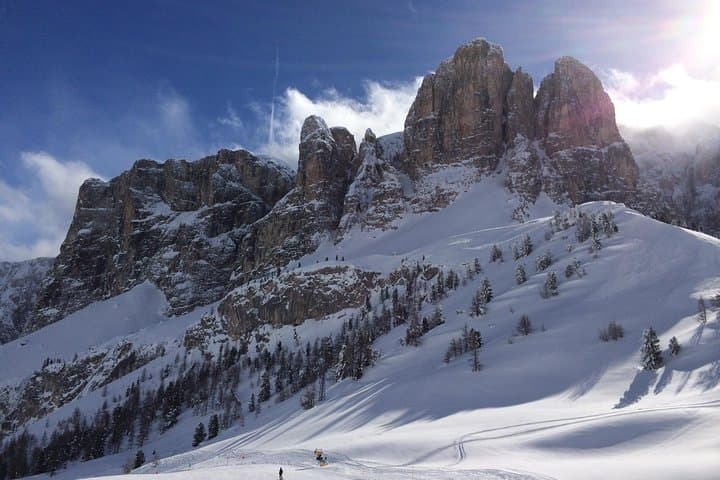
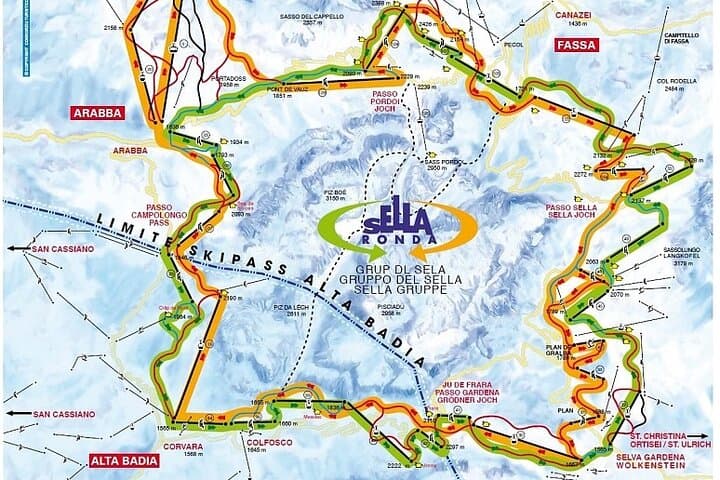
The morning light hits jagged limestone ridges as you clip into your skis in Cortina d'Ampezzo and point toward the Sella Massif. The Sellaronda is a continuous circuit of lifts and groomed runs that threads four mountain passes; today you glide through valleys shaped by glaciers and centuries of alpine life without taking your skis off.
Verified experiences and guided adventures in the surrounding area.
Operated by Centro Boarderline · Cortina d'Ampezzo, Veneto
The morning light hits jagged limestone ridges as you clip into your skis in Cortina d'Ampezzo and point toward the Sella Massif. The Sellaronda is a continuous circuit of lifts and groomed runs that threads four mountain passes; today you glide through valleys shaped by glaciers and centuries of alpine life without taking your skis off.
Geology here is blunt: towering dolomite towers carved by ice and time, pale rock that fractures into slabs and spires. Culturally the route stitches together four Ladin valleys—Val Gardena, Alta Badia, Val di Fassa and Arabba—each with its own language notes, rifugi (mountain huts) and culinary touches like speck and canederli. Vestiges of World War I—fortified trails and open mine galleries—still mark the high passes if you know where to look.
On a practical level expect 5–7 hours of continuous skiing with regular lift rides, signage for clockwise and counterclockwise directions, and varied piste grades from cruisy blues to steeper reds. A local guide or driver will pick the direction based on wind and snow; do the loop earlier in the day to avoid afternoon slush and crowded popular sections.
Bring layered, waterproof clothing, tuned skis or a rental set matched to your ability, and plan fuel stops at rifugi for hot soup and quick shelter. Check lift schedules and weather; avalanche risk is managed on groomed Sellaronda pistes but always heed closures. The loop is an efficient, scenic way to sample the Dolomites’ dramatic terrain in a single, memorable day.
moderate.
5–7 hours.
Moderate aerobic fitness; you’ll be on skis for several hours with repeated lift loading and descents.
Yes — a Dolomiti Superski pass that covers the Sella area is required to use lifts around the loop; single-day options are available.
The loop is best for intermediate skiers; some blue runs are gentle but several red pistes and lift transitions require solid technique.
Plan 5–7 hours including lift rides and short stops; guides and transfer logistics typically make it a full-day activity.
Yes — clockwise or counterclockwise routes are standard; operators choose the safer, better-conditioned direction on the day.
The passes between the valleys were strategic in World War I; remnants of wartime paths and tunnels can still be found near some high routes.
The Dolomites are a UNESCO World Heritage area—stick to marked pistes, respect refuge waste rules, and favor local services to support sustainable tourism.
Centro Boarderline operates guided outdoor trips and adventures with an emphasis on safety, stewardship, and memorable experiences.
The morning light hits jagged limestone ridges as you clip into your skis in Cortina d'Ampezzo and point toward the Sella Massif. The Sellaronda is a continuous circuit of lifts and groomed runs that threads four mountain passes; today you glide through valleys shaped by glaciers and centuries of alpine life without taking your skis off.
The morning light hits jagged limestone ridges as you clip into your skis in Cortina d'Ampezzo and point toward the Sella Massif. The Sellaronda is a continuous circuit of lifts and groomed runs that threads four mountain passes; today you glide through valleys shaped by glaciers and centuries of alpine life without taking your skis off.
Geology here is blunt: towering dolomite towers carved by ice and time, pale rock that fractures into slabs and spires. Culturally the route stitches together four Ladin valleys—Val Gardena, Alta Badia, Val di Fassa and Arabba—each with its own language notes, rifugi (mountain huts) and culinary touches like speck and canederli. Vestiges of World War I—fortified trails and open mine galleries—still mark the high passes if you know where to look.
On a practical level expect 5–7 hours of continuous skiing with regular lift rides, signage for clockwise and counterclockwise directions, and varied piste grades from cruisy blues to steeper reds. A local guide or driver will pick the direction based on wind and snow; do the loop earlier in the day to avoid afternoon slush and crowded popular sections.
Bring layered, waterproof clothing, tuned skis or a rental set matched to your ability, and plan fuel stops at rifugi for hot soup and quick shelter. Check lift schedules and weather; avalanche risk is managed on groomed Sellaronda pistes but always heed closures. The loop is an efficient, scenic way to sample the Dolomites’ dramatic terrain in a single, memorable day.