THE ADVENTURE COLLECTIVE® · Independent discovery and booking for outdoor travel

Walk Wrocław’s Old Town at your own pace with a 2.8 km self-guided audio tour that covers Gothic halls, hidden arches, and the city’s resilient postwar story. Ideal for independent travelers who want history, local color, and flexibility.
Walk Wrocław’s Old Town at your own pace with a 2.8 km self-guided audio tour that covers Gothic halls, hidden arches, and the city’s resilient postwar story. Ideal for independent travelers who want history, local color, and flexibility.
You step out of the tram into cobblestones that still remember market cries and the thud of wartime boots. The Old Town Hall looms ahead, its Gothic face studded with carved faces and sly jokes; bronze dwarfs peek from alleys like a local scavenger hunt. Follow the audio guide on your own clock and the city opens in measured chapters: a salt market turned flower bazaar, the tiny arch linking mismatched medieval houses, and the river’s current nudging you toward cathedral spires on Ostrów Tumski.
Verified experiences and guided adventures in the surrounding area.
Operated by Ciceru · Wrocław, Lower Silesian Voivodeship
You step out of the tram into cobblestones that still remember market cries and the thud of wartime boots. The Old Town Hall looms ahead, its Gothic face studded with carved faces and sly jokes; bronze dwarfs peek from alleys like a local scavenger hunt. Follow the audio guide on your own clock and the city opens in measured chapters: a salt market turned flower bazaar, the tiny arch linking mismatched medieval houses, and the river’s current nudging you toward cathedral spires on Ostrów Tumski.
Wrocław’s story is visible in brick and iron. Once a medieval Silesian trade hub, the city was heavily damaged in WWII and rebuilt with a deliberate hand — hence the nickname “Phoenix City.” Geology and waterways shaped its plan: the Odra River and its islands create short crossings, bridges with character, and streets that curve with old river channels. Culture here bends toward conviviality — café tables, late-night pierogi, and an ironic public art movement of hand-crafted dwarfs born from anti-authoritarian humor.
Practical guidance: the route is 2.8 km and typically takes about two hours with stops; the app-free audio works on a smartphone and supports multiple languages. Start at Market Square to follow the mapped sequence, wear steady shoes for uneven cobbles, and download the audio before a long data-free stretch. Public transit drops you close, service animals are allowed, and the tour is suitable for most fitness levels. Move deliberately, read plaques, and leave room for a coffee break — Wrocław rewards the curious walker.
easy.
2 hours (self-paced).
Suitable for most fitness levels—requires standing and walking over cobbles for up to two hours.
No app is required; the tour works through your smartphone browser or downloaded audio files provided after booking.
The mapped route is 2.8 km and most walkers take around two hours including stops and brief detours.
The route is family-friendly but cobblestones and narrow alleys can be difficult for full-size strollers—use a lightweight stroller or carry younger children.
Full refund available if you cancel at least 24 hours before the scheduled start; no refund within 24 hours of the tour.
Wrocław was a major Silesian trade center, heavily damaged in WWII and rebuilt in the postwar decades, earning the nickname ‘Phoenix City.’
The Old Town’s fabric is protected; stick to marked paths, avoid touching fragile façades, and support local businesses to help maintain historic sites.
Ciceru operates guided outdoor trips and adventures with an emphasis on safety, stewardship, and memorable experiences.
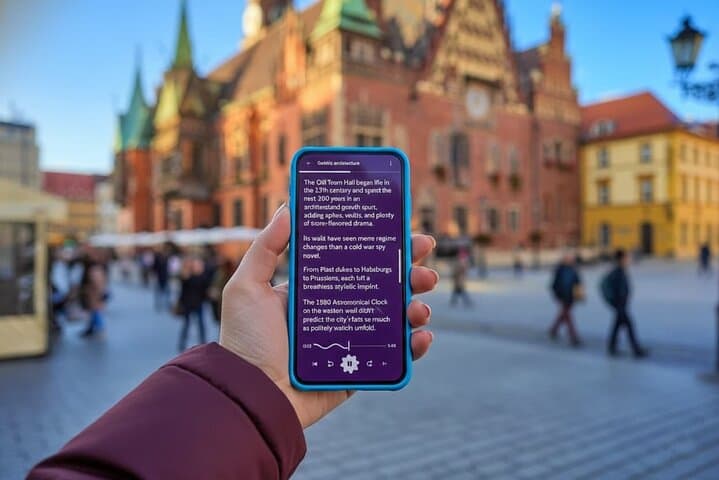


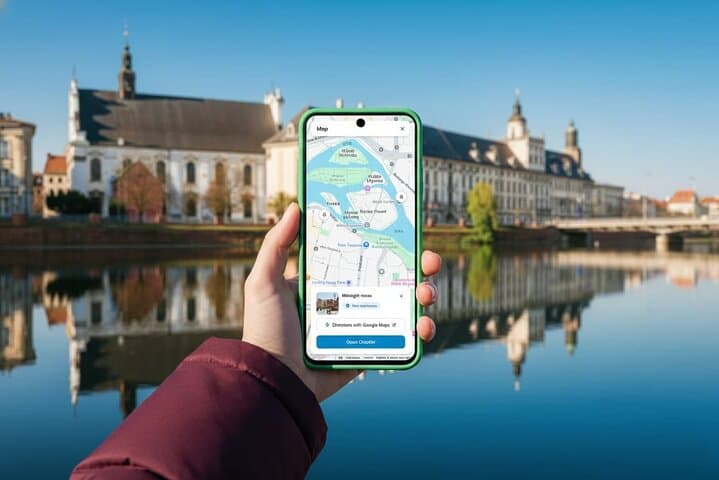
You step out of the tram into cobblestones that still remember market cries and the thud of wartime boots. The Old Town Hall looms ahead, its Gothic face studded with carved faces and sly jokes; bronze dwarfs peek from alleys like a local scavenger hunt. Follow the audio guide on your own clock and the city opens in measured chapters: a salt market turned flower bazaar, the tiny arch linking mismatched medieval houses, and the river’s current nudging you toward cathedral spires on Ostrów Tumski.
You step out of the tram into cobblestones that still remember market cries and the thud of wartime boots. The Old Town Hall looms ahead, its Gothic face studded with carved faces and sly jokes; bronze dwarfs peek from alleys like a local scavenger hunt. Follow the audio guide on your own clock and the city opens in measured chapters: a salt market turned flower bazaar, the tiny arch linking mismatched medieval houses, and the river’s current nudging you toward cathedral spires on Ostrów Tumski.
Wrocław’s story is visible in brick and iron. Once a medieval Silesian trade hub, the city was heavily damaged in WWII and rebuilt with a deliberate hand — hence the nickname “Phoenix City.” Geology and waterways shaped its plan: the Odra River and its islands create short crossings, bridges with character, and streets that curve with old river channels. Culture here bends toward conviviality — café tables, late-night pierogi, and an ironic public art movement of hand-crafted dwarfs born from anti-authoritarian humor.
Practical guidance: the route is 2.8 km and typically takes about two hours with stops; the app-free audio works on a smartphone and supports multiple languages. Start at Market Square to follow the mapped sequence, wear steady shoes for uneven cobbles, and download the audio before a long data-free stretch. Public transit drops you close, service animals are allowed, and the tour is suitable for most fitness levels. Move deliberately, read plaques, and leave room for a coffee break — Wrocław rewards the curious walker.