THE ADVENTURE COLLECTIVE® · Independent discovery and booking for outdoor travel

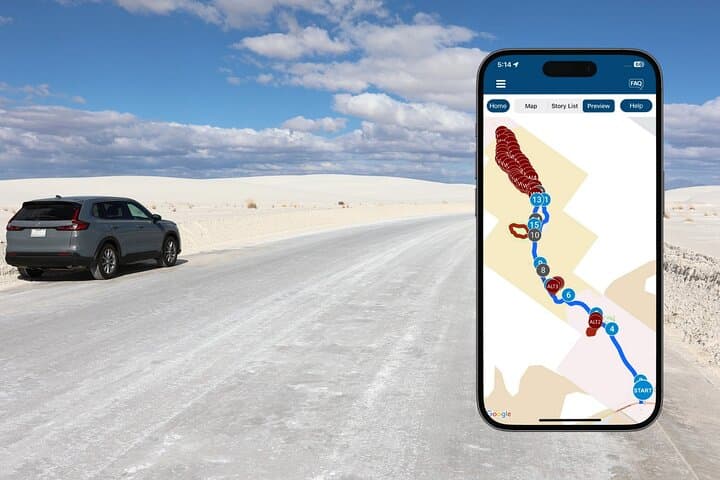
Drive through the gleaming basins of White Sands, then trade the car for sand on the Alkali Flat Trail. This self-guided audio tour pairs 14+ miles of scenic driving with a challenging 5-mile walk — download the app before you arrive and prepare for intense sun and soft sand.
Drive through the gleaming basins of White Sands, then trade the car for sand on the Alkali Flat Trail. This self-guided audio tour pairs 14+ miles of scenic driving with a challenging 5-mile walk — download the app before you arrive and prepare for intense sun and soft sand.
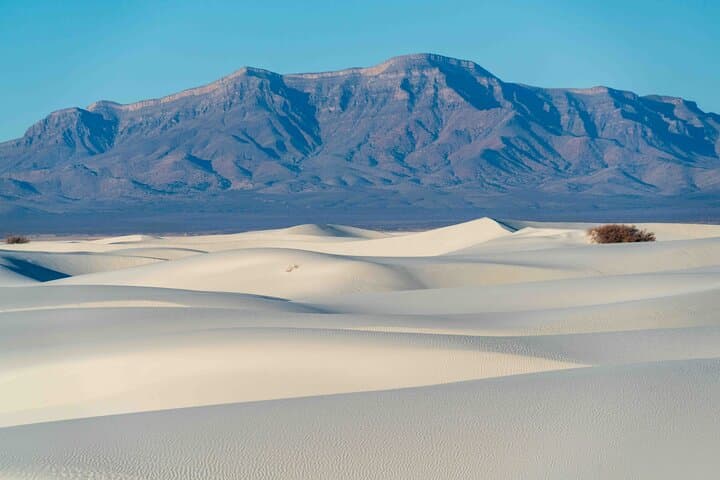
You step from your car into a landscape that looks like a snowfield under desert sun — except the grains are gypsum and the wind rewrites the dunes every hour. The road threads through broad basins with the Sacramento Mountains framing the horizon; the Visitor Center is the sensible gateway, but the real rhythm of the park is found where the pavement gives way to drifting white ridges.
Verified experiences and guided adventures in the surrounding area.
Operated by History with Action · Alamogordo, New Mexico
You step from your car into a landscape that looks like a snowfield under desert sun — except the grains are gypsum and the wind rewrites the dunes every hour. The road threads through broad basins with the Sacramento Mountains framing the horizon; the Visitor Center is the sensible gateway, but the real rhythm of the park is found where the pavement gives way to drifting white ridges.
White Sands sits on the remnants of ancient Lake Otero; gypsum crystals washed from nearby mountains accumulated into dunes that now march across the Tularosa Basin. Human history here ranges from Apache presence to Cold War-era testing nearby, and modern visitors often hear stories of fossil finds and the complex role the area played in 20th-century science and defense.
This self-guided tour pairs a 14+-mile driving route with a walking section that includes the Alkali Flat Trail (roughly a 5-mile stretch across soft sand). Expect flat but physically demanding terrain — sand saps energy, and midday exposure is intense at roughly 3,900 ft elevation. The Interdune Boardwalk provides an ADA-accessible contrast: a half-mile elevated path for closer study without the sand slog.
Practically: download the audio tour app and the password before arrival so the guide runs offline. Plan for 2–3 hours total, bring 2+ liters of water per person, sun protection, and sturdy closed-toe shoes. Start early or late in the afternoon to avoid the harshest sun, and treat the dunes respectfully — fragile plant crusts and cryptobiotic soils recover slowly. The experience is equal parts geological classroom and physical challenge: listen, learn, and leave the dunes as you found them.
moderate.
2–3 hours.
Suitable for hikers with moderate fitness; sand walking increases effort so expect slower pace and higher exertion than on packed trails.
Yes—this tour does not include park entrance fees; purchase at the park gate or online before arrival.
The Alkali Flat section crosses roughly 5 miles across soft sand and takes about 2–3 hours round trip depending on pace and breaks.
Short trails like the mile family-friendly loop allow leashed dogs, but the Alkali Flat hike is strenuous for young children and pets due to heat and soft sand.
Yes—download the tour and its offline map while you have Wi‑Fi or cellular service; once downloaded it runs without internet.
The basin was once Lake Otero; gypsum deposits formed as the lake evaporated, and the area later intersected with 20th-century scientific and military history.
Stay on designated routes and boardwalks to protect fragile soils and cryptobiotic surfaces; White Sands' gypsum dunes are slow to recover from disturbance.
History with Action operates guided outdoor trips and adventures with an emphasis on safety, stewardship, and memorable experiences.


You step from your car into a landscape that looks like a snowfield under desert sun — except the grains are gypsum and the wind rewrites the dunes every hour. The road threads through broad basins with the Sacramento Mountains framing the horizon; the Visitor Center is the sensible gateway, but the real rhythm of the park is found where the pavement gives way to drifting white ridges.
You step from your car into a landscape that looks like a snowfield under desert sun — except the grains are gypsum and the wind rewrites the dunes every hour. The road threads through broad basins with the Sacramento Mountains framing the horizon; the Visitor Center is the sensible gateway, but the real rhythm of the park is found where the pavement gives way to drifting white ridges.
White Sands sits on the remnants of ancient Lake Otero; gypsum crystals washed from nearby mountains accumulated into dunes that now march across the Tularosa Basin. Human history here ranges from Apache presence to Cold War-era testing nearby, and modern visitors often hear stories of fossil finds and the complex role the area played in 20th-century science and defense.
This self-guided tour pairs a 14+-mile driving route with a walking section that includes the Alkali Flat Trail (roughly a 5-mile stretch across soft sand). Expect flat but physically demanding terrain — sand saps energy, and midday exposure is intense at roughly 3,900 ft elevation. The Interdune Boardwalk provides an ADA-accessible contrast: a half-mile elevated path for closer study without the sand slog.
Practically: download the audio tour app and the password before arrival so the guide runs offline. Plan for 2–3 hours total, bring 2+ liters of water per person, sun protection, and sturdy closed-toe shoes. Start early or late in the afternoon to avoid the harshest sun, and treat the dunes respectfully — fragile plant crusts and cryptobiotic soils recover slowly. The experience is equal parts geological classroom and physical challenge: listen, learn, and leave the dunes as you found them.