THE ADVENTURE COLLECTIVE® · Independent discovery and booking for outdoor travel

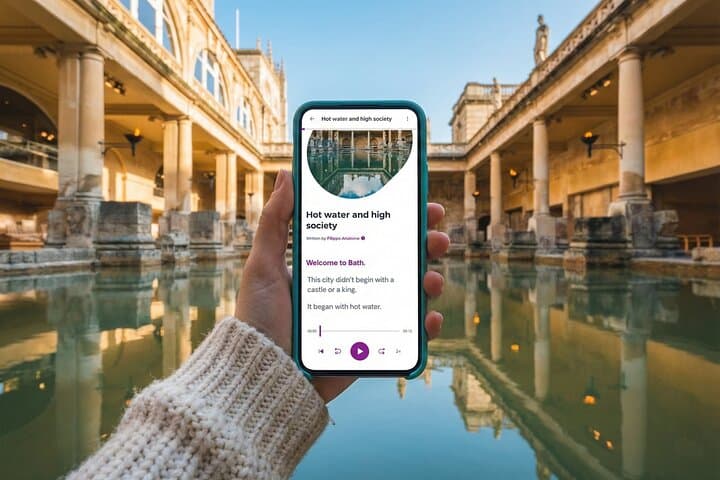
Walk Bath at your own pace with an audio guide that traces 2.8 km of Roman history and Georgian grandeur—from the warm springs to the Royal Crescent. Downloadable in multiple languages, this 2-hour route is ideal for independent travelers who want depth without the schedule.
Walk Bath at your own pace with an audio guide that traces 2.8 km of Roman history and Georgian grandeur—from the warm springs to the Royal Crescent. Downloadable in multiple languages, this 2-hour route is ideal for independent travelers who want depth without the schedule.
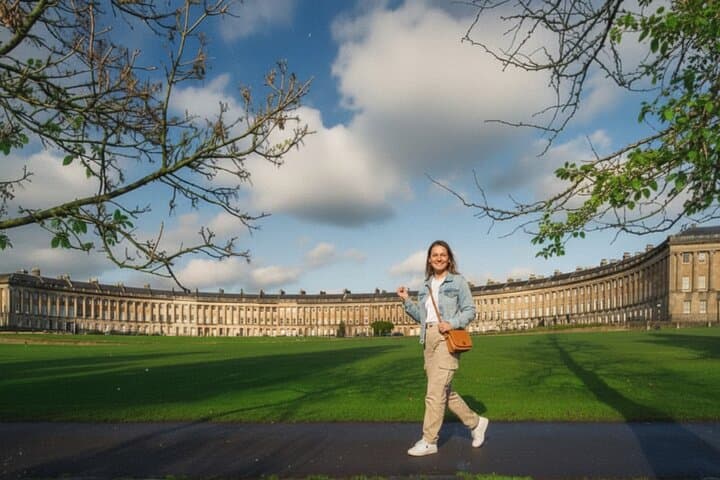
You step out into Abbey Churchyard and the city sighs around you—the Avon nudges at the stone walls while Georgian terraces turn afternoon light into warm honey. This self-guided walking tour threads 2.8 km through Bath’s upper town in roughly two hours, moving from the steaming history of the Roman Baths past Bath Abbey, along Pulteney Bridge, through The Circus, and finishing at the Royal Crescent.
Verified experiences and guided adventures in the surrounding area.
Operated by Ciceru · Bath, Somerset
You step out into Abbey Churchyard and the city sighs around you—the Avon nudges at the stone walls while Georgian terraces turn afternoon light into warm honey. This self-guided walking tour threads 2.8 km through Bath’s upper town in roughly two hours, moving from the steaming history of the Roman Baths past Bath Abbey, along Pulteney Bridge, through The Circus, and finishing at the Royal Crescent.
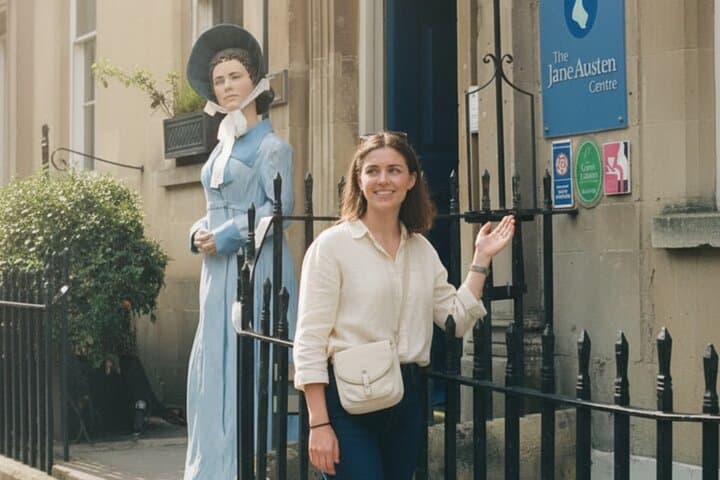
Bath’s story is stone and steam: the hot springs that drove Roman settlement (Aquae Sulis), and the oolitic Bath stone quarried nearby that gives the city its uniform, golden face. Georgian town planning and Palladian façades reflect 18th-century social choreography—assembly rooms, promenades, and the theater of polite life that Jane Austen observed and actors still play out today.
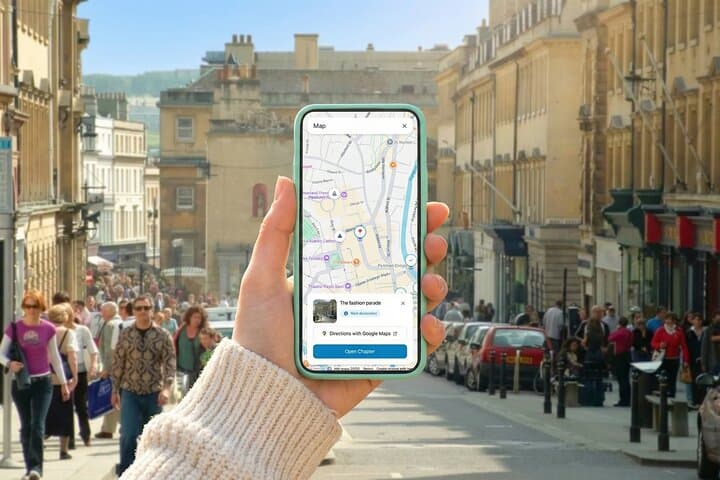
Practical details sit close to the poetry. The route is mostly paved but flagged and cobbled in places; expect steps, occasional narrow lanes, and street-level noise. The audio guide—available in multiple languages—lets you pause and linger at each stop, and interactive quizzes add a light challenge for groups or families. Download the content before you go to avoid roaming charges and look for nearby bus and rail links if you’re arriving from Bristol or further afield.
Timing matters: mornings and late afternoons soften the crowds; mid-day brings tour groups. Wear supportive shoes for uneven stone, carry a light waterproof, and bring a fully charged phone and headphones. The tour is low-impact physically but rich in cultural detail—ideal for curious walkers who want the freedom to explore Bath at their own pace.
easy.
2 hours.
Suitable for most fitness levels; requires standing and walking on uneven surfaces for up to two hours.
The route is approximately 2.8 km and typically takes about 2 hours at a relaxed pace, allowing time to stop at key attractions.
Parts of the route include cobbles, steps, and narrow passages; some clips and stops are accessible from street level but full accessibility is limited—check individual locations in advance.
The audio is offered in multiple languages including English, German, Italian, French, Spanish, Portuguese, and Chinese according to the listing.
This is a self-guided walking audio tour; admission to paid sites like the Roman Baths is not included—purchase separate tickets if you plan to enter museums or thermal sites.
Bath grew around thermal springs used by the Romans (Aquae Sulis) and was later reshaped by 18th-century architects who applied classical orders to create the city’s uniform Georgian fabric.
Bath’s stonework and heritage streets require careful maintenance; stick to marked paths, avoid leaning on fragile masonry, and support local conservation efforts by choosing responsible tour operators.
Ciceru operates guided outdoor trips and adventures with an emphasis on safety, stewardship, and memorable experiences.
You step out into Abbey Churchyard and the city sighs around you—the Avon nudges at the stone walls while Georgian terraces turn afternoon light into warm honey. This self-guided walking tour threads 2.8 km through Bath’s upper town in roughly two hours, moving from the steaming history of the Roman Baths past Bath Abbey, along Pulteney Bridge, through The Circus, and finishing at the Royal Crescent.
You step out into Abbey Churchyard and the city sighs around you—the Avon nudges at the stone walls while Georgian terraces turn afternoon light into warm honey. This self-guided walking tour threads 2.8 km through Bath’s upper town in roughly two hours, moving from the steaming history of the Roman Baths past Bath Abbey, along Pulteney Bridge, through The Circus, and finishing at the Royal Crescent.
Bath’s story is stone and steam: the hot springs that drove Roman settlement (Aquae Sulis), and the oolitic Bath stone quarried nearby that gives the city its uniform, golden face. Georgian town planning and Palladian façades reflect 18th-century social choreography—assembly rooms, promenades, and the theater of polite life that Jane Austen observed and actors still play out today.
Practical details sit close to the poetry. The route is mostly paved but flagged and cobbled in places; expect steps, occasional narrow lanes, and street-level noise. The audio guide—available in multiple languages—lets you pause and linger at each stop, and interactive quizzes add a light challenge for groups or families. Download the content before you go to avoid roaming charges and look for nearby bus and rail links if you’re arriving from Bristol or further afield.
Timing matters: mornings and late afternoons soften the crowds; mid-day brings tour groups. Wear supportive shoes for uneven stone, carry a light waterproof, and bring a fully charged phone and headphones. The tour is low-impact physically but rich in cultural detail—ideal for curious walkers who want the freedom to explore Bath at their own pace.