THE ADVENTURE COLLECTIVE® · Independent discovery and booking for outdoor travel

Walk Lucerne’s old town at your own pace with a smartphone-guided route that hits Chapel Bridge, the Lion Monument and Musegg Wall across nine interactive stops. The 90-minute tour blends video, text and VR extras for a flexible, accessible city experience.
Walk Lucerne’s old town at your own pace with a smartphone-guided route that hits Chapel Bridge, the Lion Monument and Musegg Wall across nine interactive stops. The 90-minute tour blends video, text and VR extras for a flexible, accessible city experience.
You step onto the Kapellbrücke as late-morning light slants across timber and river. The Reuss moves with a steady purpose below the covered bridge while gulls and swans patrol the edges of the quay, and a virtual guide appears on your phone to point the way.
Verified experiences and guided adventures in the surrounding area.
Operated by StadtHirsch GmbH · Lucerne, Canton of Lucerne
You step onto the Kapellbrücke as late-morning light slants across timber and river. The Reuss moves with a steady purpose below the covered bridge while gulls and swans patrol the edges of the quay, and a virtual guide appears on your phone to point the way.
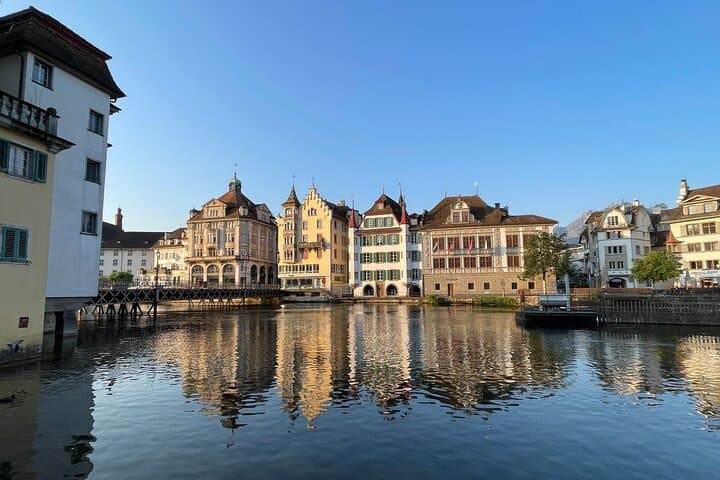
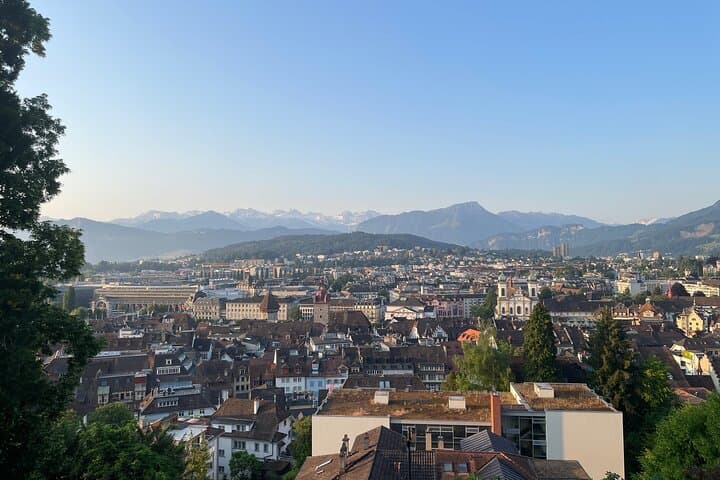
Lucerne’s compact old town wears its history plainly: the Chapel Bridge dates to the 14th century, the Musegg Wall’s towers still mark medieval defenses, and the Lion Monument remembers an early 19th-century tragedy. Beneath those civic layers, the city's setting tells an older story — Lake Lucerne’s fjord-like arms and the surrounding foothills were shaped by glacial erosion, giving the streets abrupt rises and lookout points framed by alpine ridgelines.
Culture here is tactile: watchmaking windows, pocketed courtyards, and a steady flow of lakefront cafés where locals watch light and weather rewrite the panorama. The tour uses nine mapped points, mixing video, text and a VR-enabled souvenir photo near a free watch museum — a modern companion to centuries of craft.
Practical side: the route is about 1.5–2 hours at a relaxed pace and starts at the Chapel Bridge (Kapellbrücke). You’ll need a smartphone, charged battery and modest mobility; many parts are wheelchair accessible but some Musegg towers have steps. Begin early to avoid cruise-ship crowds, bring a small pack and weather layers, and download the tour URL at the bridge to ensure smooth playback. This is an easy, flexible way to learn Lucerne’s stories while keeping the rhythm of the city under your feet.
easy.
1.5 hours.
Suitable for most fitness levels; requires standing and short walks on uneven cobblestones
The self-guided tour is designed for about 90 minutes at a relaxed pace across nine points of interest.
It’s fully self-guided — after purchasing you open the link on your smartphone at Kapellbrücke and follow the virtual guide.
Most areas of the old town and the primary route are wheelchair accessible, though some Musegg towers and narrow alleys have steps.
Yes — video and VR content stream from the link. Download maps or use local Wi‑Fi if you want to limit data usage.
Lucerne grew as a medieval market hub on the Reuss and fortified itself with the Musegg Wall and towers in the 14th century; landmark features like the Chapel Bridge date from that era.
High foot traffic affects narrow streets and historic timber bridges; stick to marked paths, avoid climbing fragile structures and respect local signage to protect fabric and wildlife.
StadtHirsch GmbH operates guided outdoor trips and adventures with an emphasis on safety, stewardship, and memorable experiences.
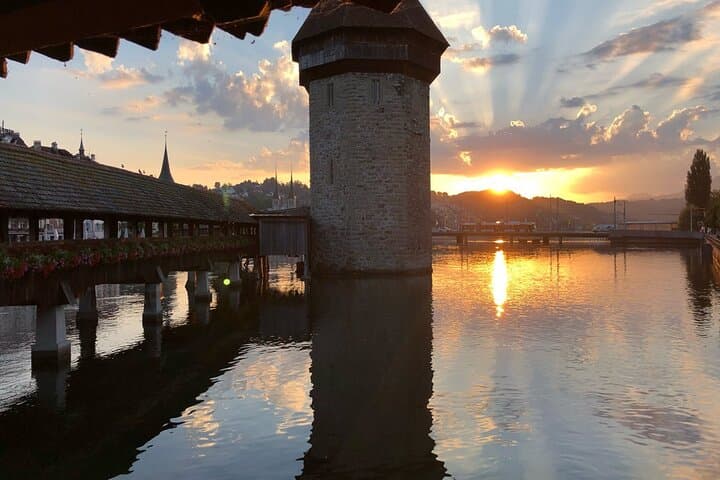
You step onto the Kapellbrücke as late-morning light slants across timber and river. The Reuss moves with a steady purpose below the covered bridge while gulls and swans patrol the edges of the quay, and a virtual guide appears on your phone to point the way.
You step onto the Kapellbrücke as late-morning light slants across timber and river. The Reuss moves with a steady purpose below the covered bridge while gulls and swans patrol the edges of the quay, and a virtual guide appears on your phone to point the way.
Lucerne’s compact old town wears its history plainly: the Chapel Bridge dates to the 14th century, the Musegg Wall’s towers still mark medieval defenses, and the Lion Monument remembers an early 19th-century tragedy. Beneath those civic layers, the city's setting tells an older story — Lake Lucerne’s fjord-like arms and the surrounding foothills were shaped by glacial erosion, giving the streets abrupt rises and lookout points framed by alpine ridgelines.
Culture here is tactile: watchmaking windows, pocketed courtyards, and a steady flow of lakefront cafés where locals watch light and weather rewrite the panorama. The tour uses nine mapped points, mixing video, text and a VR-enabled souvenir photo near a free watch museum — a modern companion to centuries of craft.
Practical side: the route is about 1.5–2 hours at a relaxed pace and starts at the Chapel Bridge (Kapellbrücke). You’ll need a smartphone, charged battery and modest mobility; many parts are wheelchair accessible but some Musegg towers have steps. Begin early to avoid cruise-ship crowds, bring a small pack and weather layers, and download the tour URL at the bridge to ensure smooth playback. This is an easy, flexible way to learn Lucerne’s stories while keeping the rhythm of the city under your feet.