THE ADVENTURE COLLECTIVE® · Independent discovery and booking for outdoor travel

Explore Egmond aan Zee at your own pace with a SmartWalk self-guided route that covers 12 iconic locations—from the lighthouse to a WWII bunker museum. This coastal walking tour blends maritime history, shifting dunes, and practical local tips delivered via WhatsApp.
Explore Egmond aan Zee at your own pace with a SmartWalk self-guided route that covers 12 iconic locations—from the lighthouse to a WWII bunker museum. This coastal walking tour blends maritime history, shifting dunes, and practical local tips delivered via WhatsApp.
Morning light strips the North Sea into silver; the lighthouse watches the quay as gulls wheel and the sand hisses under your boots. A SmartWalk self-guided route lets you move at that tempo—pausing when a plaque catches your eye, lingering at a bunker doorway, or taking a photo from a salt-scoured dune path.
Verified experiences and guided adventures in the surrounding area.
Operated by SmartWalk · Egmond aan Zee, North Holland
Morning light strips the North Sea into silver; the lighthouse watches the quay as gulls wheel and the sand hisses under your boots. A SmartWalk self-guided route lets you move at that tempo—pausing when a plaque catches your eye, lingering at a bunker doorway, or taking a photo from a salt-scoured dune path.
Egmond aan Zee began as a tight-knit fishing village; its streets and small museums still carry the imprint of 19th-century maritime life. The coastline itself is younger—ever-shifting dunes formed by wind and wave on Holocene sands—where WWII bunkers from the Atlantikwall punctuate the landscape and tell a quieter story of occupation and coastal defense.
Culturally, the town mixes working-harbor grit with seaside leisure: fish stalls, a modest lighthouse, and care homes that once housed seafarers. Local insights come through the SmartWalk prompts—secret tips on cafés, viewpoints, and small exhibits—so you see both the public façades and the human-scaled corners.
Practical guidance: plan 2–3 hours for the 12-stop route, keep your smartphone charged for the WhatsApp-based prompts, and wear shoes suited to sand, cobbles, and paved streets. Start early to avoid café crowds and late afternoon to catch lower light for photos. Respect posted signs around dunes and bunkers—many sites are protected or fragile. Hydrate, bring a lightweight rain layer in unpredictable Dutch weather, and allow time to sit on the beach and watch local life unfold.
easy.
2–3 hours.
Suitable for most fitness levels; involves steady walking on mixed surfaces for up to 3 hours
Allow 2–3 hours to complete the 12-stop route at a relaxed pace, longer if you stop for coffee or museums.
Yes—WhatsApp and a small amount of mobile data are required to receive prompts and interactive content.
Much of the town is flat and paved, but dunes, some cobbles, and museum access can limit full accessibility—check individual sites beforehand.
Yes—the SmartWalk is self-paced and can be started at any time, giving flexibility to avoid crowds or fit your schedule.
Egmond aan Zee evolved from a 19th-century fishing community and carries visible traces of the Atlantikwall bunkers built during WWII.
Dune systems are actively managed to prevent erosion; visitors are asked to stay on paths and follow local signage to protect fragile habitats.
SmartWalk operates guided outdoor trips and adventures with an emphasis on safety, stewardship, and memorable experiences.
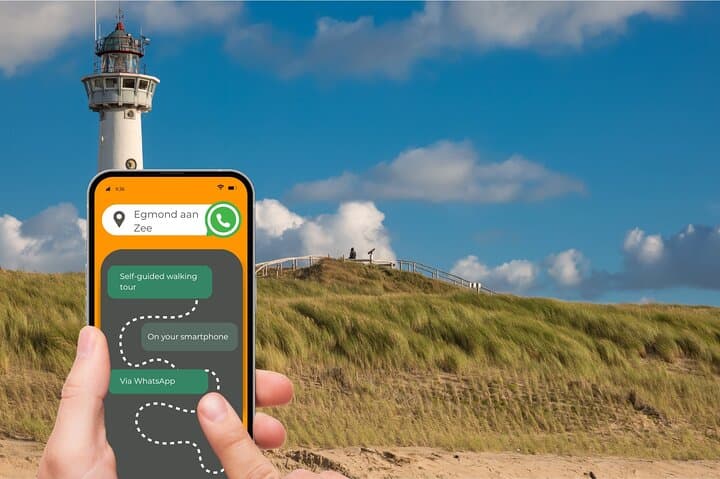


Morning light strips the North Sea into silver; the lighthouse watches the quay as gulls wheel and the sand hisses under your boots. A SmartWalk self-guided route lets you move at that tempo—pausing when a plaque catches your eye, lingering at a bunker doorway, or taking a photo from a salt-scoured dune path.
Morning light strips the North Sea into silver; the lighthouse watches the quay as gulls wheel and the sand hisses under your boots. A SmartWalk self-guided route lets you move at that tempo—pausing when a plaque catches your eye, lingering at a bunker doorway, or taking a photo from a salt-scoured dune path.
Egmond aan Zee began as a tight-knit fishing village; its streets and small museums still carry the imprint of 19th-century maritime life. The coastline itself is younger—ever-shifting dunes formed by wind and wave on Holocene sands—where WWII bunkers from the Atlantikwall punctuate the landscape and tell a quieter story of occupation and coastal defense.
Culturally, the town mixes working-harbor grit with seaside leisure: fish stalls, a modest lighthouse, and care homes that once housed seafarers. Local insights come through the SmartWalk prompts—secret tips on cafés, viewpoints, and small exhibits—so you see both the public façades and the human-scaled corners.
Practical guidance: plan 2–3 hours for the 12-stop route, keep your smartphone charged for the WhatsApp-based prompts, and wear shoes suited to sand, cobbles, and paved streets. Start early to avoid café crowds and late afternoon to catch lower light for photos. Respect posted signs around dunes and bunkers—many sites are protected or fragile. Hydrate, bring a lightweight rain layer in unpredictable Dutch weather, and allow time to sit on the beach and watch local life unfold.