THE ADVENTURE COLLECTIVE® · Independent discovery and booking for outdoor travel

Drive I‑70 with a GPS‑triggered audio guide that turns the stretch between Denver and Breckenridge into a narrated exploration of mining history, geology, and mountain towns. Download the tour on Wi‑Fi, plan stops, and expect variable road and weather conditions.
Drive I‑70 with a GPS‑triggered audio guide that turns the stretch between Denver and Breckenridge into a narrated exploration of mining history, geology, and mountain towns. Download the tour on Wi‑Fi, plan stops, and expect variable road and weather conditions.
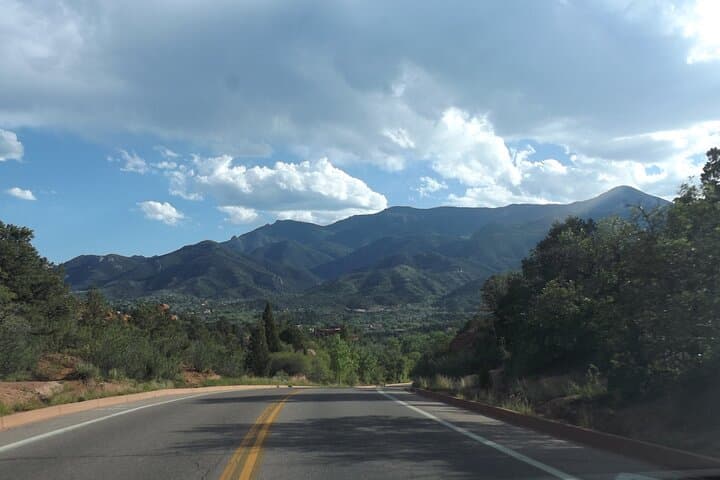
You ease onto I‑70 as the mountains pull the horizon into sharp relief. The car hums, the app cues a warm narrator, and the valley opens: frozen rivers daring you to stop, old mine tailings standing like industrious scars, and highway curves that invite a slow, deliberate pace.
Verified experiences and guided adventures in the surrounding area.
Operated by Tripvia Tours · Breckenridge, Colorado
You ease onto I‑70 as the mountains pull the horizon into sharp relief. The car hums, the app cues a warm narrator, and the valley opens: frozen rivers daring you to stop, old mine tailings standing like industrious scars, and highway curves that invite a slow, deliberate pace.
This route traces the arteries of Colorado's mining boom and the engineering feats that pierced the Rockies — Eisenhower Tunnel and Loveland Pass are chapters in the state's transportation story. Geology here is blunt and visible: uplifted granite, glacial cirques, and talus slopes exposed beside the road. Cultural notes arrive in quick sketches — the gambling legend Poker Alice, mountain towns reborn by skiing and outdoor recreation, and the Arapaho National Forest protecting the watershed.
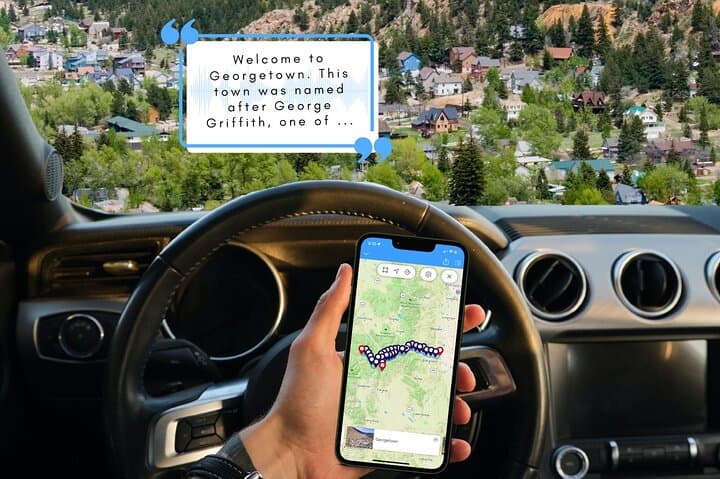
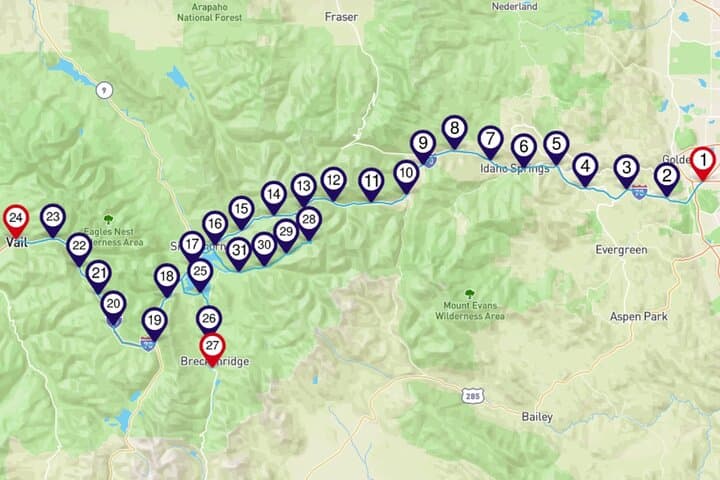
The audio tour is structured around 45 points of interest: small towns (Georgetown, Frisco), ski resorts, historical mine sites, and overlooks where the Rockies step down to the plains. Commentary triggers with GPS, so you can stop for photos, short hikes, or a coffee without losing your place.
Practically, download the Tripvia app and the tour to your phone on Wi‑Fi before you leave; the narration runs offline. Plan fuel and timing — summer brings heavy traffic, winter brings chain laws and possible closures. Keep the route flexible: pullouts, historical markers, and short walking access points let you mix driving with on‑foot exploration. Pack layers, a power bank, and a printed map for redundancy — the road delivers the views, the audio supplies the backstory.
easy.
1–2 hours (drive time variable by stops).
Minimal fitness required for driving; short walks at overlooks may involve uneven ground and light elevation change.
No — download the Tripvia tour on Wi‑Fi before you depart; once downloaded the audio and map run offline.
Start or stop anywhere along I‑70 between Denver and Vail/Breckenridge; the experience is the same in either direction.
Yes for standard vehicles, but check high‑pass conditions in winter — studded tires or chains may be required on Loveland Pass or other high sections.
Yes — points of interest include short, accessible pullouts and stroller/wheelchair‑friendly areas; longer hikes are optional.
The corridor grew up around 19th‑century gold and silver mining; engineering projects like the Eisenhower Tunnel reshaped transport across the Rockies.
Drive-respectfully practices matter — stay on paved pullouts, pack out trash, and avoid driving into meadows; the watershed is protected by national forest policies.
Tripvia Tours operates guided outdoor trips and adventures with an emphasis on safety, stewardship, and memorable experiences.
You ease onto I‑70 as the mountains pull the horizon into sharp relief. The car hums, the app cues a warm narrator, and the valley opens: frozen rivers daring you to stop, old mine tailings standing like industrious scars, and highway curves that invite a slow, deliberate pace.
You ease onto I‑70 as the mountains pull the horizon into sharp relief. The car hums, the app cues a warm narrator, and the valley opens: frozen rivers daring you to stop, old mine tailings standing like industrious scars, and highway curves that invite a slow, deliberate pace.
This route traces the arteries of Colorado's mining boom and the engineering feats that pierced the Rockies — Eisenhower Tunnel and Loveland Pass are chapters in the state's transportation story. Geology here is blunt and visible: uplifted granite, glacial cirques, and talus slopes exposed beside the road. Cultural notes arrive in quick sketches — the gambling legend Poker Alice, mountain towns reborn by skiing and outdoor recreation, and the Arapaho National Forest protecting the watershed.
The audio tour is structured around 45 points of interest: small towns (Georgetown, Frisco), ski resorts, historical mine sites, and overlooks where the Rockies step down to the plains. Commentary triggers with GPS, so you can stop for photos, short hikes, or a coffee without losing your place.
Practically, download the Tripvia app and the tour to your phone on Wi‑Fi before you leave; the narration runs offline. Plan fuel and timing — summer brings heavy traffic, winter brings chain laws and possible closures. Keep the route flexible: pullouts, historical markers, and short walking access points let you mix driving with on‑foot exploration. Pack layers, a power bank, and a printed map for redundancy — the road delivers the views, the audio supplies the backstory.