THE ADVENTURE COLLECTIVE® · Independent discovery and booking for outdoor travel

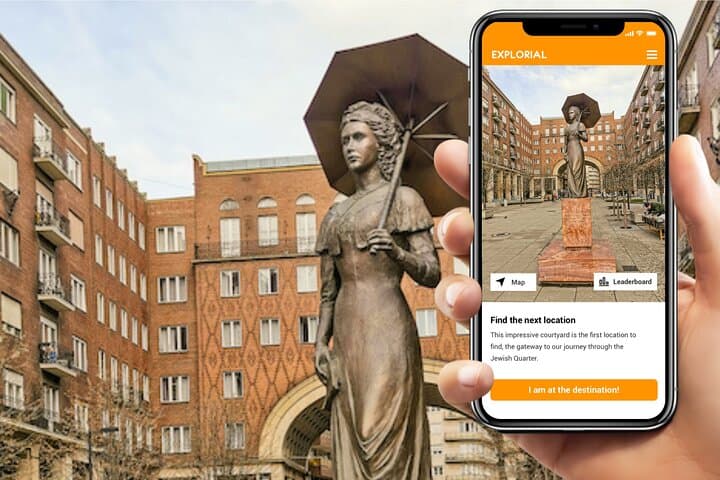
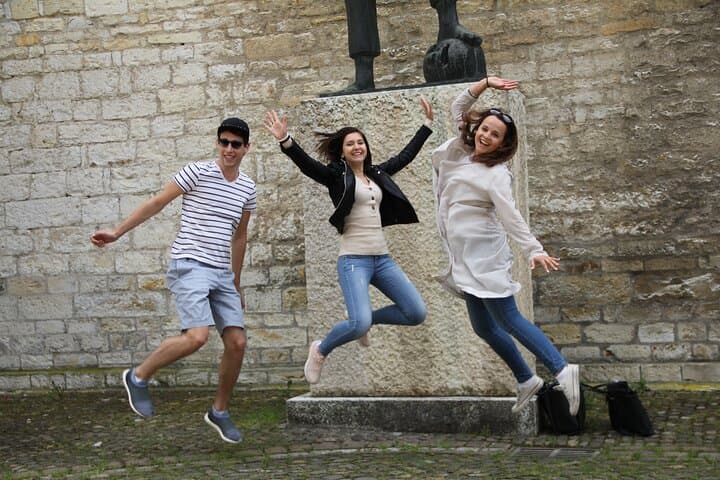
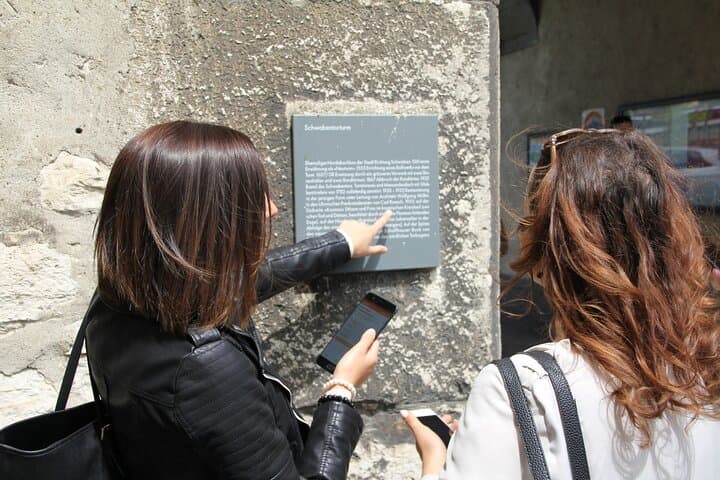
Explore Budapest’s Jewish Quarter by solving clues on a self-guided scavenger hunt. This walk blends history, street culture, and photo challenges across 1–2 hours at your own pace.
Explore Budapest’s Jewish Quarter by solving clues on a self-guided scavenger hunt. This walk blends history, street culture, and photo challenges across 1–2 hours at your own pace.
You step off the tram and the alleyways themselves seem to ask questions—bronze plaques wink from façades, tram tracks hum like a distant metronome, and a courtyard fountain dares you to pause and look closer.
Verified experiences and guided adventures in the surrounding area.
Operated by Explorial · Budapest, Budapest
You step off the tram and the alleyways themselves seem to ask questions—bronze plaques wink from façades, tram tracks hum like a distant metronome, and a courtyard fountain dares you to pause and look closer.
The Jewish Quarter sits east of the Danube in District VII, a compact urban grid where 19th-century synagogues and pre-war apartment blocks meet post-communist ruin bars. At its heart is the Dohany Street Synagogue, Europe’s largest, surrounded by a memorial garden that traces the community’s long arc from Ottoman-era growth to 20th-century tragedy and revival. The stone and brick here tell a political and cultural history: Jewish merchants shaping Budapest’s commerce, wartime ghettos, and the creative push that produced tonight’s bustling ruin-bar scene.
Geologically there’s little drama—flat, urban terrain—so the story is social: courtyards, hidden stairwells, mosaic tiles, and the occasional lime tree that shades a quiet bench. Local culture shows up in café counters, poster-covered walls, and improvised street art; the scavenger-hunt format turns those details into clues.
Practical guidance: download the Explorial app, plug in your access code, and start at the mapped point—expect 1–2 hours of steady walking on paved streets with many stops. Wear comfortable shoes, carry water, and keep your phone charged for maps and photo tasks. Go mid-morning or early evening to avoid peak tourist flows; take breaks in Gozsdu Udvar courtyards and respect memorial spaces. The route is beginner-friendly and self-paced—perfect if you want a mix of puzzle-solving, history, and chance discoveries.
easy.
1–2 hours.
Comfortable walking ability for 1–3 miles on mostly flat, paved surfaces; minimal stamina required
No—this is self-guided. Once you receive the access code you can start anytime and proceed at your own pace.
Much of the quarter is paved, but there are cobblestones, narrow alleys, and occasional steps that can make some sections difficult for wheelchairs or strollers.
The experience is offered in English; the app may offer additional language support depending on updates.
Most participants finish in 1–2 hours, but the experience is self-paced so you can take longer to explore cafés and museums along the way.
The Jewish Quarter grew in the 19th century around the Dohany Street Synagogue and was a dense cultural and commercial hub before wartime disruption; post-war renewal mixed preservation with contemporary nightlife.
Respect memorial sites and private courtyards; support local shops and cafés to help maintain the area’s urban fabric and cultural heritage.
Explorial operates guided outdoor trips and adventures with an emphasis on safety, stewardship, and memorable experiences.

You step off the tram and the alleyways themselves seem to ask questions—bronze plaques wink from façades, tram tracks hum like a distant metronome, and a courtyard fountain dares you to pause and look closer.
You step off the tram and the alleyways themselves seem to ask questions—bronze plaques wink from façades, tram tracks hum like a distant metronome, and a courtyard fountain dares you to pause and look closer.
The Jewish Quarter sits east of the Danube in District VII, a compact urban grid where 19th-century synagogues and pre-war apartment blocks meet post-communist ruin bars. At its heart is the Dohany Street Synagogue, Europe’s largest, surrounded by a memorial garden that traces the community’s long arc from Ottoman-era growth to 20th-century tragedy and revival. The stone and brick here tell a political and cultural history: Jewish merchants shaping Budapest’s commerce, wartime ghettos, and the creative push that produced tonight’s bustling ruin-bar scene.
Geologically there’s little drama—flat, urban terrain—so the story is social: courtyards, hidden stairwells, mosaic tiles, and the occasional lime tree that shades a quiet bench. Local culture shows up in café counters, poster-covered walls, and improvised street art; the scavenger-hunt format turns those details into clues.
Practical guidance: download the Explorial app, plug in your access code, and start at the mapped point—expect 1–2 hours of steady walking on paved streets with many stops. Wear comfortable shoes, carry water, and keep your phone charged for maps and photo tasks. Go mid-morning or early evening to avoid peak tourist flows; take breaks in Gozsdu Udvar courtyards and respect memorial spaces. The route is beginner-friendly and self-paced—perfect if you want a mix of puzzle-solving, history, and chance discoveries.