THE ADVENTURE COLLECTIVE® · Independent discovery and booking for outdoor travel

Explore San Francisco’s historic Chinatown at your own pace with a self-guided audio tour that pairs food stops with local history. Ideal for curious travelers who prefer independent exploration, the route covers iconic sites, bakeries, and alleyway stories in about an hour.
Explore San Francisco’s historic Chinatown at your own pace with a self-guided audio tour that pairs food stops with local history. Ideal for curious travelers who prefer independent exploration, the route covers iconic sites, bakeries, and alleyway stories in about an hour.
A morning in San Francisco’s Chinatown begins at the Dragon Gate, where the street junction hums with vendors, pedestrians and the clatter of rolling carts. Walk under the arch and the neighborhood tightens around you: narrow alleys, neon signs in Chinese characters, steam rising from bakery windows. The self-guided app places the visitor in that pulse—listen at your pace, stop for a bite, and follow stories tied to each storefront.
Verified experiences and guided adventures in the surrounding area.
Operated by VoiceMap Audio Tours · San Francisco, California
A morning in San Francisco’s Chinatown begins at the Dragon Gate, where the street junction hums with vendors, pedestrians and the clatter of rolling carts. Walk under the arch and the neighborhood tightens around you: narrow alleys, neon signs in Chinese characters, steam rising from bakery windows. The self-guided app places the visitor in that pulse—listen at your pace, stop for a bite, and follow stories tied to each storefront.
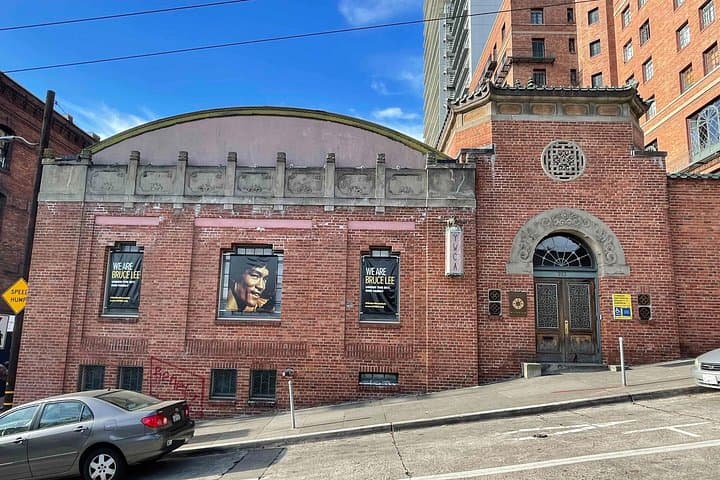
Chinatown is among North America’s oldest Chinese enclaves, shaped by 19th-century immigration, the Chinese Exclusion Act, and waves of community resilience. The area’s streets sit atop landfill and reclaimed marshes, giving the district its compact grid and steep approach from surrounding blocks. Cultural touchstones—Old Saint Mary’s, Portsmouth Square, Ross Alley—illustrate a community that balanced tradition with adaptation; even Bruce Lee’s early life threads into local memory.
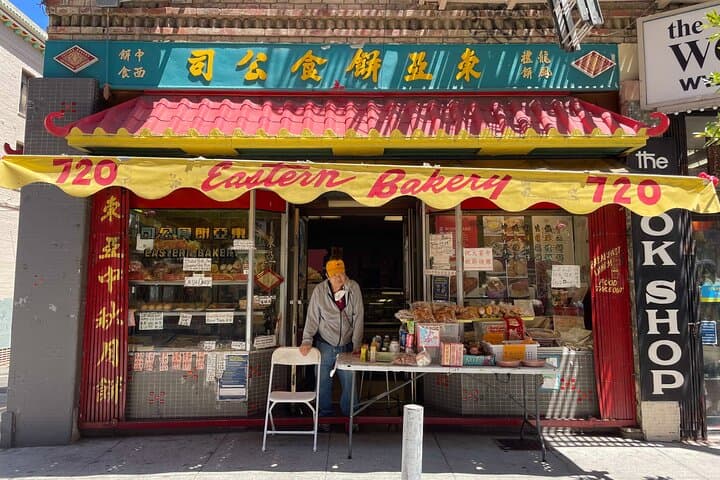
The tour stitches culinary stops into historical context: fortune-cookie makers, dim sum counters, bakeries selling egg tarts and mooncakes. Local shops like the Wok Shop and Kite Shop reveal the practical crafts that keep the neighborhood alive.
Practical guidance: plan for about 60–75 minutes of walking with frequent stops; sidewalks can be crowded, so move deliberately and allow extra time for lines at popular eateries. Bring a charged phone for the app, comfortable shoes for uneven pavement, and a reusable water bottle. Visit early to avoid lunch crowds, and carry small bills for market purchases. The route is entirely walkable, family-friendly, and suited to travelers who want autonomous pacing with local depth.
easy.
1–1.25 hours.
Suitable for most fitness levels; involves continuous walking on city sidewalks and short standing waits
No—after purchase you can download audio and maps to your device for offline use, though initial setup requires internet access.
Much of the route is on paved sidewalks, but some alleys and spots have steps or narrow passages; check individual waypoints in the app for accessibility details.
Yes—this product includes lifetime access to the tour, so you can use it before and after your booking date on your own schedule.
No—the tour points out eateries and recommends items, but food purchases are paid separately at each location.
San Francisco’s Chinatown developed during the Gold Rush and grew despite exclusionary laws; Portsmouth Square served as an early civic center for the Chinese American community.
Support local businesses to help maintain the neighborhood’s character; minimize single-use plastics when sampling street foods and respect posted signage for private properties.
VoiceMap Audio Tours operates guided outdoor trips and adventures with an emphasis on safety, stewardship, and memorable experiences.

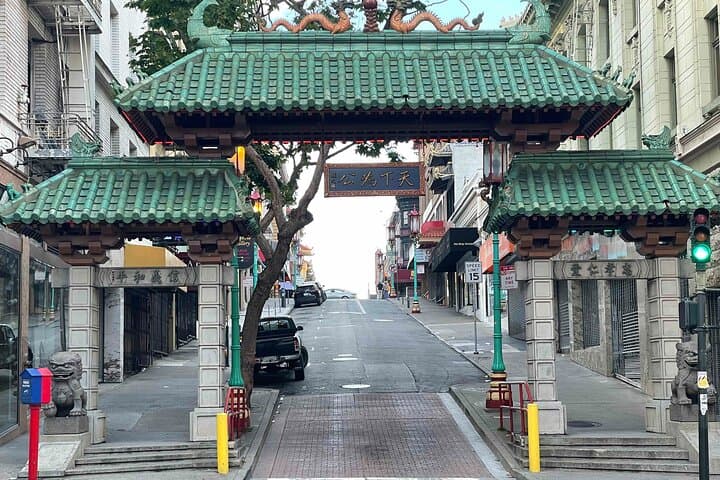
A morning in San Francisco’s Chinatown begins at the Dragon Gate, where the street junction hums with vendors, pedestrians and the clatter of rolling carts. Walk under the arch and the neighborhood tightens around you: narrow alleys, neon signs in Chinese characters, steam rising from bakery windows. The self-guided app places the visitor in that pulse—listen at your pace, stop for a bite, and follow stories tied to each storefront.
A morning in San Francisco’s Chinatown begins at the Dragon Gate, where the street junction hums with vendors, pedestrians and the clatter of rolling carts. Walk under the arch and the neighborhood tightens around you: narrow alleys, neon signs in Chinese characters, steam rising from bakery windows. The self-guided app places the visitor in that pulse—listen at your pace, stop for a bite, and follow stories tied to each storefront.
Chinatown is among North America’s oldest Chinese enclaves, shaped by 19th-century immigration, the Chinese Exclusion Act, and waves of community resilience. The area’s streets sit atop landfill and reclaimed marshes, giving the district its compact grid and steep approach from surrounding blocks. Cultural touchstones—Old Saint Mary’s, Portsmouth Square, Ross Alley—illustrate a community that balanced tradition with adaptation; even Bruce Lee’s early life threads into local memory.
The tour stitches culinary stops into historical context: fortune-cookie makers, dim sum counters, bakeries selling egg tarts and mooncakes. Local shops like the Wok Shop and Kite Shop reveal the practical crafts that keep the neighborhood alive.
Practical guidance: plan for about 60–75 minutes of walking with frequent stops; sidewalks can be crowded, so move deliberately and allow extra time for lines at popular eateries. Bring a charged phone for the app, comfortable shoes for uneven pavement, and a reusable water bottle. Visit early to avoid lunch crowds, and carry small bills for market purchases. The route is entirely walkable, family-friendly, and suited to travelers who want autonomous pacing with local depth.