THE ADVENTURE COLLECTIVE® · Independent discovery and booking for outdoor travel

Explore Saguaro National Park at your own pace with an offline audio driving tour. Follow GPS-guided stops through towering saguaros, petroglyphs, and scenic overlooks—ideal for photographers and families seeking flexible, educational exploration.
Explore Saguaro National Park at your own pace with an offline audio driving tour. Follow GPS-guided stops through towering saguaros, petroglyphs, and scenic overlooks—ideal for photographers and families seeking flexible, educational exploration.
You pull onto a desert road as morning light lifts the saguaros out of shadow; their arms reach slow and deliberate, shaping the horizon while a wide sky presses down with clean, dry air. The drive through Saguaro National Park—east and west districts—feels like moving through a living archive: stacked granite, wind-sculpted ridgelines, and cactus forests that have watched centuries of sun.
Verified experiences and guided adventures in the surrounding area.
Operated by Shaka Guide Apps · Tucson, Arizona
You pull onto a desert road as morning light lifts the saguaros out of shadow; their arms reach slow and deliberate, shaping the horizon while a wide sky presses down with clean, dry air. The drive through Saguaro National Park—east and west districts—feels like moving through a living archive: stacked granite, wind-sculpted ridgelines, and cactus forests that have watched centuries of sun.
Human history and geology are close at hand. Hohokam petroglyphs mark camps and travel routes; Civilian Conservation Corps stonework dots overlooks built during the 1930s. The park sits where the Sonoran Desert opens into Rincon and Tucson Mountains, a place of coarse volcanic rocks, alluvial fans, and soils that favor the saguaro’s slow, spiny growth.
Culture here mixes ranching history, Indigenous ties to desert plants, and modern Tucson’s outdoor ethos. Wildlife moves quietly: javelinas root near washes, roadrunners sprint across flats, and hawks ride afternoon thermals that dare you to look up.
Practical guidance: download the audio tour on Wi‑Fi before you go, follow the GPS-activated stops, and plan for heat—start at first light or late afternoon in summer. Park entrance covers seven days; many viewpoints and short hikes are ADA-accessible, but unpaved trails need sturdy shoes. Carry plenty of water, a charged phone and a phone mount for safe, hands-free navigation. Respect saguaros and cultural sites—stay on designated roads and trails, pack out trash, and keep a safe distance from wildlife. The self-guided format gives freedom: pause at overlooks, add a short loop hike, and set your own pace through one of the Southwest’s most iconic landscapes.
easy.
12–13 hours.
Suitable for all fitness levels; minimal walking required unless you choose trail hikes
No — redeem and download the tour over Wi‑Fi; the audio and offline map work without cellular data.
The full suggested listening itinerary can be taken across a day (12–13 hours) if you explore both districts, but you can run shorter sections at your pace.
Many overlooks and short interpretive trails are ADA-accessible; longer backcountry trails are not.
Yes — park entrance is per vehicle and valid for seven days; bring your receipt and display as required.
The park preserves Hohokam-era rock art and CCC-built overlooks from the 1930s, reflecting human use across centuries.
Water is scarce and invasive grasses threaten native regeneration—stay on roads, pack out waste, and avoid disturbing young saguaros.
Shaka Guide Apps operates guided outdoor trips and adventures with an emphasis on safety, stewardship, and memorable experiences.
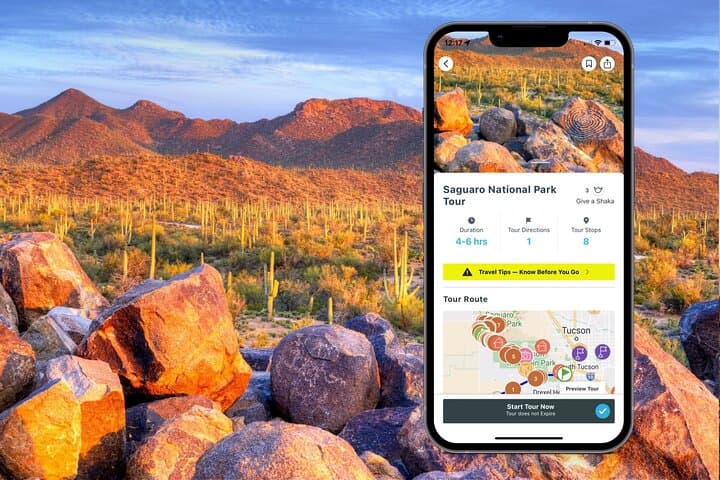
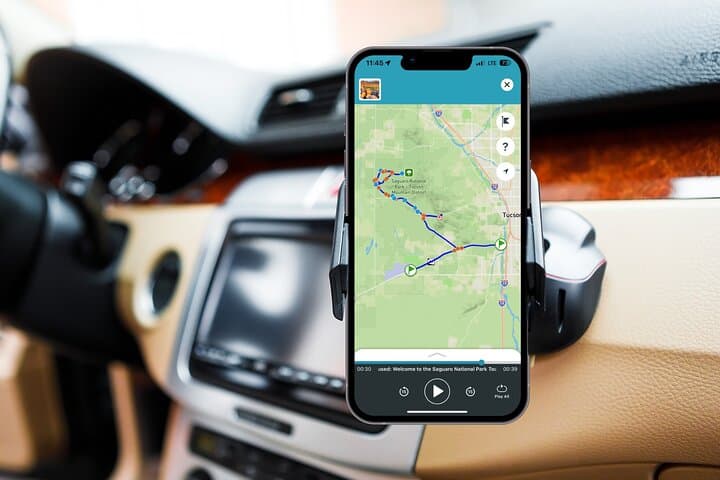
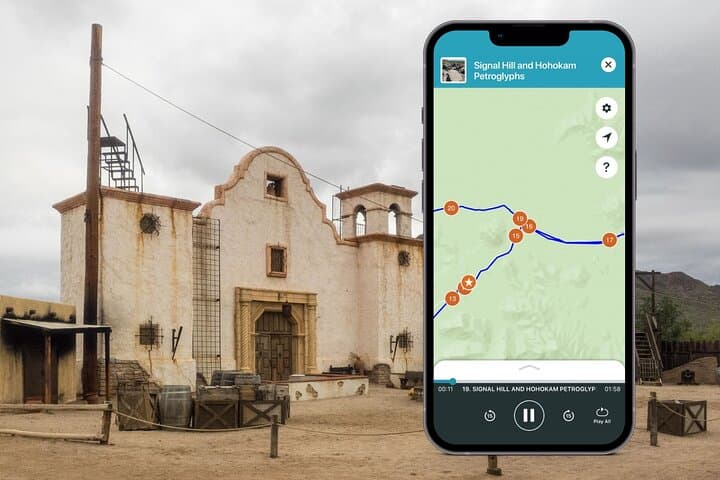
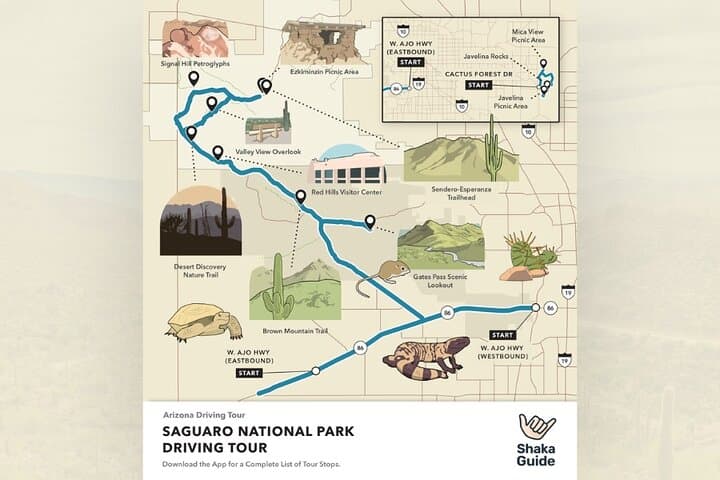
You pull onto a desert road as morning light lifts the saguaros out of shadow; their arms reach slow and deliberate, shaping the horizon while a wide sky presses down with clean, dry air. The drive through Saguaro National Park—east and west districts—feels like moving through a living archive: stacked granite, wind-sculpted ridgelines, and cactus forests that have watched centuries of sun.
You pull onto a desert road as morning light lifts the saguaros out of shadow; their arms reach slow and deliberate, shaping the horizon while a wide sky presses down with clean, dry air. The drive through Saguaro National Park—east and west districts—feels like moving through a living archive: stacked granite, wind-sculpted ridgelines, and cactus forests that have watched centuries of sun.
Human history and geology are close at hand. Hohokam petroglyphs mark camps and travel routes; Civilian Conservation Corps stonework dots overlooks built during the 1930s. The park sits where the Sonoran Desert opens into Rincon and Tucson Mountains, a place of coarse volcanic rocks, alluvial fans, and soils that favor the saguaro’s slow, spiny growth.
Culture here mixes ranching history, Indigenous ties to desert plants, and modern Tucson’s outdoor ethos. Wildlife moves quietly: javelinas root near washes, roadrunners sprint across flats, and hawks ride afternoon thermals that dare you to look up.
Practical guidance: download the audio tour on Wi‑Fi before you go, follow the GPS-activated stops, and plan for heat—start at first light or late afternoon in summer. Park entrance covers seven days; many viewpoints and short hikes are ADA-accessible, but unpaved trails need sturdy shoes. Carry plenty of water, a charged phone and a phone mount for safe, hands-free navigation. Respect saguaros and cultural sites—stay on designated roads and trails, pack out trash, and keep a safe distance from wildlife. The self-guided format gives freedom: pause at overlooks, add a short loop hike, and set your own pace through one of the Southwest’s most iconic landscapes.