THE ADVENTURE COLLECTIVE® · Independent discovery and booking for outdoor travel

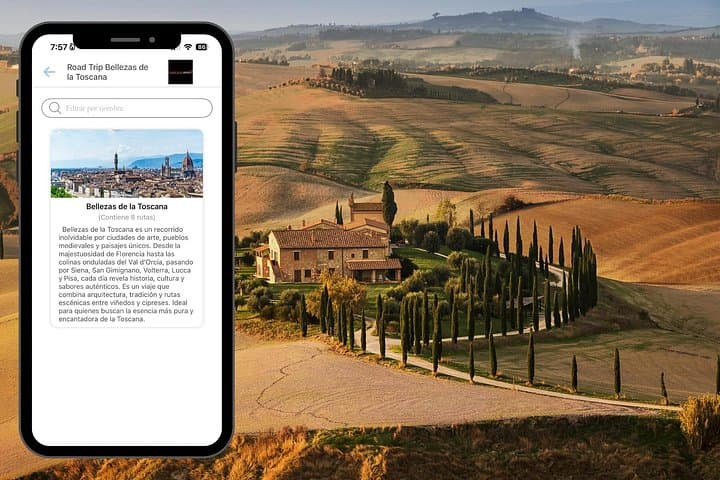
Drive at your own pace through Florence, Siena and medieval hill towns with an audio guide that weaves history, practical routing and local color. This multi-day self-guided trip balances scenic driving with walking tours of compact city centers.
Drive at your own pace through Florence, Siena and medieval hill towns with an audio guide that weaves history, practical routing and local color. This multi-day self-guided trip balances scenic driving with walking tours of compact city centers.
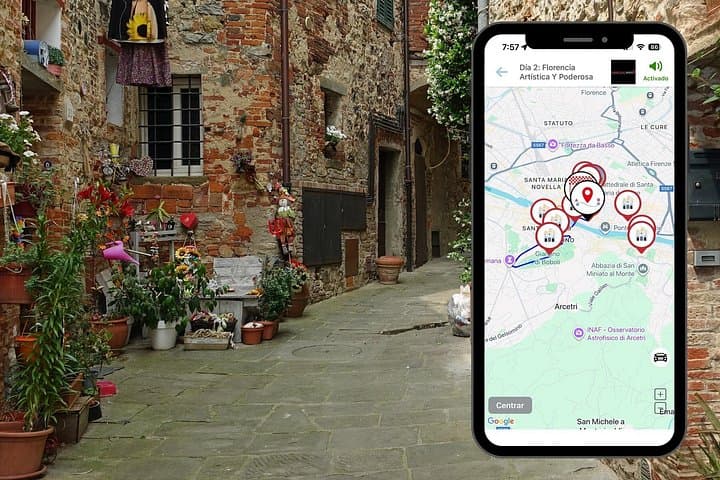
Morning light slides across a narrow Florentine street and the audio guide clicks on — your map is a ribbon of back roads, hilltop towns and vineyards waiting to be claimed at your own pace.
Verified experiences and guided adventures in the surrounding area.
Operated by BARCELONA LANDS · Florence, Tuscany
Morning light slides across a narrow Florentine street and the audio guide clicks on — your map is a ribbon of back roads, hilltop towns and vineyards waiting to be claimed at your own pace.
This six-day self-guided road trip stitches Florence, Siena, Monteriggioni, San Gimignano, Volterra and Lucca into a practical route through Tuscany’s rolling hills. Geology here is soft limestone and clay; the landscape folds into ridges and shallow valleys with vineyard terraces and olive groves. Cities show layered histories: Etruscan stones at Volterra, medieval towers in San Gimignano, and Renaissance masterpieces in Florence’s compact core.
Culture is lived in piazzas and markets — cafè counters, alabaster workshops and family-run wineries along the Via Chiantigiana. Expect cobbled streets, narrow lanes where traffic slows, and hill climbs that reward with wide views of cypress lines and patchwork fields.
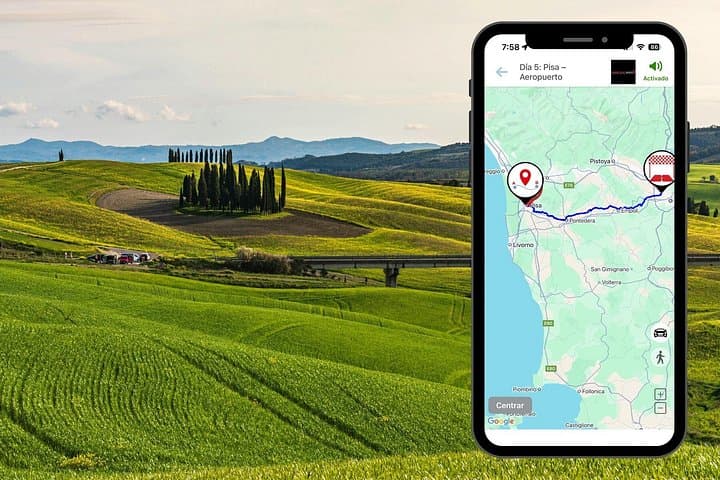
Practical guidance: plan 4–6 hours of driving spread across days — Florence to Siena ~80 km, Siena to San Gimignano ~45 km, San Gimignano to Volterra ~30 km. Use the audio routes to skip idle searching; load offline maps and full-charge devices before leaving towns because rural signal can be spotty. Park at city edges where possible and walk historic centers; many cores are restricted to pedestrians (ZTL zones in Italy). Wear comfortable walking shoes for cobbles, carry a refillable bottle, and time visits early morning or late afternoon to avoid tour-bus congestion.
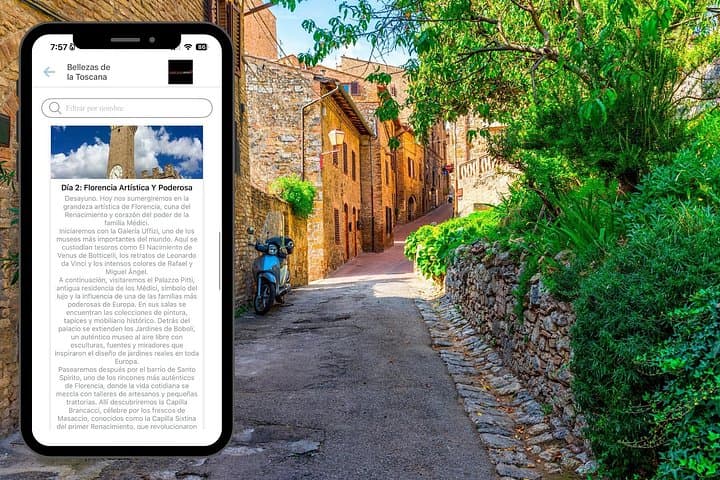
The audio guide turns logistics into context: architecture, legends and practical pointers so you move deliberately — not rushed — through one of Italy’s most storied regions.
easy.
6 days.
Low aerobic fitness required—suitable for travelers who can walk 1–3 miles on cobbles and climb short hills.
Yes — the routes are designed for self-driving but can be adapted by public transport with longer transfer times between towns.
The audio guide includes Spanish, English, German, French, Italian and Portuguese as listed in the product details.
No — the guide provides commentary and suggested stops, but admissions and guided entry to museums are not included.
Yes — this is self-guided audio content meant to be paused, reordered or repeated so you can customize time in each town.
Tuscany’s towns layer Etruscan foundations, medieval fortifications and Renaissance urban planning; many hill towns grew on strategic routes like the Via Francigena.
Stick to marked roads and paths, avoid littering in rural areas, and prioritize family-run businesses and local artisans to keep tourism benefits in the community.
BARCELONA LANDS operates guided outdoor trips and adventures with an emphasis on safety, stewardship, and memorable experiences.
Morning light slides across a narrow Florentine street and the audio guide clicks on — your map is a ribbon of back roads, hilltop towns and vineyards waiting to be claimed at your own pace.
Morning light slides across a narrow Florentine street and the audio guide clicks on — your map is a ribbon of back roads, hilltop towns and vineyards waiting to be claimed at your own pace.
This six-day self-guided road trip stitches Florence, Siena, Monteriggioni, San Gimignano, Volterra and Lucca into a practical route through Tuscany’s rolling hills. Geology here is soft limestone and clay; the landscape folds into ridges and shallow valleys with vineyard terraces and olive groves. Cities show layered histories: Etruscan stones at Volterra, medieval towers in San Gimignano, and Renaissance masterpieces in Florence’s compact core.
Culture is lived in piazzas and markets — cafè counters, alabaster workshops and family-run wineries along the Via Chiantigiana. Expect cobbled streets, narrow lanes where traffic slows, and hill climbs that reward with wide views of cypress lines and patchwork fields.
Practical guidance: plan 4–6 hours of driving spread across days — Florence to Siena ~80 km, Siena to San Gimignano ~45 km, San Gimignano to Volterra ~30 km. Use the audio routes to skip idle searching; load offline maps and full-charge devices before leaving towns because rural signal can be spotty. Park at city edges where possible and walk historic centers; many cores are restricted to pedestrians (ZTL zones in Italy). Wear comfortable walking shoes for cobbles, carry a refillable bottle, and time visits early morning or late afternoon to avoid tour-bus congestion.
The audio guide turns logistics into context: architecture, legends and practical pointers so you move deliberately — not rushed — through one of Italy’s most storied regions.