THE ADVENTURE COLLECTIVE® · Independent discovery and booking for outdoor travel

Walk Notting Hill at your own pace with an audio guide that points out Portobello Road’s market life, hidden mews and social history. Expect colourful façades, short hills, and stops at Britain’s oldest cinema and a community hub, The Tabernacle.
Walk Notting Hill at your own pace with an audio guide that points out Portobello Road’s market life, hidden mews and social history. Expect colourful façades, short hills, and stops at Britain’s oldest cinema and a community hub, The Tabernacle.
A cold morning light slips between stucco façades as the walker drops down from Notting Hill Gate toward Portobello Road. Shopfront colours push you forward; narrow mews and clipped garden squares offer sudden, private pauses. The audio guide begins—local voice, crisp directions—and the neighbourhood unfurls in short chapters: Ladbroke Square’s iron railings, the patched cobbles of St. Luke’s Mews, and the lively market stalls that have defined Portobello for generations.
Verified experiences and guided adventures in the surrounding area.
Operated by Vidi Guides · London, Greater London
A cold morning light slips between stucco façades as the walker drops down from Notting Hill Gate toward Portobello Road. Shopfront colours push you forward; narrow mews and clipped garden squares offer sudden, private pauses. The audio guide begins—local voice, crisp directions—and the neighbourhood unfurls in short chapters: Ladbroke Square’s iron railings, the patched cobbles of St. Luke’s Mews, and the lively market stalls that have defined Portobello for generations.
Notting Hill’s story is practical as much as picturesque. Built on London Clay with a low rise of West London terraces, the area grew in the 19th century as suburban housing for a swelling city. Portobello Road became a market in the Victorian era; in the 20th century the Windrush generation and later waves of immigrants reshaped its music, food and culture—evidence still audible in shop signs and market calls. The Electric Cinema, one of Britain’s oldest working cinemas, and The Tabernacle reflect layers of social history and adaptation.
For a self-guided walk, the route is compact (about 1–2 miles) with short hills and cobbles—easy to moderate underfoot. Download audio and maps for offline use, pick a quiet weekday morning for photos, or go late on market day for atmosphere and street food. Wear supportive shoes, bring a charged phone for GPS, and budget time to pause at gardens and independent shops. This tour rewards slow attention: history, architecture, and the everyday details that make Notting Hill more than a backdrop—it’s a neighbourhood that keeps evolving under your boots.
moderate.
45–60 minutes.
Suitable for someone comfortable walking 1–2 miles on urban terrain with short hills; strollers manageable on main sections.
The audio tour runs about 50 minutes and covers roughly 1–2 miles of easy-to-moderate urban walking with some short hills and cobbled surfaces.
Main sections along Portobello Road are stroller-friendly; many mews and side lanes have tighter paving and some steps—access can be limited in places.
No—download the audio and offline map in advance to use the location-aware guide without mobile data.
This is a self-guided audio tour with historical narration; entrance fees to private sites are not included and group guides are not provided.
Notting Hill expanded in the 19th century on London Clay as middle-class terraces; the Portobello market evolved from early produce stalls into a famous antiques and food market and the area later became culturally reshaped by Caribbean and other immigrant communities.
Respect private garden squares and fenced areas—stay on public paths. Support local shops and avoid single-use plastics while visiting market stalls to reduce litter and pressure on narrow streets.
Vidi Guides operates guided outdoor trips and adventures with an emphasis on safety, stewardship, and memorable experiences.
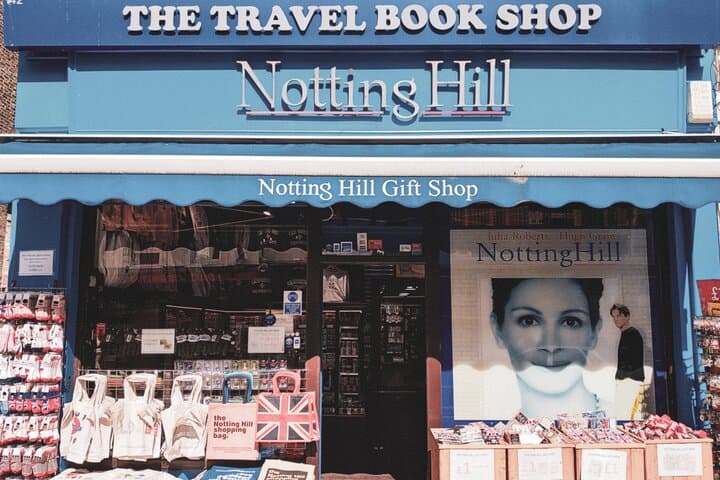
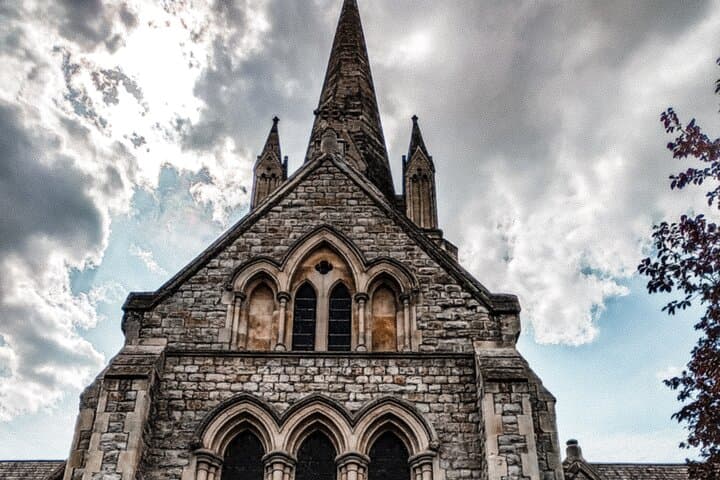

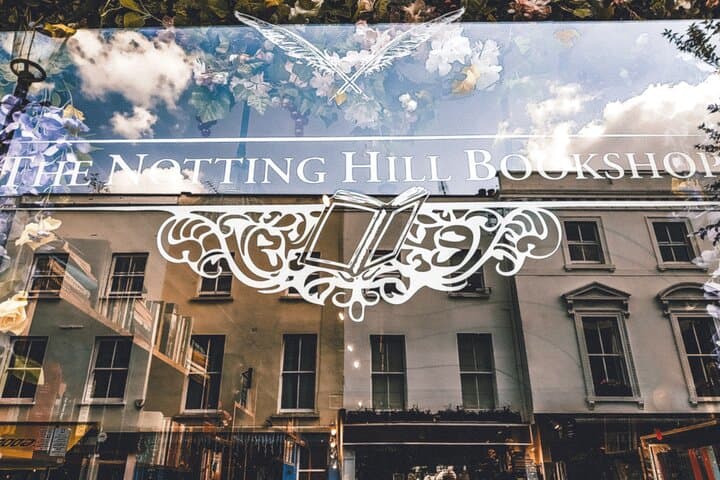
A cold morning light slips between stucco façades as the walker drops down from Notting Hill Gate toward Portobello Road. Shopfront colours push you forward; narrow mews and clipped garden squares offer sudden, private pauses. The audio guide begins—local voice, crisp directions—and the neighbourhood unfurls in short chapters: Ladbroke Square’s iron railings, the patched cobbles of St. Luke’s Mews, and the lively market stalls that have defined Portobello for generations.
A cold morning light slips between stucco façades as the walker drops down from Notting Hill Gate toward Portobello Road. Shopfront colours push you forward; narrow mews and clipped garden squares offer sudden, private pauses. The audio guide begins—local voice, crisp directions—and the neighbourhood unfurls in short chapters: Ladbroke Square’s iron railings, the patched cobbles of St. Luke’s Mews, and the lively market stalls that have defined Portobello for generations.
Notting Hill’s story is practical as much as picturesque. Built on London Clay with a low rise of West London terraces, the area grew in the 19th century as suburban housing for a swelling city. Portobello Road became a market in the Victorian era; in the 20th century the Windrush generation and later waves of immigrants reshaped its music, food and culture—evidence still audible in shop signs and market calls. The Electric Cinema, one of Britain’s oldest working cinemas, and The Tabernacle reflect layers of social history and adaptation.
For a self-guided walk, the route is compact (about 1–2 miles) with short hills and cobbles—easy to moderate underfoot. Download audio and maps for offline use, pick a quiet weekday morning for photos, or go late on market day for atmosphere and street food. Wear supportive shoes, bring a charged phone for GPS, and budget time to pause at gardens and independent shops. This tour rewards slow attention: history, architecture, and the everyday details that make Notting Hill more than a backdrop—it’s a neighbourhood that keeps evolving under your boots.