THE ADVENTURE COLLECTIVE® · Independent discovery and booking for outdoor travel

Use a downloadable audio guide to walk the National Gallery at your own pace — no admissions included. Learn the stories behind Holbein, Van Gogh and Botticelli with focused commentary and a digital map to navigate the main galleries.
Use a downloadable audio guide to walk the National Gallery at your own pace — no admissions included. Learn the stories behind Holbein, Van Gogh and Botticelli with focused commentary and a digital map to navigate the main galleries.
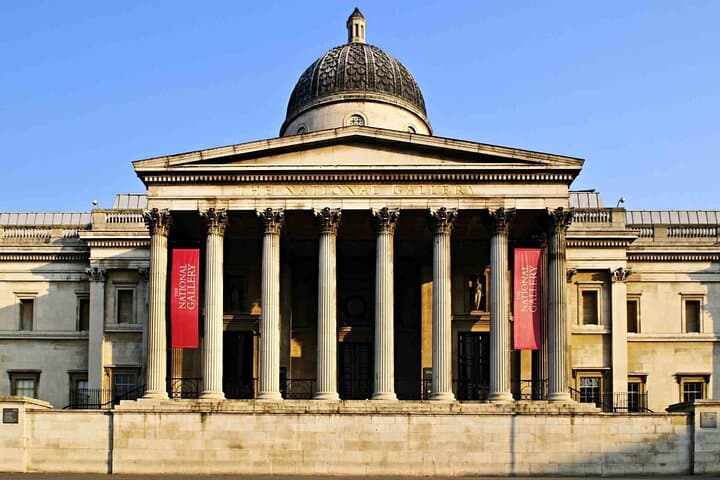
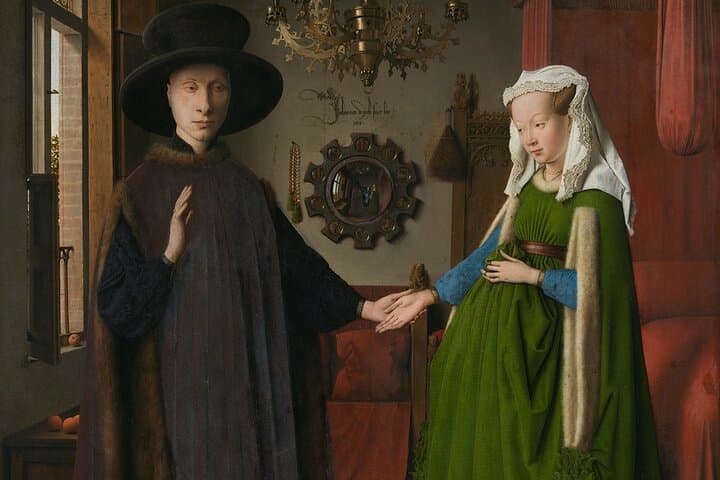
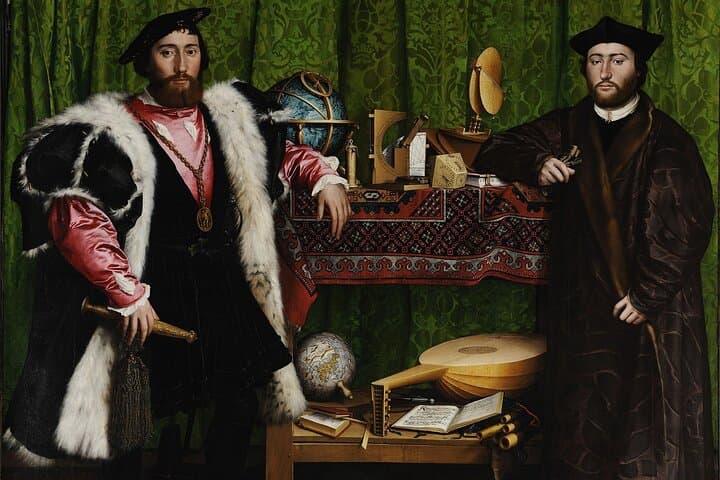
Step through the stone steps onto Trafalgar Square and let the city's pulse soften as you move toward a room full of shared silences: the National Gallery. The audio guide escorts you from the Holbein portraits of Tudor court life through the thick impasto of Van Gogh's Sunflowers and the moody diagonals of a Turner seascape, placing each painting in its social and technical context while you stand where generations have stood.
Verified experiences and guided adventures in the surrounding area.
Operated by Vox City International Ltd · London, England
Step through the stone steps onto Trafalgar Square and let the city's pulse soften as you move toward a room full of shared silences: the National Gallery. The audio guide escorts you from the Holbein portraits of Tudor court life through the thick impasto of Van Gogh's Sunflowers and the moody diagonals of a Turner seascape, placing each painting in its social and technical context while you stand where generations have stood.
Founded in 1824, the Gallery assembles Western European paintings from the 13th to the 19th centuries; its collection charts changes in patronage, technique and national identity. Architecturally, the building is a 19th-century civic response to a growing public appetite for art, sitting beside Trafalgar’s columns and fountains that keep watch over the square.
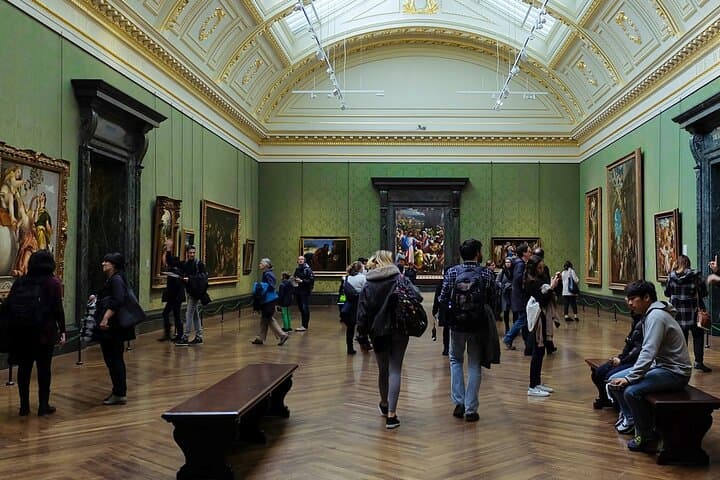
Culturally, the Gallery is part museum, part classroom — expect multilingual commentary explaining provenance, restoration stories and the brushwork that betrays an artist's hand. Local insight: peak crowds arrive late morning and during school holidays; quieter hours are weekday afternoons.
Practically, this product is an audio-only, mobile-download guide that does not include admission — the National Gallery maintains free entry, so you can pair this download with a self-timed visit. Scan the QR code on your voucher before arrival, charge your phone, and bring headphones that let you hear detailed commentary in galleries without disturbing others. Plan roughly three hours to move through the main wings at an unhurried pace; shorter visits are possible by selecting focused routes in the app. Respect signage, avoid flash photography, and give yourself time to stand and look — the audio is best when it follows your gaze, not your feet.
easy.
2–3 hours.
Low; suitable for most visitors comfortable with standing and walking on flat museum floors for several hours
No — the National Gallery is free to enter and this product supplies only the digital audio guide; you’ll still need to enter via the main doors or any public entrance.
Scan the QR code on your voucher to download the audio guide to your phone; files play through the provider’s app or a mobile web player, depending on the download instructions.
Yes — the National Gallery and the audio guide note accessibility; lifts and accessible routes are available, and captions or text transcripts may be provided for some content.
The audio guide includes several languages such as English, Chinese, Italian, French, German and Spanish, allowing travelers to choose narration that suits them.
The National Gallery was founded in 1824 to house a national collection accessible to the public; its holdings trace European painting developments across centuries.
The Gallery runs active conservation programs — follow signage, avoid touching works, and respect photography rules to help preserve delicate paintings.
Vox City International Ltd operates guided outdoor trips and adventures with an emphasis on safety, stewardship, and memorable experiences.
Step through the stone steps onto Trafalgar Square and let the city's pulse soften as you move toward a room full of shared silences: the National Gallery. The audio guide escorts you from the Holbein portraits of Tudor court life through the thick impasto of Van Gogh's Sunflowers and the moody diagonals of a Turner seascape, placing each painting in its social and technical context while you stand where generations have stood.
Step through the stone steps onto Trafalgar Square and let the city's pulse soften as you move toward a room full of shared silences: the National Gallery. The audio guide escorts you from the Holbein portraits of Tudor court life through the thick impasto of Van Gogh's Sunflowers and the moody diagonals of a Turner seascape, placing each painting in its social and technical context while you stand where generations have stood.
Founded in 1824, the Gallery assembles Western European paintings from the 13th to the 19th centuries; its collection charts changes in patronage, technique and national identity. Architecturally, the building is a 19th-century civic response to a growing public appetite for art, sitting beside Trafalgar’s columns and fountains that keep watch over the square.
Culturally, the Gallery is part museum, part classroom — expect multilingual commentary explaining provenance, restoration stories and the brushwork that betrays an artist's hand. Local insight: peak crowds arrive late morning and during school holidays; quieter hours are weekday afternoons.
Practically, this product is an audio-only, mobile-download guide that does not include admission — the National Gallery maintains free entry, so you can pair this download with a self-timed visit. Scan the QR code on your voucher before arrival, charge your phone, and bring headphones that let you hear detailed commentary in galleries without disturbing others. Plan roughly three hours to move through the main wings at an unhurried pace; shorter visits are possible by selecting focused routes in the app. Respect signage, avoid flash photography, and give yourself time to stand and look — the audio is best when it follows your gaze, not your feet.