THE ADVENTURE COLLECTIVE® · Independent discovery and booking for outdoor travel

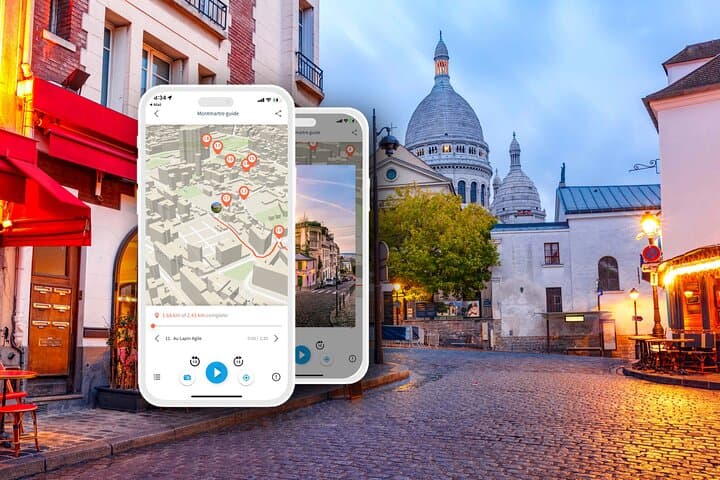
Walk Montmartre at your own pace with a smartphone audio guide that maps a 90-minute route through Sacré-Coeur, Place du Tertre, Moulin Rouge and artists' haunts. Download the app, follow the offline map and enjoy layered history, cobbled streets and memorable city views.
Walk Montmartre at your own pace with a smartphone audio guide that maps a 90-minute route through Sacré-Coeur, Place du Tertre, Moulin Rouge and artists' haunts. Download the app, follow the offline map and enjoy layered history, cobbled streets and memorable city views.
You start at the foot of the hill, headphones in, smartphone awake—Paris ripples around you while the hill of Montmartre pulls focus. Cobbled lanes angle upward past cafés painted in pastels, the Moulin Rouge’s red mill catches the eye from the Boulevard, and the white domes of Sacré-Coeur crown the neighborhood like a landmark calling you higher.
Verified experiences and guided adventures in the surrounding area.
Operated by TouringBee · Paris, Île-de-France
You start at the foot of the hill, headphones in, smartphone awake—Paris ripples around you while the hill of Montmartre pulls focus. Cobbled lanes angle upward past cafés painted in pastels, the Moulin Rouge’s red mill catches the eye from the Boulevard, and the white domes of Sacré-Coeur crown the neighborhood like a landmark calling you higher.
Montmartre earned its reputation in the 19th and early 20th centuries as an artists' quarter: Picasso, Toulouse-Lautrec and Modigliani lived and worked here, and many façades still carry traces of that era. Geologically it’s a low chalky outcrop above Paris that shaped narrow streets and steps rather than boulevards; culturally it’s a mix of bohemian lore, cabaret history and contemporary street life.
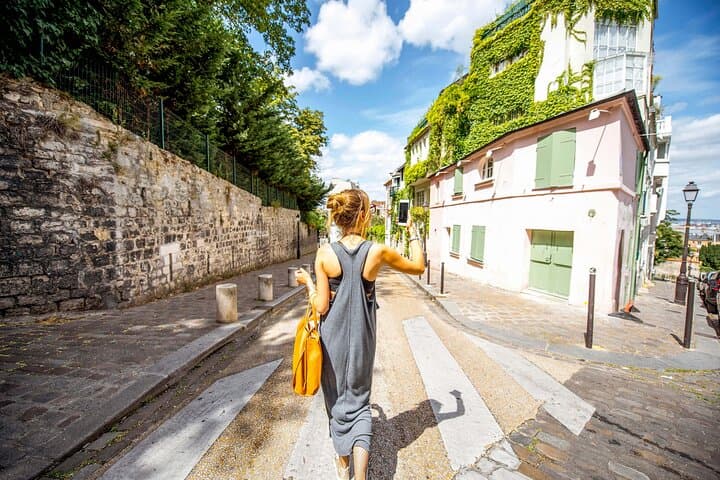
The audio-guided route (roughly 90 minutes) moves through Place du Tertre, the Wall of Love, Bateau-Lavoir and the Lapin Agile, stopping at La Maison Rose and Dalida’s bust en route. Expect city steps, short cobbled hills, busy squares and frequent photo stops—an urban walk with sensory variety rather than technical trail demands.
Practical edge: download the app and offline map before you arrive, bring comfortable shoes for stairs and cobbles, and plan for at least 90 minutes with pauses. Public transit drops you within a short walk; mornings or late afternoons offer softer light and fewer crowds. The guide gives historical context and local color while you set the pace.
easy.
1.5 hours.
Suitable for most fitness levels—requires walking, short climbs and stair negotiation.
After booking you receive app access—download the iOS or Android app, activate your purchase, and the tour and offline map will be available for one year.
The route has steep steps and cobbled sections; it’s fine for older children but not stroller-friendly in many stretches.
Yes—the self-guided audio guide is available anytime; suggested duration is 90 minutes but you can pause and extend visits.
Full refunds are available if cancelled at least 24 hours before activation per the provider's cancellation policy.
Montmartre grew as an artists' enclave in the late 1800s; Sacré-Coeur was built after the 1870s conflicts and shaped the hill's modern identity.
Stay on public paths, avoid touching historic façades, and support small local cafés and galleries to keep the neighborhood economically sustainable.
TouringBee operates guided outdoor trips and adventures with an emphasis on safety, stewardship, and memorable experiences.
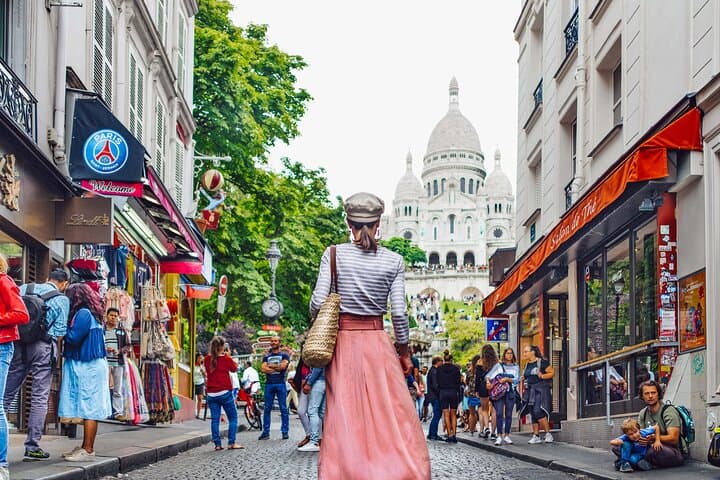

You start at the foot of the hill, headphones in, smartphone awake—Paris ripples around you while the hill of Montmartre pulls focus. Cobbled lanes angle upward past cafés painted in pastels, the Moulin Rouge’s red mill catches the eye from the Boulevard, and the white domes of Sacré-Coeur crown the neighborhood like a landmark calling you higher.
You start at the foot of the hill, headphones in, smartphone awake—Paris ripples around you while the hill of Montmartre pulls focus. Cobbled lanes angle upward past cafés painted in pastels, the Moulin Rouge’s red mill catches the eye from the Boulevard, and the white domes of Sacré-Coeur crown the neighborhood like a landmark calling you higher.
Montmartre earned its reputation in the 19th and early 20th centuries as an artists' quarter: Picasso, Toulouse-Lautrec and Modigliani lived and worked here, and many façades still carry traces of that era. Geologically it’s a low chalky outcrop above Paris that shaped narrow streets and steps rather than boulevards; culturally it’s a mix of bohemian lore, cabaret history and contemporary street life.
The audio-guided route (roughly 90 minutes) moves through Place du Tertre, the Wall of Love, Bateau-Lavoir and the Lapin Agile, stopping at La Maison Rose and Dalida’s bust en route. Expect city steps, short cobbled hills, busy squares and frequent photo stops—an urban walk with sensory variety rather than technical trail demands.
Practical edge: download the app and offline map before you arrive, bring comfortable shoes for stairs and cobbles, and plan for at least 90 minutes with pauses. Public transit drops you within a short walk; mornings or late afternoons offer softer light and fewer crowds. The guide gives historical context and local color while you set the pace.