THE ADVENTURE COLLECTIVE® · Independent discovery and booking for outdoor travel

Walk the streets where pivotal civil rights moments unfolded — from Rosa Parks’ bus stop to the Alabama State Capitol. This self-guided GPS tour pairs on-location narration with a permanent virtual playback so you can learn, revisit, and reflect on your own schedule.
Walk the streets where pivotal civil rights moments unfolded — from Rosa Parks’ bus stop to the Alabama State Capitol. This self-guided GPS tour pairs on-location narration with a permanent virtual playback so you can learn, revisit, and reflect on your own schedule.
Stand at the curb where a single act changed a nation. The tour opens at the corner of Molton and Montgomery Street, where Rosa Parks' refusal to yield still echoes through the pavement and storefronts. As you press play on the WalknTours app the street becomes a sequence of scenes: courthouse steps, a church pulpit, a diner table, and finally the broad marble stairs of the Alabama State Capitol where the Selma to Montgomery march concluded.
Verified experiences and guided adventures in the surrounding area.
Operated by WalknTours · Montgomery, Alabama
Stand at the curb where a single act changed a nation. The tour opens at the corner of Molton and Montgomery Street, where Rosa Parks' refusal to yield still echoes through the pavement and storefronts. As you press play on the WalknTours app the street becomes a sequence of scenes: courthouse steps, a church pulpit, a diner table, and finally the broad marble stairs of the Alabama State Capitol where the Selma to Montgomery march concluded.
This is a compact urban history route. The stops trace Jim Crow-era ordinances, the Montgomery Bus Boycott, the Freedom Riders' violence and perseverance, and Martin Luther King Jr.'s sermons and speeches on Dexter Avenue. Geologically the terrain is flat, rising only slightly toward the capitol; the city grid and brick facades reflect 19th- and early-20th-century development rather than dramatic landscape change. Culturally, the walk connects sites where legal rulings, grassroots organizing and faith communities intersected to reshape civil rights nationwide.
Practical guidance: expect 65–75 minutes of listening time and 1–2 miles of walking on sidewalks and occasional stairs. Download WalknTours (enter code 'rosaparks77' to unlock the tour) and carry earphones and a charged phone. Midday light can be strong in summer; morning or late afternoon offers cooler temperatures and softer light for photographs. Respect memorials and private property, pause audio if you enter museums or churches, and allow extra time if you plan to visit interiors. The experience is self-paced, historically rich, and grounded in downtown Montgomery’s walkable streets.
easy.
1–1.5 hours.
Basic walking fitness; suitable for most people who can manage 1–2 miles on pavement.
The audio runs about 65–75 minutes and covers roughly 1–2 miles across downtown Montgomery from the Rosa Parks starting point to the State Capitol.
No—this GPS walking tour is self-guided and outside; some museums or indoor sites on the route may require separate admission if you choose to enter.
Download WalknTours on iOS or Android, register, find "The Montgomery Civil Rights Walk of Freedom" and enter experience code 'rosaparks77' to unlock it permanently.
Yes, sidewalks are generally stroller-friendly and service animals are permitted; note occasional building steps if you opt to enter interiors.
The route connects locations central to the 1955–56 Montgomery Bus Boycott and the Selma-to-Montgomery march, spotlighting legal cases and community organizing that advanced civil rights law.
Preserve historic markers and public memorials by staying on sidewalks and following posted rules; support local museums and archives which maintain these interpretive sites.
WalknTours operates guided outdoor trips and adventures with an emphasis on safety, stewardship, and memorable experiences.
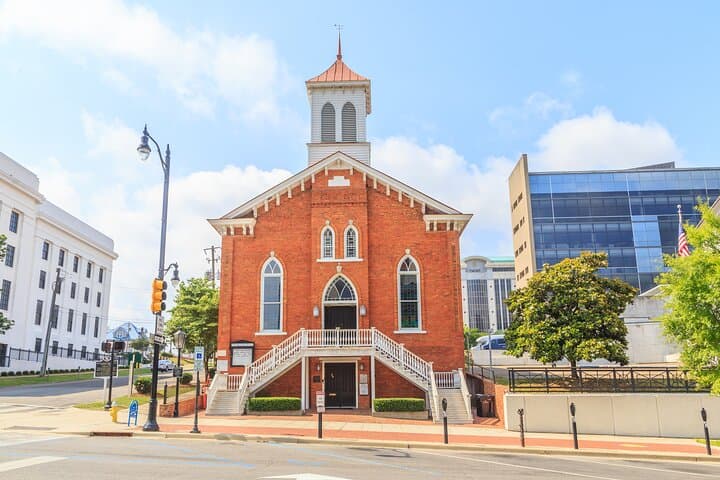
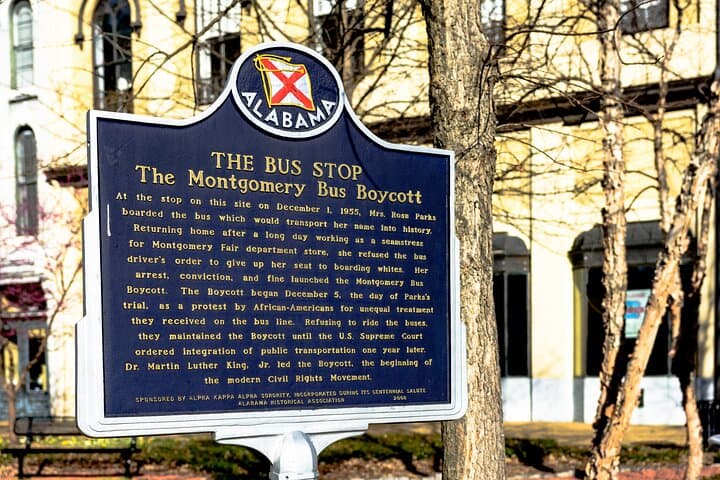


Stand at the curb where a single act changed a nation. The tour opens at the corner of Molton and Montgomery Street, where Rosa Parks' refusal to yield still echoes through the pavement and storefronts. As you press play on the WalknTours app the street becomes a sequence of scenes: courthouse steps, a church pulpit, a diner table, and finally the broad marble stairs of the Alabama State Capitol where the Selma to Montgomery march concluded.
Stand at the curb where a single act changed a nation. The tour opens at the corner of Molton and Montgomery Street, where Rosa Parks' refusal to yield still echoes through the pavement and storefronts. As you press play on the WalknTours app the street becomes a sequence of scenes: courthouse steps, a church pulpit, a diner table, and finally the broad marble stairs of the Alabama State Capitol where the Selma to Montgomery march concluded.
This is a compact urban history route. The stops trace Jim Crow-era ordinances, the Montgomery Bus Boycott, the Freedom Riders' violence and perseverance, and Martin Luther King Jr.'s sermons and speeches on Dexter Avenue. Geologically the terrain is flat, rising only slightly toward the capitol; the city grid and brick facades reflect 19th- and early-20th-century development rather than dramatic landscape change. Culturally, the walk connects sites where legal rulings, grassroots organizing and faith communities intersected to reshape civil rights nationwide.
Practical guidance: expect 65–75 minutes of listening time and 1–2 miles of walking on sidewalks and occasional stairs. Download WalknTours (enter code 'rosaparks77' to unlock the tour) and carry earphones and a charged phone. Midday light can be strong in summer; morning or late afternoon offers cooler temperatures and softer light for photographs. Respect memorials and private property, pause audio if you enter museums or churches, and allow extra time if you plan to visit interiors. The experience is self-paced, historically rich, and grounded in downtown Montgomery’s walkable streets.